Friday, February 10, 2023

Mood Music

Ah, music. Whether it's classical, hard rock, 80s synth pop, ragtime...music is fun. But it does a lot more than entertain us. It uplifts, it enlightens, it inspires. And yes, I do listen to music when I'm writing. Sometimes I'll throw on a generic 'music for writing' video on YouTube, but more often than not I'll have something specific in mind, depending on the genre I'm working in.

For fantasy, it's either classical (19th century Romantics) or epic movie soundtracks. I've also used medieval Gregorian chants for some of my Meterran work, especially stuff about the Crusades. And I recall listening to some Japanese music way back in the day when I wrote what is now Crimson Moon. Because music almost always has a cultural association with it. For example, if you hear a koto, your mind will almost instantly associate what you're listening to with Japan. You hear a honkytonk piano, and you're in a Western saloon. Our cultural link with music is that strong.

Science fiction gets classical music; sometimes it's Mozart or even Bach for their technical artistry, sometimes it's early 20th century stuff (everyone knows about Also Spracht Zarathustra, aka the music from 2001: A Space Odyssey). Technopop doesn't do it for me; it's too...sterile, that's the word. It feels empty to listen to, and it's tough to get inspired by that. Now, 80s music in general, that is fun and inspiring, no question. But technopop from the last twenty years? Hard pass when writing.

Another sci-fi option is music from science fiction shows and (sometimes) movies. Not Star Wars or any of the Star Trek themes, though. That music is all iconic, but it's so closely identified with their particular franchises that it's virtually impossible to separate the music from the scenes. And I do not want to be writing a scene where a Jedi is swinging a lightsaber on the bridge of the Enterprise. That would be wrong. In fact, anything by John Williams is out. Raiders, Superman, Star Wars, you name it...he's just too iconic.

Mysteries...when I'm writing Cameron Vail, it's 80s all the way. Why? Because Cameron Vail is the age I was back in the 1980s and early 1990s. That music gets me in the mindset of a younger man, full of life and hope, and much less cynical than I am now. And sure, Cameron's stories are set in modern day, but I'm not a twenty-year old today; I'm fifty-two and climbing. So, I'll go back to when I was that age for inspiration.

For my Gilded Age stories, that's obviously ragtime and early jazz. I mean, it's obvious. And I love ragtime, so that makes it easier to get in the spirit and mood of the time.

Sometimes I don't use music at all. But when the mood strikes, music makes the writing go that much easier.

To see how the music inspired my latest publication, check out Crimson Moon, available now at Amazon in ebook or paperback. Soundtrack not included, unfortunately.


Thursday, February 9, 2023

Cover Art Found!

And it was approved by my art critic, my son Tanner. Although, as he pointed out, this might have worked just as well as the cover to the first book...


He has a point. And I'm just going to take the central part of the picture, obviously. But I think it will work well, at least until I can commission a proper cover. It gets the point across of who and what Kane is, doesn't it?

So, that's the next step completed. Now, I just need my reader to get through it so I can get it ready for publishing.

Wednesday, February 8, 2023

Fantasy vs. Science Fiction, part II

Fantasy and science fiction went their separate ways in the middle of the 20th century, but it wasn't until the fantasy boom of the late 70s and 80s that the two genres finalized their divorce. And fantasy, which up until that point was still a very wide-ranging, diverse genre, became fixated on Tolkien pastiche and, later on, subversion and deconstruction of all the tropes of the 'epic fantasy' story. Conan, Fafhrd and the Gray Mouser, Lovecraft, and Burroughs were tossed to the side in favor of sweeping epics and door-stopper book series. The genre of fantasy ossified until the accepted wisdom was that Tolkien had invented fantasy; his predecessors were ignored or altogether forgotten.

Meanwhile, science fiction had gained widespread boosting by two particular franchises: Star Trek in the 60s, and Star Wars in the 70s. Like fantasy, science fiction largely fell into the category of 'epic space stuff', although it never became as ghettoized as fantasy did; other types of science fiction still held sway, such as near-future cyberpunk, alternate history, and post-apocalyptic (especially those damn zombies). But for the average person on the street, sci-fi meant warp drive and lightsabers.

And while the two genres had once been linked with a common fandom of 'weird adventure stories', now there was actual disdain and even rivalry between the two; fantasy was its own separate thing, and you couldn't mix the two. This, despite Star Wars being an obvious mixing of the two genres; the Jedi were basically wizards, after all, complete with a dark overlord (first Vader, then the Emperor). But too many people of my generation saw the two genres as bein utterly and inevitably distinct from each other.

Frankly, it's time that stopped. Science fiction needs to be fantastic to be entertaining, and fantasy needs at least a grounding in a believable setting to be relatable. And there is plenty of middle ground to be covered where the two can mix. Fortunately, that re-merging of the genres has already begun; there are countless writers in Indie publishing who are mixing the two again, with space crews meeting alien wizards, and wizards and paladins running into high technology in their travels. And that is a good thing.

Fantastic adventure fiction is, and should be, about the stories, not the settings. The settings can be really cool, and lots of fun, but the most important thing is the story has to be entertaining. If the story is boring, the setting really doesn't matter, because people won't want to read it.

For an example of how science fiction and fantasy can be merged, you can take a look at Awakening, the first book of the Gilded Age series, in which magic and science combine to create a brave new world where people can suddenly do things beyond mortal capabilities. It's available at an Amazon location near you.


Tuesday, February 7, 2023

Fantasy vs. Science Fiction

In the beginning, that being the early 20th century, there was no distinction between fantasy and science fiction writing. It was all 'fantastic fiction'. Back then, the word 'fantastic' didn't mean 'awesome' as it does today; it meant 'weird', 'strange,' and 'otherworldly'. It had a more negative connotation than it does today. The reason for that would be the Fantastic Four comic, which changed the meaning of the word for millions of readers. But we're looking back half a century earlier than that.

In the early days of the pulps, publishers didn't worry much about what 'genre' a story was. If it was an entertaining story, they published it. The main exception to this was the Romance genre, which was always the most popular and thus was the first genre to get its own specialty magazines. 'Adventure' was its own category, encompassing everything that had to do with action and adventure. That included westerns, fantasy, weird tales, science fiction, some subtypes of mystery, war...it was all 'adventure' fiction.

That began to change in the 1920s. Prior to that, there were specialty magazines that covered a...not a genre, but a theme. Railroad magazines, for example, were pulp fiction collections where the stories all had to do with the railroads. They might be romantic, they might be thrillers, they might be weird...but they were all linked by the theme of the railroads. Other examples would be the Western, with different types of stories but all with that primary theme of being set in the old West.

But it wasn't until Hugo Gernsback got into pulp publishing that the 'weird' category started to splinter. Gernsback had a passion for science. He published a magazine about the new technology of radio, and was a firm believer that science would be the key to a utopian future. He went so far as to found the first magazine dedicated to what he called 'scientificion', Amazing Stories.

I've reviewed some of the earliest issues of Amazing a long time ago in this blog. One of the things that Gernsback was determined to see was stories that were based in realistic, or at least plausible, science of the time. Back then, scientists still didn't know about the vacuum of space; the ether was the scientifically-accepted explanation for what lay between the planets and the stars. Gernsback wasn't interested in magic or supernatural horror; he was a realist from top to bottom, and so he began the split between the genres we now know as fantasy and science fiction.

However, Gernsback's idea didn't take off right away. There was a lot of overlap between fantasy, horror and sci-fi in the 1920s; Weird Tales was the magazine that collected all kinds of stuff. For example, Robert E. Howard's Conan stories often included elements that wouldn't have been out of place in a Lovecraft story. One of Lovecraft's stories actually includes a mention of a character from the Hyborian (Conan) Age, albeit not one that was written by Howard. Yes, the shared literary universe existed even then.

Gernsback didn't last very long at Amazing; his tenure was noteworthy mostly for his reluctance to pay his writers, and eventually he was forced out and ended up starting another magazine, Wonder Stories. Amazing would continue on, its direction slightly shifting from scientific realism to scientific adventure.

See, readers back then wanted what today's readers want: Adventure and romance. And the new Amazing Stories gave them both, in spades. It was during this period that Amazing published some of the most popular and well-written stories in science fiction history: Buck Rogers, The Skylark of Space, Triplanetary; authors such as Burroughs and Merritt introduced new works in the magazine, and new authors made their debuts here such as Lovecraft, Jack Williamson, and John Wyndham.

During the 1930s, science fiction was one of the most popular genres, far outstripped fantasy, which had been left behind to lurk in the corners of Weird Tales. Rockets and alien worlds were the attraction, not swords and supernatural or mythological creatures. And so, the splitting of the weird and fantastic into the sterilized genres was complete.

Growing up, the genre split was all I knew; sci-fi was sci-fi, and fantasy was fantasy, and while they shared space on the library shelves and in the bookstore, everyone knew they were not to be mixed. The old days of 'weird and fantastic' were long gone, and largely forgotten by the younger generations. But that was a temporary situation, and the winds were slowly shifting...

Monday, February 6, 2023

New Paperbacks!

Well, one new paperback, and one slightly revised one.

Apprentice, the first book of the Shadowmage Saga, will be out in paperback very soon, within a couple of days. This doesn't count as a new book, of course, since I released it as an e-book on New Year's Eve. Also, I did a bit of revision (very little, mostly formatting) to Arrival, the first book of the Chronicles of Meterra.

Why did I do this? Because I'm going to be selling these at the local bookstore shortly, that's why. I'll need a bunch of author copies, but the local bookstore, Coles, has provided me with a consignment contract, and they like the idea of fantasy books by local authors. Mysteries as well, although sci-fi isn't that popular here, apparently.

I'm looking forward to this; the store does book signings for authors, so I'll be able to market the book myself to potential readers who haven't seen my blog or heard of me in any way whatsoever. I've been living here for two and a half years now; it's time people noticed me.

Once I get settled in with the Summerside store and get some sales, I'll be heading to Charlottetown, where there's a much bigger store, Indigo. This isn't a really big island, but once people start reading my stuff, if they like it, they'll spread the word...and they'll buy more books.

Yes, it's all about the money. No, it's about the stories; I love telling them. I love coming up with these new ideas, and I love putting them down on paper. Or pixels; either way.

So, here's hoping it goes well. I think it will, but then I'm an optimist at heart.

Sunday, February 5, 2023

Winter is Still Here

But the brutally cold temperatures are gone, at least for now. We bottomed out at about -26° C early on Saturday morning, with wind chills reaching -45°. We had heat lamps set up in the chicken coop for a couple of days, and everyone came through fine. We even got some eggs out of the deal. Bonus points!

So, we're back to normal cold temperatures, around -8° or so. With snow, of course, because why not? But it's a lot better than getting frostbite from letting the dogs out to go pee. As long as we continue with this sort of weather, we'll be fine. I'm hoping we don't get another cold snap like that, though. It was really rough for the weekend.

I must say, though, feathers are a great insulator for those chickens. Even with the heat lamps, it was really, really cold in there, but the birds were doing just fine. Walking around, cuddling up under their wings at night, they did great. Feeding them oatmeal laced with cumin, paprika and chili pepper flakes might have helped with the warmth, of course. Sure as hell would have woken me up.

The bunnies did well, too. And they didn't have a heat lamp. Or at least the bunny girls didn't; they are still separated from Bugs, because three bunnies is enough for now. He was in the coop with the chickens, since rabbits don't like to be alone, and he was chilling under the heat lamp to sleep. Hey, why not? But the bunnies have enough fur that the cold didn't do them in, so that was a good feeling.

As for our house, we came through just fine. No burst pipes, no horrible mess to clean up. But we did run out the electric bill from running a heater in the front entrance for two days, and we kept the pipes from freezing by trickling water in the bathroom sink for the whole cold snap. It worked; all else is secondary.

That last point is especially relevant considering we know of three separate locations that did have burst pipes. Friends of ours, my job, and the place where my wife does her workshops all had major problems with frozen and burst pipes over the last twenty-four hours. Not good at all. We'll see how long it takes for me to get back to work, especially since my desk was right under the worst of the flooding. Yikes.

So, for now we will remain grateful that we came through so well. That's twice Mother Nature has kicked us hard in the past few months. We got through Fiona, and we got through this. Here's hoping we don't run into another test in the next couple of months.


Saturday, February 4, 2023

Hunting for Cover Art

Yeah, this one won't be as easy. I'm still not 100% sure what I'm looking for, so it's not like the cover picture will just fall into my lap the way the one for Crimson Moon did. But I have time; the book will be published before the end of the month, and it's only the 4th.

And...yeah, not much else to talk about today. We're bundling up in the house and waiting for the cold snap to go away. Mass was canceled for tomorrow at our church because the heaters in the old church can't keep up with the cold. So, we're probably staying home all day tomorrow, too. Well, chores will get done, so that's something.


Friday, February 3, 2023

Another Book Completed!

Or at least, it's in the hands of my first-reader. Or in her tablet, as the case may be. But this is the second book of Kane, completing the story that I wrote years ago and finally brought back to a publishable form. I'm proud of this one; it's got some of my best stuff, I think. Don't get me wrong; I love all of my books, of course. But this one gives me a special feeling. Kane has been a favorite character of mine for about thirty years; getting his story done means a lot.

So, what can be expected in this book? Well, more of what was in the first book, of course. Action, drama, and some humor here and there. The stakes are a bit higher in this one, though; Kane's dealt with the personal quests he had; now it's time for the world-affecting ones. Or at least, Empire-affecting ones. I don't want to spoil it, obviously, since I'm hoping people will read the first book as well. It only makes sense; I don't do a recap of the first book in this one, although maybe I should. But since they're being published so close together, I don't see the point in doing it. Someone who buys them both isn't going to need a recap to get into the second book.

Now, it's time to find a suitable cover. Once I can think of what that cover should look like. I'm not just going to repeat the first one, obviously. So, it's time for some hunting and foraging in the internet jungle. Wish me luck.

While you're waiting, you can always read the first book, Crimson Moon, available now at an Amazon website near you.


Thursday, February 2, 2023

Here Comes Winter...

I was going to title it, 'Winter is Coming', but I really, really hate that show. And I've never even watched it; I just read some of the books. They were...awful? No, not strong enough. Disturbingly vile? Yeah, that's closer.

Anyway, it's time to batten down the hatches, because we're about to get a hell of a cold snap. 36 hours of -20° C. Translated into American, that would be 'And I thought Minnesota was bad!'. It's going to be nasty. For myself, I'm not too worried; we've done some work improving the insulation and keeping the house warmer, so the family will be fine. It's the barn that worries me. The bunnies and chickens are going to be really, really cold.

So, we're putting some heating lamps in there for them tomorrow; there's one in there already. We're going to need some more straw for them, too. I'm worried that it'll be too cold to go out and feed them, but I'll have to suck it up.

In other news, I've decided that we are going to have to get a cow of our own. I'm really not looking forward to having to get up and milk it early in the morning and again in the afternoon, but the price of dairy is getting ridiculous. Butter is as expensive as eggs. And I was really not impressed to find out that the government deliberately shortens the supply of dairy by forcing farmers to dump and drain any surplus they draw from their cattle. In a time when inflation is rampant, making them throw away enough milk to fill a swimming pool or two? Yeah, I'm not impressed.

At the rate prices are going up, people will be ready to trade their magic beans for a single cow and a pair of chickens. Best to get ahead of the game.

I guess I'm going to have to build a stall in the barn for next fall...

Wednesday, February 1, 2023

Enterprise Retrospective: Civilization

 The eighth aired episode of the season,"Civilization" was a big moment for the Enterprise crew. While they had landed on other planets before and met other starfaring alien species, this was their first encounter with a technologically-backward species. Of course, since this is Star Trek, the aliens are humanoids. And their technology is around 15th-century Earth. To save time, I'm going to copy the Wikipedia entry on this episode's plot.

Enterprise locates a planet inhabited by pre-industrial humanoids called Akaali. Scanners also detect technology which does not correspond with the planet's technological level. Against Sub-Commander T'Pol's recommendation, Captain Archer decides to visit. Going in disguise, T'Pol suggests a distant rural landing site. Once in the Akaali city, Ensign Sato notices inhabitants that appear sick. Scans lead them to an old curio shop, but they encounter a force-field blocking the way. They are then confronted by a local apothecary, Riann. T'Pol stuns her, and when she awakens, Archer convinces her that he is an investigator from another city.

Archer and Tucker revisit the shop during the day posing as antique collectors. They confront Garos, asking him why his DNA is not Akaali. After confirming Tucker and Archer are not natives either, he freely admits his origins: he is part of a survey mission from Malur, and the power source is merely a fabrication unit to provide food and clothes. Archer tells him about the illness, but he claims it is an incurable indigenous virus. Doctor Phlox discovers that the water near the shop has been contaminated with a highly toxic chemical, tetracyanate 622.

Archer and Riann observe the shop at night to try to see what is being delivered to Garos. They follow a man leaving the shop with a delivery. He leaves the crates in a forest clearing, and Archer is then attacked by a Malurian. Under the shop, Archer and Riann then discover that Garos is mining a veridium isotope, and the poisoned water is a by-product. Archer orders the reactor beamed up by Enterprise but the Malurians now have a warship in orbit. T'Pol beams the power plant into the alien ship's path, using torpedoes to detonate it and crippling their shields. On the planet, Archer provides Riann with the antidote, and assures her that the Vulcans will monitor the planet to ensure the Malurians do not return.

*******************************

So, what was good about this episode? Well, as I said, this is their first pre-warp civilization encounter. And the important thing for long-term Trekkers to remember is this: There is no Prime Directive. So, anything can happen; the crew aren't constrained by the rules of the non-existent Federation, although the Vulcans do have a non-interference policy of their own. But Archer isn't bound to it, and of course the crew are eager to explore this world. I mean, who wouldn't be? And the action climax of the episode is a phaser shootout in the middle of the town street in front of all those natives. No way would Kirk or Picard have ever done that, but Archer does what he has to do.

In addition to the unusual amount of freedom available to the crew, this episode also highlights how 'primitive' the Enterprise's technology is compared to the other series. For example, Archer's universal translator breaks down momentarily while he is talking with Riann. As he realizes it, he covers his inability to understand a word she's saying by laying the smack down on her lips (how convenient that the Akaali are so nearly indistinguishable from humans) while fumbling with the translator to get it to work again. It's a cute scene, but it makes an important point, as well. The Enterprise really is blazing the trails that Kirk, Picard and others would follow. And they are flying around in a ship that is to Kirk's Enterprise as a Mercury capsule is to the space shuttle. It's state of the art for 2151, but man, it's a fragile little tin can.

But it's things like this that also make this my favorite Star Trek series. I absolutely love the 'first to the stars' premise. I love that we're going to slowly see the development of what would become the Federation. And I love that we're seeing everything in such a raw state. Sure, compared to the Akaali, the Enterprise crew are practically gods, being able to teleport to space, shoot lasers, and talk to people thousands of miles away. And yet, we know that they still have a long, long way to go. And the journey to what would become the Federation is going to be fun.

Sure, I know, it doesn't work out that way; the series got cancelled after season 4 just when it was getting really good. But the kernels are there, and I'm going to savor them.

So, how to rate the episode? I'll give it a 7 out of 10; it's not the best, but it's entertaining and has some good historical development for the future Federation. And Archer gets to make out with another cute alien girl (he's ahead of Tucker, 2 to 1 now). And really, isn't that what Star Trek is all about?

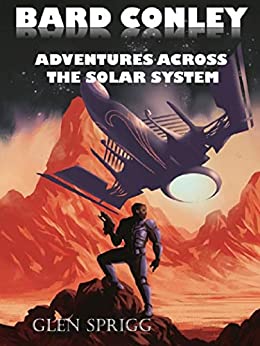
For my own take on space travel in the far future, check out my first sci-fi book, Bard Conley's Adventures Across the Solar System, available on Amazon.