Showing posts with label Education. Show all posts

Monday, February 27, 2023

Spreading the Good Word...

No, not that good word. I'm talking about the beauty of old-school RPGs. One of my son's friends was telling his mother how much he loved the game, and she sent me a message asking what gaming books I would recommend she buy for him. There were a bunch of links to the current 5th edition starter set and other such stuff, but I shook my head and showed her the good stuff: Moldvay Basic and Mentzer Basic rules on eBay. A bit cheaper than Amazon, and hopefully they'll arrive in time for his birthday next weekend.

I have to remember to tell her to get some dice, too. There's a few places in town where she can get them, so that shouldn't be an issue.

The reason I suggested the old books is simple: They are simple enough for kids to understand, even kids who struggle a bit with reading as he does. That's one of the things I want to encourage him to do, read more books. And the Moldvay Basic book, in particular, has a great reading list, sort of an Appendix N variant with books aimed at younger kids. Teenagers are pretty cool with reading Conan and Tolkien, but they'll balk at Wizard of Oz or even Narnia. But those are great books for kids to read, especially to give them a great grounding in fantasy literature. And any reading is great to boost his education and his confidence.

Plus, the rules are straightforward. The Mentzer Basic set includes some solitaire, choose-your-own-adventure type pages to teach the basics. Both Moldvay and Mentzer cover a lot of information in only a few pages; Moldvay is 64 pages, but it's enough information to get a game started with lots of variety in monsters and treasure. Add the Cook or Mentzer Expert sets, and you're golden.

I know, I'm using AD&D 1e rules for my game, but I still have a fondness for the Moldvay rules, which are the ones I first owned. And I do have a nearly-complete BECMI collection, which I might consider completing now that D&D isn't verboten in the house. I'm only missing a few things, which I should be able to find. I regret that I'll never get the Trail Maps again, but there's no way I'm paying those prices on eBay. Not until I'm richer than this, anyway.

She also told me he was enthusiastic about reading my books, so she bought four of them. Hey, I'm not complaining in the slightest. And it spurred Tanner, who's not happy that his friend is going to read my books before he does. So, now I have to get author copies of these books for him. And, of course, he wants them signed.

Here's one of the books she bought for him, available on an Amazon website near you.


Sunday, February 26, 2023

The Dream Library

I've been thinking about my library lately. I like it, of course; I've got some fantastic reading material. But, like every other bibliophile out there, I always want more. And I've been thinking about what my dream library would include, if I had unlimited budget and all the time in the world to read it. Not to mention, space to actually put it in.

So, here's a list that I've come up with, some of which I already have, some of which I will probably never have. And while this might not be a complete list, it's certainly enough to make dreams come true. The first part of this list will be stuff that I have, either complete or in part.

We start, of course, with the Bible. I've got several of those, including the complete Navarre Bible set with commentary, as well as the Ignatius New Testament (also with commentary) and a family copy of the New American Bible. That's a full shelf right there.

Next, the Early Church Fathers, the complete 34-volume set edited by Peter Schaff way back in the 19th century. I've got the first five volumes so far. The set covers pretty much everything that was known to have been written in the first eight or so centuries of Church writings. There's actually more than even that set contains, but it's a pretty comprehensive set.

The Great Books of the Western World, complete 1952 edition. I lost about half of my set in the flood back in Wallaceburg, unfortunately. I'm looking for replacements, and there are some reasonably priced ones on eBay, so I'll have to get those at some point. There is a 1990 60-volume set, but I'm fond of the set I have. Besides, I'll get most of the additions from that set in the Great Ideas Today series.

The Gateway to the Great Books, the 'beginners version' of the Great Books set. It's a 10-volume set, which I have.

The Great Ideas Today, the annual yearbook published by the Great Books people. This series ran from 1961 to 1998; I've got quite a few of those already. I'm missing 1962, 1965, 1966, 1976, 1979, and 1988-1998. These are available through various online stores, so I'm confident I can complete this set.

The Junior Classics, ten-volume set, published by Castalia House. I've got the first three of these in hardback, but I want the whole set. Even if my kids aren't going to read them, my grandkids hopefully will. This set is a reprint of the 1918 set with a few changes to include some newer writings. The first three volumes are great; I can't wait to get the rest of them.

The Thousand and One Nights by Sir Richard Burton. I've mentioned this one before; I have a gorgeous, original set of these sitting on my shelf. Fascinating stuff.

The Funk & Wagnalls New Encyclopedia, 1979 edition. We got this for free a few months ago from a family here on the Island. Sure, the internet has a lot more information, but I believe in being prepared. Besides, physical copies are better. The set also came with a two-volume dictionary, as well as four Science Yearbooks from 1980-1983. There's also a four-volume Medical & Health set that came with it, also free.

Woman's Day Encyclopedia of Cooking. Don't laugh. It was a gift from my mother. It's a twelve-volume set from 1966, and there's a lot of information in there. My best friend, a trained chef, said it's an excellent resource for anyone training to be a chef (like Tanner). Besides, I've got a bunch of recipes from that set that are fantastic.

Complete or essential works of various authors, including H.P. Lovecraft, Edgar Rice Burroughs, Jules Verne, H.G. Wells, Lord Dunsany, Edgar Allan Poe, Clark Ashton Smith, J.R.R. Tolkien, and C.S. Lewis. The latter is one I only have a few books for; I've got the Narnia series, as well as the Screwtape Letters, but that's about it. There's more of him that I would want. There are a lot of other sci-fi and fantasy authors as well that I have gathered, but the above listed are the big ones.

Dictionary; I've got three so far, all excellent and big.

A World Atlas. I've got one of those, but it's from the 1960s, so it's a wee bit out of date. Still, the maps are gorgeous, and it's historical, which I like even more.

Latin and Greek learning materials. Again, even if it's not for my kids, my grandkids will hopefully learn these languages. And I've got just about everything for Wheelock's Latin, as well as the Reading Course in Homeric Greek and a printed New Testament Greek textbook.

So, what do I want to add to this magnificent pile? Not too much more, to be honest; the biggest addition would definitely be the complete Loeb's Classical Library, the little hardcovers that include the Latin (red) or Greek (green) text on one page, and the English translation on the opposite. There are over five hundred of those, so I'm not expecting to complete that set. But man, it would be a hell of a thing to have on the library shelves, wouldn't it?

A Gardening Encyclopedia. We learn by doing, but we also learn by reading. And I've got a lot to learn about gardening and small hobby farming. So, that would be a great resource to have, even if it was mostly general information.

The Catholic Encyclopedia, preferably an older version. What can I say? I love encyclopedias and have since I was a kid, and I love being Catholic and learning more about it. Obviously, it's not a book to read cover-to-cover. But it would definitely be a great resource to have around.

Authors that I would like to have either complete or essential collections: Sir A.C. Doyle, G.A. Henty, H.R. Haggard, Abraham Merritt, Leigh Brackett, L. Frank Baum, Poul Anderson, and Jack Vance. Maybe some more of Tolkien's stuff; I have his 'Big Five', but nothing else.

I think that's pretty thorough. If nothing else, it would be a great storehouse of knowledge of Western Civilization for future generations. I may never get all of it, but that won't stop me from trying.

Oh, I'll also have copies of my own books as well, because while they might not be on the level of the books I've listed above, I'm still quite proud of them. Here's the latest one, Crystal Lilac, available now in paperback and e-book formats at an Amazon website near you.


Sunday, January 22, 2023

Generation Gaps

It's tough to be a parent sometimes. Especially when you and your kids have similar interests. Or at least, one of your kids. The oldest one and I don't have much in common except that we're both male. So, that's something, I suppose. And the youngest, being autistic, has that in common with me, although he's much further into his own world than I ever was.

But it's the middle one, Tanner, that mirrors me in a lot of ways. And yet, even our similar interests diverge in key areas. For example, we both love to read fantasy. But it's like pulling teeth to get him to read the classic fantasy books such as Howard, Leiber, or epics like Homer and Gilgamesh. I know, he's a teenager, and they like different things. I know that I loved reading books like that when I was his age, but then, I was weird. Still am, according to my wife.

We also like gaming, specifically role-playing games like Champions and D&D. He's asking some of his friends if they will join in a game with us, which should be a lot of fun. I'm going to be trying to teach them some old-school style gaming. I haven't looked at the newer editions of D&D since 2007, but from what I have heard, they can get pretty wild with the character options. Maybe it's the 'get off my lawn' old geezer in me, but if playing a dwarf or an elf isn't fantastic enough, you're pretty jaded. Fortunately, he does want to play an elf, so we'll see how it goes with his friends.

The thing is, there's just so much out there to see in fantasy fiction, but it has really become formulaic and rote. I mean, everything seems to be either a Lord of the Rings pastiche or a Harry Potter ripoff. The more 'creative' stories are basically mashups of the two big stories. And that's disappointing, because there is so much more that can be done with fantasy. I'm trying to do things a bit different in my writing, but it's tough to get traction with an audience that only knows one or two possible versions of fantasy writing.

Still, it's worth the effort, because we need to break out of the ruts that we've found ourselves in. Science fiction doesn't have to be Star Wars/Star Trek or cyberpunk. Fantasy doesn't have to be kids in a school or an epic quest to find or destroy something. And the genres don't need to be separated and walled off from each other; that's what the pulps were all about, mixing and meshing things together in wild and creative ways that were really entertaining. And yet, for the past forty or so years, no one has known about that sort of writing.

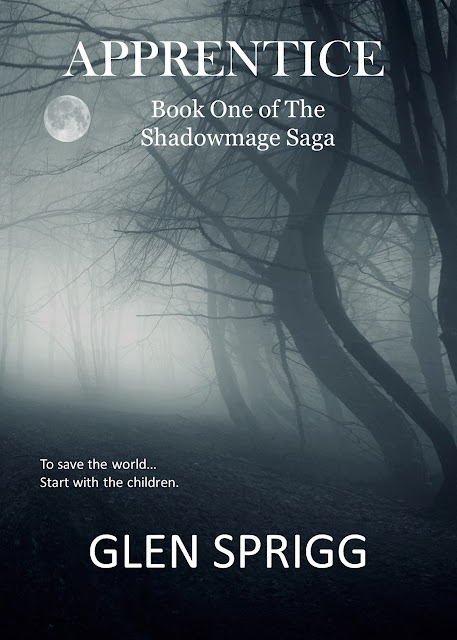
It's time to bring some of that creativity back. I'm doing my part with my newest book, Apprentice, the first book of the Shadowmage Saga. Take a look, and see if it sparks some imagination in you.


Tuesday, January 17, 2023

Always Learning

There's an old saying, 'when you stop learning, you start dying.' I love to learn. I wasn't always keen on doing new things, but I always loved learning something new. I've gotten better at the 'new things' part (I'm living on a farm and raising chickens and vegetables, for Pete's sake), but that love of learning never, ever went away.

I mentioned yesterday that I'm going to pick up my French again after a whole bunch of years. It should be easy going at first, since I still have the basics buried deep in my psyche. I'm sure it will get tougher as I go, but I'll get it done.

I'm also doing some Latin, which I've done on-and-off for over thirty years, without ever really getting deep into it. It's too bad; that's a lot of years when I could have been reading the classics in their original language. After I get the Latin done, I'll move onto Greek so I can do the rest of the classics.

And of course, I've always loved history. There's just something about history that speaks to me like nothing else does. So, when I found a Youtube series that covers World History, I had to check it out. It's by Crash Course, and it covers 42 lessons from the agricultural revolution to modern globalism. I'm thinking it will be a good homeschooling course, although I'll have to see a few more videos before I'm certain.

Finally, I'm resuming my annual Bible study. I've read the Bible from cover-to-cover every year since 2016. This year, I'm taking a different approach, using Fr. Mike Schmitz's 'Bible in a Year' program. It's a different method, since it involves reading the Bible chronologically instead of from front to back. It focuses on the narrative story in the Bible, from Genesis to Acts, while sprinkling in psalms, prophets and New Testament writings in their historical context. I'm looking forward to it. And since it's podcasts, I can listen to it in the car on the way to and from work. Time saver!

I'm also beginning to study the Early Church Fathers, the successors to the Apostles. Learning about how they understood the teachings of the early Church is an invaluable resource to understanding Christianity as it was meant to be. I've got five books of them on my bookshelf, big thick books with tiny writing that cover the first three centuries of Christian history. It's a great set, and I've got quite a few more books to go before I complete it.

Then there's the gardening and farming that I'm learning about. I'm going to be working hard this spring to get these bigger gardens going. There's a learning curve involved, and I'm doing everything I can to make that curve smaller. We'll see the results in the summer and fall.

These are just some of the learning examples I'm focusing on in 2023. And I'm also going to be doing some teaching. My son, Tanner, and some of his friends are interested in playing Dungeons & Dragons. I'm going to be teaching them how it's done, old-school. Tanner is quite excited, and if all goes well, we might have our first game this weekend. We shall see.

All this learning has a purpose, of course. It's going to help me with my writing, as well as teaching my kids and (eventually) grandkids. And, who knows? They might decide to follow us into a farming life. I certainly hope so; I planted those trees in the back yard for them. I hope they'll get to enjoy them.


Monday, April 12, 2021

End of Term...Finally!

Oh, it's been a rough week and a bit. Four courses finishing up, four major assignments...but I finally got it all done. It's not going to be perfect, but I'm happy with what I got done, especially in the past few days. I should have known it was coming, but Saaturday morning found me at the hospital in Summerside getting treated for a damn kidney stone. Stress does that sometimes.

But, I'm pretty much over it, and I'm done with this term. Two more courses to go this summer, and I'm finally finished. And they are going to be easy courses, unlike the past term of assignment-heavy stuff. Music notation and Canadian history, and that's it. I'm so very looking forward to being done.

The last assignment I had was for my History of Modern Britain course. My final essay's topic was Sir Richard Burton, the man who did the sixteen-volume translation of The Thousand Nights and a Night, which I am still reading night by night. I picked him as a topic because he's an excellent example of the kind of man we don't have anymore, a man who went out and did things, great things, and wrote about them for everyone to read. By today's standards, he was the very definition of 'toxic masculinity.' But by any normal standards, he was the kind of man we need a lot more of these days. Unapologetically masculine, self-assured, and a man who was both brilliant and strong. He combined a lot of the best traits mankind has to offer. Sure, he was a Victorian Brit, and didn't think too highly of the cultures he visited and wrote about, but let's be honest: They were backwards, by the standards of the Christian West. It might be politically incorrect to say it, but it's the truth.

Anyway, it was a topic that spoke to me, and I hope I did it (and him) justice.

Now, it's a few weeks of relative peace before heading back into the fray one last time. I can't wait to be done with it.


Saturday, January 30, 2021

Is Opera Still a Thing?

Well, yes, it is. One of the courses I'm taking this term is on opera. Why am I taking it? Partly because I love classical music, partly because it's valuable credits for my degree, and partly because opera has a lot to do with history. And today, we actually watched an opera as a class, over Zoom.

Now, I had been thinking we were going to watching Mozart's The Magic Flute, which I would very much like to watch with Tanner, my twelve-year-old. Magic, monsters, fantasy...it's right down both our alleys. Instead, though, we watched Verdi's La Traviata, which combines the child-friendly subjects of prostitution, betrayal, and tragic death by consumption (aka tuberculosis). Quite the shift in expectations there.

Watching a movie over Zoom isn't really something I would recommend, unless you've got fantastic wi-fi. Which, being on a farm on Prince Edward Island, I do not possess. It's decent wi-fi, certainly, but not that good. So, I got to watch the stop-motion version for parts of it, as a series of still images that were supposed to be moving. The sound was good for the most part, so I got most of the singing. I just couldn't get the subtitles to link up because the video was slow.

So, why am I talking about opera? Because it relates to writing, of course. Opera is a synthesis of different arts: writing (the libretto, or play), music, and visual arts. Opera isn't something you should just listen to. It needs to be seen to be fully appreciated. It doesn't matter how fantastic the music is; it's part of a story that is meant to be seen as well as heard. When the composer and writer put together the words and the music, they can't actually show you the story without the visual component. And it's that visual component that draws people into the world of the opera, a visual component that can change the entire meaning of the story if done right.

For example, the opera we saw, La Traviata, is based on a story written by Alexander Dumas (the same guy who wrote The Three Musketeers), which was based on his own life experiences. When it was first composed, Verdi had to change the setting of the play from the mid-19th century to the early 18th century so as to distance the social commentary in the novel, play and opera from what was actually going on at the time. But the version we saw is set in the 19th century, which gives it a different feel. The costumes are closer to what people wear today, as opposed to having wigs and such.

In writing, though, we don't have that visual component to work with. In fact, all we have are the words on the page, and the reader's imagination to fill in the rest. It's both a blessing and a curse, because today's reading audiences have been conditioned to see their stories, whether in movies, television shows, or video games. It's tougher to engage the mind when all you have is words.

That doesn't mean we shouldn't try, of course. And that's why I mentioned a few posts ago that the toughest part of writing for me is the descriptions. But those descriptions are what make it possible for the reader to visualize the story in more concrete terms. The more clear the description, the better the connection the reader can make with the story. Opera uses the music and the scenery as shortcuts. That's not a bad thing, of course; opera is still very popular today among a lot of people, and you can see most of the great operas on DVD or on YouTube if you want. It's not the same as a live performance, of course, which is something I would very much like to see at some point. Assuming we're ever allowed to live normal lives again.

I plan to use my course in opera to help me bridge that gap between where my descriptions are now and where I want them to be. Any genre will do, although I prefer the happier and more mythic stories to the tragic, 'socially-relevant' ones. But then, I'm just an old-fashioned kind of guy.


Thursday, January 28, 2021

A Fantastic Find

Oh, I've been waiting for this moment for twenty years...

I haven't made an eBay purchase in quite a few years now, but I took the plunge when I found something I've been wanting to get for two decades now. It's a complete set of Sir Richard Burton's English translation of the Arabian Nights, a sixteen-volume set. I bought it a couple of weeks ago, anticipating an arrival in early February, or later because PEI takes longer for everything.

Well, they arrived today, and they are beautiful. Check it out:


I know, I know...they look really old and worn, don't they? Well, that's because they ARE old. 135 years old, in fact. Yes, this is the ORIGINAL, limited edition printing of the Thousand Nights and a Night, from 1885. Don't believe me? Feast your eyes!


That's right, and it's fantastic! I've already started reading it, beginning with the Translator's Foreword, and I've started the introduction to the stories. And wow, I'm ten pages in, and I'll never be able to watch Disney's Aladdin the same way again. I'm definitely not going to be reading these to my kids. Not until they're much older, anyway.

See, my initial exposure to the Arabian Nights stories was in the children's versions, such as Andrew Lang or the aforementioned Disney movie. Little did I know that those were very much the bowdlerized versions of the stories. The 'naughty bits' were glossed over or just edited out altogether. Not so with Sir Richard Burton; he is, after all, the man who brought the Kama Sutra to England a couple of years before publishing this. That was available in a limited edition, too. In fact, you couldn't buy these books in a bookstore; it was, as you can see below, only available to 'subscribers.'


'Private subscribers only' was because the British censors deemed the books pornography. And while Burton's translation is nothing compared to what we can find with a Google search these days, it certainly isn't going to make the children's section of the library, either. As I said, I'm ten pages in so far, and I've already run into adultery, voyeurism, two orgies, and murderous revenge. And Scheherazade hasn't even shown up in the book yet.

Still, it's a beautiful set, and while it's not kid-friendly, it's definitely chock-full of adventure, magic, genies, romance, and heroics. I'm there. And the cool part is, I know how long it will take me to read the first ten volumes: 1,001 days! The last six are supplemental stories, and that's where I'll find the Ali Baba and Aladdin stories; they weren't part of the original Arabian Nights, but everyone assumes they are.

Here's what the inside looks like. It's got a lot of art like this, with the translucent leaf overtop of it (which I've moved out of the way so you can see the text on the other side as well).


That art is tame compared to some of the pictures; at least those girls are clothed.

Now, for a certain class of people, this book ranks right up there with Mein Kampf as a tome of pure horror. Why? Because it was published in 1885 by a man who would have outright laughed at the notion of political correctness while picking his teeth with an elephant tusk and talking about the backward cultures he had visited around the world. If you are offended by old terms used to describe people of a certain color, then this is not the book series for you. Burton considered this to be a work of anthropology, not literature, and he has the typical Victorian-era British attitudes toward non-European (or just non-British) people around the world: They are backward, half-savage at best, and almost impossible to properly civilize. He doesn't hide it, he doesn't sugar-coat it, and he doesn't give a damn.

Burton himself is quite the character; he was, without a doubt, a man's man of Victorian England. An explorer, adventurer, and spy, he spoke a bunch of languages (as many as 29 according to some counts), and among his exploits are a trip to Mecca in disguise (when Europeans were forbidden on pain of death to go), and being among the first Europeans to find the Great Lakes of Africa while searching for the source of the Nile. He served in the Crimean War and in India, explored the East Coast of Africa, Brazil, and the Middle East. He got around, and he truly lived. Controversial even in his own time, he nonetheless is a man to be admired for what he accomplished.

Now, if you'll excuse me, I'm going to keep reading. And no, I'm not doing a review or a Let's Read of this series. That would just be weird, and take forever.

Thursday, January 14, 2021

Sportsmanship

Tanner, my middle son, had his first basketball game the other night. He's never played before, and he was the last player to make the team. But he learned early on that working hard is the easiest way to make a team, and he did indeed work hard. He doesn't have the skill set yet, but he's got the determination.

So, they played a very weak team. And I do mean weak; by the end of the first quarter, they were up by about 30-5. The final score was 75-22; the coach didn't deliberately run up the score, which is good. He even instructed the starting players to stop taking easy lay-ups and shoot from the outside.

He also made sure that every player got a moment. In the third quarter, there were only two players on the team who hadn't scored. One of them was my son. So, when they were on the floor, the coach instructed the other players to feed them the ball as much as possible to give them a chance to score that basket. It was made easier by the fact that the other team didn't really grasp the concept of 'defense' for most of the game; there were a lot of wide-open shots for everyone.

Anyway, Tanner's friend was the other player who hadn't yet scored, and he got several opportunities before he finally got that first basket (he got two more in the game as well). Then, it was Tanner's turn. He got a couple of chances that were "just a bit outside" (a Major League reference for those in the know). But on the third try, he got the ball on a long down-court pass, and got the layup to drop. I cheered as loud as if I'd just watched the Montreal Canadiens score a game-seven overtime goal.

His teammates congratulated him, and he got to stay on the court to finish the game. He was hustling the whole time, and it showed. On defense, the player he was guarding never touched the ball until the last play of the game...and Tanner stole the ball and headed down-court. The final buzzer went off before he could shoot, but it was still a great effort.

As I said, the coach didn't run up the score; the talent difference was just that big that even with the starters spending most of the second half on the bench, they were dominant. I contrast that with Tanner's first experience with flag football from before we moved. On that team, the coach seemed to think he was coaching the 2007 Patriots, running up the score and keeping his best players on the field for almost the entire game, while the younger and smaller players got maybe half a quarter of playing time all day. We quit that team halfway through the season, since it was obvious that the only people enjoying themselves were the coach and the stars.

Sportsmanship matters; sure, it's great to win a trophy as a kid playing on a team, but it's not nearly as impressive if you didn't make any real contribution to the team. In 4 eight-minute quarters, Tanner got nearly fifteen minutes of playing time, almost half the game. That means a lot to a twelve-year-old, much more than having him sit on the bench for all but three minutes and telling him that cheering on the rest of the team counts as playing time.

More importantly, the other team didn't walk off the floor looking like German POWs from the siege of Stalingrad. Yes, they lost, but they didn't get utterly crushed and humiliated. I'm not exaggerating when I say that Tanner's team could have won by a hundred points. 75 may seem pretty high for a game that short, but it could easily have been a lot worse. Kudos to the coach for spreading the playing time around as well as he did, and giving every kid that moment on the scoreboard.


Thursday, January 7, 2021

Rink Update and Other News

Well, it's a learning process. And I'm learning that a skating rink isn't easy to build. I think there's a leak in the tarp somewhere under the ice, because I spent three hours filling the rink the other day and it looks like I got nowhere. We're dealing with freezing rain now, so I'm going to wait until that clears up before doing anything else. I want to go down the road to a neighbor who has a much nicer rink up and running, and see if he's willing to take a look and see if we can salvage this year's attempt.

Not much of an update, I suppose. So, I'll talk about something else as well.

It feels good to be back to writing regularly. Since we moved here, I haven't been able to properly concentrate on writing, which is why I didn't get anything published since August. It's frustrating, but the move really affected me, as well as my family. It took some adjusting, but I'm feeling it again. I've started working on a new fantasy novel, a sequel to the two Meterra books. It's going to be called 'The Dark Swamp.' Okay, that's a working title; I might have a better one in mind.

As for my mystery...I still have to get the next one finished. But right now, I'm feeling the fantasy bug, so that's going to take up the next little bit of my writing focus. I'm not up to the time commitment I need to get back to, but I'm working my way up.

School is starting again, and I've got four courses lined up: Medieval Europe (which is going to be so bloody awesome), Britain and the Modern World (well, it's better than the Global History of Food), Literature and Censorship (an English course focusing almost entirely on the Soviet Union and Russian literature), and Opera. No, I'm not going to be singing.

So, a short entry today, but it's good to be writing this blog regularly again. More tomorrow.


Wednesday, November 25, 2020

Winter Wonderland

It has begun...a PEI winter storm hit us today. It's not a huge amount; maybe two or three inches by morning. Still, it's not even December yet, so we're ahead of where we would have expected to be back in Ontario. Of course, I get an alert on my phone today that tomorrow it's going to be 41° F around here, or about 5° C, so the snow shouldn't stick around for too long. But, it was nice to walk the dogs in the blowing snow. And believe me, around here, it blows a lot.

I had a spot of good news today with regard to school. Once again, the university is offering courses online that would normally be in-class only. Thanks to COVID, the distance students can now get some of the good courses. I'm thrilled; I wasn't looking forward to having to take a course in North American Gender History just to qualify for my degree. Or the History of Food. No, I get the good stuff: Medieval Europe, with castles and such. Perfect for a fantasy writer, yes? I can also take courses on the Soviet 'experiment,' or modern British history. Not as awesome as medieval stuff, but still...not bad. I just wish the Crusades course had made it. That would have been...the Holy Grail, so to speak.

Seriously, the online offerings were pretty lame. I'm not exaggerating about the course on the History of Food. Oh, and naturally there are courses on the history of pandemics. Subtlety, thy name is not University Courses. Frankly, I'm surprised they're offering it; having done some studying on pandemics (the Black Plague and the Spanish Flu), the COVID thing doesn't really match up. They might get people to think that this COVID thing is a tad overblown. That would be fun to see.

Our middle son has made the school basketball team, so he's having lots of fun with that. I know, I know...why is he in school? We're homeschooling, right? We hate public education! What's going on?

Well, when you move to an island two thousand kilometers away with no family or friends nearby, it's tough for a kid who is very outgoing and social to make friends out in the country where there aren't any kids around. So, we agreed to let him attend school on condition that he still does his homeschooling work. That way, at least we know he'll get an education. But I doubt it will last; public schools aren't going to be much different no matter where you go.

Anyway, he made the team, so that's a bonus for him. He's not having trouble making friends, which is good. He's the exact opposite of me when it comes to social situations.

Well, it's another brief entry tonight. But, I'm excited about the courses that are available to me, so I'm going to take this opportunity to remind you that I have a couple of fantasy books already published. Check out Arrival, the first book in the Chronicles of Meterra series. It's got lots of medieval stuff in it. And it's available either as an ebook or as a paperback. Go ahead, take a look. You won't be disappointed.


Tuesday, September 8, 2020

Back to School

 Yes, I'm moving, I'm working, I'm trying to continue with my writing...and now I'm back in school, working toward that History degree. Unfortunately, the course options are rather threadbare for online students. In the age of COVID, there are a few more options, since the university is offering some of its in-class-only courses online this term. But still, after three terms I've gone through the courses that are actually interesting, and now I'm left with the dregs.

I find myself in a bit of a quandary, really. With so few options available, and faced with a certain number of credit requirements to get a degree, I'm stuck with some courses that really don't appeal to me. Sure, the Gilded Age history course looks like a lot of fun, especially since I wrote a book set in that time period, and the Astronomy class is moving out of the Solar System and out to the stars this term, which will be great fun. But the course on Latin American history is basically fulfilling a requirement. Yay.

But the biggest challenge is going to be the course on Gender History in North America to 1880. Yes, that is an actual thing. And because the course options are so slim, I'm forced to take this course if I want to graduate with my chosen degree. It was either that, or the History of India course. And my interest in Indian history ranks somewhere around my interest in Navel-Lint Chemical Analysis. At least the course I'm taking has the potential to provide enormous entertainment. I doubt I'll last more than two weeks, though; my opinions on the subject are likely to prove somewhat 'unenlightened.' Let's face it: I'm a white, straight, married, Catholic man who's about to turn 50. I expect that my presence in that course is going to trigger at least half of the students in the class, and all of the teaching staff. As I said, entertaining.

What frustrates me about this is that there really aren't that many courses available that cover Western civilization's history, at least not in a way that doesn't make our history look like a vast wave of oppression and evil white patriarchy. Seriously, we aren't that bad. Western civilization is awesome, and so is our history. But instead of learning about it, we get to learn about the history of pandemics (gee, nothing subtle about that one), gender history, or the history of other cultures. Why can't we learn our own? Is it because we'll find out that it isn't really as bad as we're being told?

I've studied history for over forty years; I'm just now going for an official designation on the matter. But I've read countless books on our history, and it's a fascinating subject. Even if you dig into it past the commonly-held myths and legends that comprise the majority of what we know about our history, you'll find incredible tales that really happened, and secrets that have shaped our society for centuries.

I hope that I'm wrong and that this semester will be full of learning, eager and open minds, but I'm not holding out a huge amount of hope in that regard. In the meantime, though, I'm going to keep packing, keep reading, and keep up this blog as best I can. I've already linked to a couple of my books in this post, so I'll add a third one just cause. It's my first book, Final Exam, still available on Amazon for the low introductory price of $0.99. And it's a topical book, since it takes place on a college campus. Which one? Does it really matter? Check it out, and spread the word; Indie publishing is the wave of the future.


Sunday, May 17, 2020

Life's Chapters

My wife found a sweet deal on a sale site she frequents; we got a big plastic tote full of someone's homeschooling materials for only 50 bucks. Considering how much stuff was in there, we got a major bargain. Manipulatives, flash cards, tons of books on all kinds of subjects...it's quite the haul.

One of the books in the tote is The Well Trained Mind, by Susan Wise Bauer, a long-time homeschooling mom and advocate. It's about teaching kids the way kids used to be taught before the 'progressives' got hold of education and turned it into something completely dismal. It focuses on the old trivium method of teaching, which means you stuff the younger kids' heads full of facts, the middle-schoolers learn how to analyze those facts, and the high-schoolers learn how to take those facts and understand them and what they mean in their lives.

I'm oversimplifying it, of course; you don't teach six-year-olds calculus and trigonometry, or have them memorizing passages of Plato and Aristotle. But you give them the solid foundation they need so they can master those bigger things when they reach that age.

One of the things in that book was a brief 'note from Jessie,' one of the contributors to the book. As soon as I saw it, I made sure my wife read it. The thing that really resonated with her was Jessie's discussion of how life has chapters, and we can't live them all at once. That's something a lot of people don't understand; they want it all, and they want it now. Well, life doesn't work that way. If you're going to do one thing, something else isn't going to be done right away, or at all. If you're going to homeschool your children, you're not going to be taking a round-the-world cruise in the middle of it, pandemic or not. Some things simply have to be put off until a later time.

My wife and I have both struggled with that notion, as I expect a lot of others have. I want to write a crap-ton of books and sell them on multiple platforms, and I also want to read a huge pile of books, as well as homeschool my kids, and maybe take a round-the-world cruise at some point. But that's not all going to happen at once. So, since some things can be put off, they're going to be. Some things, of course, can't be put off; homeschooling is not something I can wait to do until the kids are in their teens. So, that's priority. Feeding the family is also a huge priority, so that means working full-time. Which, unfortunately, will cut into the writing time, so I'm going to have to get as much of that done as I can while we wait for this stupid virus nonsense to go away so we can get back to work.

So, the reading takes a back seat to the priorities (although I still make a point of reading every day; I'm just not reading full novels on a daily basis). And the cruise...well, we can always hope for it. But that's a want, not a need, and it can wait forever if necessary. If my kids are well-educated and have successful careers, and I've got a bunch of books out on Amazon for people to read, then I've accomplished something much more important than a world cruise.

On the writing front, my editor just returned the last of the short stories for my next anthology, so I'm just waiting for the cover art before I publish it. It's a fantasy anthology, set in the same place as The Chronicles of Meterra: Arrival. So, since it's nearly here, you might want to pick up a copy of the first book, in e-book or in paperback, before reading the anthology. Just a suggestion.

Monday, May 11, 2020

Back to School

What? It's mid-May. Back to school? Schools are closed! Haven't you heard? COVID is on the loose, and schools are a deathtrap! Why would you go back there now?!

It's online schooling, actually, and it's the Summer term, which is only going to July. That's pretty nice, since it will still count as a full set of credits. Anyway, the courses I'm taking are a course on European history (which is my major), and a course on ancient humor (which is going to be majorly fun). Two courses, nine credits, and that much closer to finally earning that degree I never knew I actually wanted or needed.

Having a degree these days is almost like having credit card debt; pretty much everyone has one, or is expected to have one. Actually, now that I think about it, it's exactly like having a lot of debt, because you can't get one anymore without going into debt. Here in Canada, it's not as expensive as in the States, but it's still not cheap. And it will be five years of college and university courses by the time I'm done next spring, which adds up a lot of debt. Even though I'm old, which means a good chunk of my student loan money is actually grants that I don't have to pay back, I'm still going to be on the hook for quite a substantial amount of money.

So, why am I getting the degree? Because it's difficult to get work without one, unless you're in the trades. And this body isn't built for the trades. It never was. Sure, I like to think I was athletic back in the day, but that day was way, way back. Now I'm arguing with my knees every time I crouch down with the catcher's mitt with my son pitching faster than I can. And he just turned twelve yesterday. I feel old. Who am I kidding; I am old. Age isn't just a number; it's a reminder that the good old days might not be as good as you remember, but enjoy them while you can, because eventually, you won't remember them.

Online education is great, really; you don't have to sit in a room with a bunch of indifferent, bored college-age kids. You don't have to do much group work (does anyone really like group work? If you do, you're not normal). You can take the time to think about the answer to a question without being on the spot. You can attend class pretty much whenever you want, wearing whatever you want. That's right; you can write your exams in your underwear, and who's going to know? So much for that nightmare.

It has its downsides, too, especially for younger people like not me. After all, college is where people go to do two things: party, and meet attractive people of the opposite sex.

What? It's not like they're getting an actual education, is it?

As I was saying...the social aspect of college goes right out the window when you go to online courses. So, the only people who are really going to thrive and get the most out of the online college experience are people who don't actually care about the social aspect. That's right, the nerds and geeks like me are in our glory. This is what we've been preparing our whole lives for! Limited social interaction, tons of computer and internet time, and no reason to go to bed on time instead of playing video games all night! We are living the dream, folks!

No, I'm not up all night playing video games; I have a family to deal with in the morning, remember? But if I could...I'm just saying.

So, it's back to heavy reading (like I hate that), pithy discussion board quotes, and the occasional online lecture. Piece of cake. One more year of this, and I can show off an embossed piece of paper! I can't wait!

Speaking of college life, my first published book is about that very subject. It's a murder mystery called Final Exam, and you can get it for the low price of $0.99 US on Amazon RIGHT NOW!!! Go ahead, I'm done now, anyway.


Saturday, May 9, 2020

Then and Now

I was walking the dogs with my middle son tonight, and we had a good talk. We recently decided on a special weekly reading assignment for him: In addition to his regular homeschooling work, he is going to be reading one book a week and reporting on it the following weekend. The book we assigned to him today was Little House in the Big Woods by Laura Ingalls Wilder. That's 'Little House on the Prairie', for you older folks. We picked it because it's not really a challenging book; it's written for younger people, after all, so it's not like I handed him Moby Dick.

Anyway, we read the first two chapters together today. At first, he wasn't that much into it; after all, it's the story of a little girl growing up in backwoods Wisconsin 150 years ago. How exciting can that be, right?

Turns out, it's quite interesting, even for a boy about to turn twelve. The descriptions of the smokehouse and butchering the hog got his attention, and the story of how Grandpa got away from a panther was riveting.

On the walk, we talked about what life was like back then compared to now. I pointed out that Wilder, born in 1867, was 36 when the Wright Brothers took off for the first time, and died shortly before the launch of Sputnik in 1957.

Can you imagine the changes that generation experienced? They didn't even have light bulbs when they were kids; the Civil War was still fresh and raw; Canada was a brand-new country. By the time they were gone, the world had fought two horrifying industrial wars, and the final frontier had been breached.

There's never been a societal shift of that magnitude before, and I doubt there ever will be again. Jules Verne was writing fantastical stories about submarines and moon shots, and by the time Wilder was gone, those things were a reality. How did they process that shift? There's no one alive today, obviously, who can remember those things; the Wright Brothers first flight was in 1903, 117 years ago. Of all seven billion people alive right now, there is a grand total of ONE person who was alive in 1903, a Japanese woman who was less than a year old then. So, there's no one left who remembers a time when men couldn't fly. When compared to recorded human history, it's the blink of an eye. But it's now four full generations since that happened.

And people wonder why I'm studying history in school. There is no more fascinating subject than history; it's also the most important one. That's why books like Laura Ingalls Wilder's tales are valuable to us, because they give us a window into a different time. A simpler time, yes, in many ways, but that doesn't mean inferior. The past has so much to teach us, which makes me wonder why so many people are so determined to erase it. Schools don't teach history, or if they do, it's a dull, watered-down version with so much revisionism and outright invention that it's no wonder kids don't pay attention to it and think it's boring.

Those who fail to learn from history are doomed to repeat it. We've seen that time and time again, and those of us who have learned from history are watching it all happen again. And for all those people that say, 'it can't happen here', well...it's not the first time that's been said, either.

If you're interested in history, check out my first fantasy novel,which has historical tie-ins: The Chronicles of Meterra: Arrival, available in e-book and in paperback. And leave a comment; it's nice to know what other people think.


Thursday, April 30, 2020

You're Never Too Old

There are a few people who know that I used to teach piano lessons; I worked in a music school before I met my wife (and I proposed to her at the year-end recital), then did private lessons in my own home studio for two years after that. Since then, though, the only teaching I've done has been sporadic with my own sons, and my own playing has fallen by the wayside as life has gotten in the way of playing and practicing.

However, with my mother visiting us for a couple of weeks to escape the boredom of quarantining alone, things have changed. My middle son was practicing, and my mother mused on how she wished she could have learned the piano when she was younger. Unfortunately, her own mother (my grandmother) didn't like pianos, and got rid of them when my grandfather would bring them in to refinish. My own father didn't want a piano either; we ended up with an organ when I was twelve, which is what I got my start on. So, my mother's love of piano settled into appreciating what I, and later my oldest son, would learn and play.

However, since she's here, and we just went through all of our stuff in the basement post-flood, I decided to pull out a couple of books that survived and give it a whirl with her. I'm not a big fan of modern piano method systems, because they are mostly geared to kids, or are too simple for adult beginners who don't want (or don't have the time) to spend years learning to play a simple sonatina or waltz.

Being a fan of older things (I've mentioned that before once or twice), I have a copy of Carl Czerny's Opus 500, the Complete Pianoforte School. Czerny was a student of Beethoven, and was one of Franz Liszt's teachers, so he knew a thing or two about how to tickle the ivories. Yes, that's a really old expression. I like old things, remember?

Anyway, I pulled out the Czerny book and got right to it with my 77-year-old mother. She had a little bit of music training back in the day, so she wasn't coming at it completely cold, but I know her well enough to make sure she gets a chance to stretch her mind and do some problem-solving. So, I just went over a couple of basic fingering exercises, and demonstrated the first exercise piece in the book. It's a simple piece, although if it was in a Conservatory book it would definitely not be a beginner's piece. Maybe a Grade 1 Etude. Anyway, she liked the sound of it, so we started working on it. She's excited about it, and did some diligent work before going to bed. She's even reading the Czerny book, which very few people today do. A lot of piano students today don't even know who Czerny is, which is a shame; the man is a titan in the history of piano pedagogy.

When she goes home, she is considering getting a piano herself. She was worried about finding a teacher who would use the same method (understandable, since no one in North America has likely ever used it anyway, and no one in Europe's used it in nearly 170 years). Fortunately, we live in the Digital Age, and the internet is just a click away, so I'll be able to continue teaching her online, if that's what she wants.

I like the idea of it, because it will encourage me to get back to playing again, something I've struggled with over the past few years because of school and work commitments. Now, I can get back into the habit and work on the pieces I've wanted to do for years. I'll also be working on the Czerny book, of course, to make sure I can teach it to her. My son might use the same method as well, which will be interesting. I'm teaching him the finer art of liking old things, one old thing at a time. Hey, gotta keep the memories alive, right?

Friday, April 24, 2020

Why Homeschooling?

My wife and I have gotten a lot of flak from people over the years because of our desire and interest in homeschooling our children. "You're not trained to teach!" "They won't be properly socialized!" "They'll be just like you and won't think for themselves!" And that's just a sample of the kind of things we've heard.

Here's the thing: None of those objections have any value. Not at all. Not trained to teach? Give me a break; we teach our children from the moment they're born. We teach them how to use the toilet, how to brush their teeth, how to hold a fork and spoon, how to eat solid food...our children learn right from the start, and always have. Who else would they learn it from?

No, the notion that you have to be 'trained' to teach comes from the public schooling mentality, where there's only one way to teach and one way to learn. The problem with that is that it simply isn't true. People learn in different ways, and just because one child doesn't do well with 'book learning' doesn't mean they're unintelligent, no matter what the report card says.

Public education has been so watered down (and I'm being polite in using that terminology) that it's effectively nothing more than a babysitting service for two-income families. And it's not a particularly good babysitting service, either; some public schools have descended into a Lord of the Flies-level social order; the kids are in charge, and the adults are hamstrung by the latest 'don't do anything to hurt the kids' feelings' rulings that come down the pipe. Bullying is rampant, as are drug use, sexual assault, and outright violence. I don't really need a degree from a teacher's college to tell me that's not a good situation for a child.

As for socialization, well...see the above paragraph. How is that supposed to be 'socialization' that is good for the child? Seriously, what's the point of complaining that homeschooling parents aren't sending their kids to spend time with other kids when those other kids are smoking cigarettes or watching porn on their iPhones? And that's the kids in elementary school; let's not even get into what the high schoolers are doing. And that's not the kind of socialization we need, anyway.

A Harvard law professor just came out and insisted that parents shouldn't have absolute authority over their children. However, she's just as adamant that people like her SHOULD have that same authority. Parents are slowly being pushed out of the school system altogether; sure, there's 'meet the teacher' night once or twice a year, but really, parents are seen as a nuisance and an inconvenience. And I say that from personal experience.

Anyway, this professor is concerned that kids will only get their parents' viewpoint on religion, social justice, politics, and whatever else the parents teach their kids. How dare the parents instill their own values into the next generation? How horrible that we aren't subjecting our children to the political and social indoctrination they get from the public schools? Sorry, Ms. Harvard Law professor, but last time I checked, we live in a free society where people are still allowed to have opinions that differ from yours.

And I haven't even touched on the obvious benefits of homeschooling, such as the statistical evidence that homeschoolers do much better on standardized tests than public school kids, or how homeschooled kids have a much wider range of experiences with people of various ages, since they aren't cooped up in a room for six hours with people their own age.

Kids in public schools today are learning to read from Cat in the Hat, if they're lucky. Homeschoolers learn to read unabridged books at a young age: Fairy tales, fables, poetry, and novels. My son, who is not yet twelve, started reading Virgil's The Aeneid, one of the greatest epic stories of all time. Can the public schools boast like that?

He also wants to read my own books, which is nice. He especially wants to read the latest one, Best Served Cold, available now on Amazon.com. You should read it, too. Even a twelve-year-old can understand it; how hard can it be?

Friday, April 17, 2020

Why Literature Matters

As a homeschooling parent, I have some pretty strong opinions about education. One of those opinions is that without a proper grounding in classical children's literature, kids aren't going to be educated, no matter how many courses you put them through.

Back almost a century ago, a few perceptive men saw how adults were losing their ability to reason and discuss issues beyond the lowest common denominator. Sports, pop culture and the latest fads were all they really cared about, and when it came to more important issues, such as who was running the country and how they were doing it, people weren't able to look past the most basic surface level, nor could they even articulate what it was that was bothering them about it in the first place. Sure, they knew that So-and-So was doing a lousy job, but nothing beyond that, including how he should actually be doing the job in the first place, or even what the job was!

I know, it sounds familiar, doesn't it? I could be talking about people today. But, that's the point.

So, these perceptive men began the Great Books Movement. This was an opportunity for adults to learn about the classics, the books that defined our culture, the writings of the most profound thinkers in history, and understand not only what they were saying, but why they were saying it, and whether or not we should agree with what they were saying. In short, they were educating people in how to think, not merely what to think. They were teaching them Plato, Aristotle, Aquinas, Shakespeare, Newton and dozens of other great writers.

Unfortunately, you've probably never heard of the Great Books Movement, because despite more than forty years of effort, toil and sweat, not to mention some sweet encylopedic sets of these Great Books, they couldn't sustain interest. The adults just weren't able to connect with these great writers. They didn't 'get' it. And the reason they didn't get it was that, unlike those great writers and their intended audiences, the modern adults didn't have the cultural backdrop, the fertile soil developed in childhood by reading great works intended for children. Fairy tales, nursery rhymes, Aesop's fables...unless it showed up in a Disney cartoon, kids of the past century don't have a lot of experience with them. And that is a crime against generations of humanity. It is a theft of our cultural heritage, a heritage we not only have a right to, but an obligation to pass on to future generations.

My middle son, who is eleven, loves to read Percy Jackson and Captain Underpants. Yikes. He also watches Cartoon Network whenever he can cajole myself or his mother into allowing him TV time. I made the mistake of sitting in briefly on his viewing time, and what I saw was horrifying. The 'artwork' wouldn't pass muster in a kindergarten class; the 'humor' is atrocious and largely centered on bodily functions or thorough emasculation of whatever unfortunate male character gets selected for the writer's abuse, and the 'plots' are ridiculous. There's more plot in a Road Runner cartoon (a fact my son was able to verify when I challenged him to watch a few of those instead).

I know, I know...old guy, get off my lawn, etc. Well, I might be old, but I'm not wrong. Kids today don't have any real value in their entertainment. Just getting them to read is a challenge and a half. But it's a challenge that's worth it.

I found the children's literature books I had purchased when I was homeschooling my oldest son, more than a decade earlier. I offered him a few of them to read, and he expressed some interest, promising to check them out before heading back to staring at the brain-drainer.

Then, he read Call of the Wild, by Jack London.
The Call of The Wild by Jack London - Book Review
Well, that did it. Suddenly, he's interested in reading real books instead of The Day My Butt Went Psycho. He's reading fairy tales, he's reading Edgar Rice Burroughs...he's reading real books now. And, while he still wants to stare at the brain-candy, he's genuinely interested in reading these stories, and even asking me to read him Aesop's fables at night. Hey, moral lessons before bed is never a bad idea, is it? And, while our youngest boy is autistic and doesn't get the whole 'reading' idea, I've started reading some short children's poems to him. Even if he's not looking at the pictures or the words, he can hear my voice. It's a start, anyway.

I know, I'm long-winded. But here's the point: Education is a life-long process; it doesn't end when you graduate high school, or even university or college. But those early years are critical for determining what kind of an education will even be possible for you or your child to get. That's not to say you can't learn later on, but you're starting with a major handicap.

If you're a parent with young kids, don't stick them in front of Netflix or the Cartoon Network while you exchange Facebook posts. Sit down with them and read to them. Grab Lang's Blue Fairy Book, or Beatrix Potter, or Tarzan of the Apes if they're older, or Little House on the Prairie for the girls. Give them a solid literary foundation, and you will change their lives.

And, if you want to practice reading yourself, I've got a few options for you, including my newest release, A Universe of Possibilities. Look me up on Amazon and see what else I have to offer.


Wednesday, April 15, 2020

School's Out!

Well, that's that. Another fun-filled, exciting semester of university completed. Technically, I was done as of yesterday, when I did my Astronomy exam (150 multiple choice questions) and handed in my Cold War History take-home exam. But the second exam officially closed today, so that's it. No more, finished, done.

So, now it's just a matter of waiting for my grades, and it's on to the summer term. I'm only taking a couple of courses, on Modern Europe and Ancient (Classical) Humor. I was also going to take a course in Children's Literature, since as a homeschooling parent, that's important to me. However, I was informed that I had to take a prerequisite English course first, and that course started off with a unit on Margaret Atwood's Handmaid's Tale. Yeah, I don't need the Children's Lit course that bad. I don't need anything that bad. Handmaid's Tale is exactly the sort of book I'm rebelling against in my own writing. I'm sure as heck not going to take a course that requires me to read it.

This isn't my first go-around with university-level English reading requirements. Way back when I was young and foolish (as opposed to old and foolish, as I am now), I spent a year at the University of Toronto, taking courses that had absolutely no bearing on what I wanted to do with my life. Of course, at that point, I didn't actually want to do anything with my life, so no course would have had any real impact on me.

Two of the courses I took were in Science Fiction and Detective Fiction. I rather enjoyed the detective fiction; I discovered some great mystery writers such as Rex Stout, S.S. Van Dine, and Dorothy Sayers. Stout is a strong influence on my own mysteries, by the way, so if you like Nero Wolfe and Archie Goodwin, you might like Cameron Vail and Bill Potts.

However, the science fiction reading list just didn't work for me. They skipped over the early pulp writers such as Burroughs and even E.E. Doc Smith (two of the seminal influencers on science fiction, especially Star Wars), and jumped right to the so-called 'Golden Age' of science fiction. I remember Olaf Stapledon was on the list; so was H.G. Wells, I think. I honestly can't remember any other writers or books from that course. I do remember that it was some really boring writing, though. There was no action, no excitement, just bland, dry writing that was meant to be deep and meaningful, but ended up feeling pointless. I eventually dropped the course. A course on science fiction. And I was writing at the time; Final Exam got its start back then. But this...no, it was bad.

It's an unfortunate thing that science fiction went from being about exciting adventures while exploring the depths of the solar system, and later interstellar action, down to philosophical tracts about how socialism and humanism are the inevitable fate of mankind. No wonder sci-fi went from being hugely popular in the 1930s to a neglected field today. Why would anyone want to read that?!

Well, at least the detective stories were fun. I was introduced to Edgar Allan Poe in that course, which remains eye-opening to this day. I also met Dashiell Hammett and Raymond Chandler, which was quite the change from the genteel parlor-mysteries I was used to up until that point. I'm still not comfortable writing the hard-boiled detective stories, but I don't mind reading them.

Well, time to celebrate the end of a term, and get ready for the next one in less than a month. It never ends, I guess. Well, that's not true; it will end in about a year when I finally get my degree, thirty years after I started way back when.

In the meantime, though, I've got more writing to do. And you've got reading to do! If you haven't already looked at my first fantasy novel, take a peek at The Chronicles of Meterra: Arrival. And watch this space, because there will be something else coming out soon.

Wednesday, February 26, 2020

Going Back to School

Technically, I’m not ‘going back,’ since I’ve been studying in higher education for three and a half years now. Yes, pushing 50 and still doing the college/university thing.

I started out taking accounting, because I needed to make a living to support my family. But one of the things I learned in accounting was that accounting is as boring as watching snails run a marathon. And when you combine the fact that the book of tax laws makes the Wheel of Time series look like a short story and they change a bunch of those laws every single year, it just isn’t worth trying to keep up.

But, I was still stuck in the ‘I have to do this to make money’ mentality. But here’s the thing: I had a three-year college diploma in Business Administration – Accounting, and nobody would hire me. Why? Because I didn’t have a DEGREE. That college diploma? Nope; employers want the whole enchilada just to get started. I mean, I intended to get the degree anyway, but it’s tougher to do that when you can’t feed your family.

Meanwhile, I learned about writing and how much fun it was, and that I actually could, eventually, make decent money as a self-published author. So, after three years of college and half a year of online university study, I made the decision and switched out to another major at another online school. I’m going to have a history degree when I’m done. And oh, what a difference it has made.

First, the courses are actually interesting. Instead of taking a mandatory course discussing the arcane cultural nuances of Luxembourg, I took courses that were actually relevant to what I want to do. I want to write sci-fi; I’m studying Astronomy and learning all kinds of cool stuff about the solar system. And what writer wouldn’t benefit from learning history? The Cold War is just littered with story ideas, from spy stuff to science fiction (let’s go back to the moon!), action and adventure to political thrillers. And the best part is, I got to live through the last twenty years of it. So, this course is both relevant and fun.

I am taking a creative writing course, which has helped me in the sense that I am thinking of stories that otherwise I never would have considered; I just wrote a story from the point of view of my eleven-year-old son (when he was six). I wouldn’t have written that if it wasn’t assigned. So, it’s a way to broaden my writing horizons. But it’s the only creative writing course I intend to take.

I think that the switch away from accounting was a great decision, because it just wasn’t what I wanted to do. I’m pretty good at it, but it’s just not something I care about. With a history degree, though, I can use it to boost my writing (especially since I can take other courses that touch on relevant subjects, like Astronomy), and I can probably get work as a history teacher as well. And I love teaching.

I don’t know if there’s a moral to this story, but I guess it comes down to the simple fact that there are a lot of people stuck in dead-end careers, miserable and feeling hopeless. Don’t be like that; find something you love, find a way to monetize it, and take steps to make it even better. And above all, have fun. Because being rich doesn’t compensate for being miserable.