Showing posts with label Book Reviews. Show all posts

Tuesday, January 20, 2026

The Curse of Capistrano (1919)

Well, why not? I mean, I just reviewed a fantastic movie that spins off from this story; now it's time to look back at the original Zorro story, The Curse of Capistrano by Johnston McCulley. It's set in the early 19th century in California, about a hundred years before the writing. So it would be like someone today writing a book set in the early 20th century. It doesn't seem all that long ago when you think about it. McCulley's grandparents might have been living at the time the story is set.

Anyway, The Curse of Capistrano first appeared as a serialized novel in All-Story Weekly, from August 9th to September 6th, 1919. It was an instant hit, and made even more popular when one of Hollywood's biggest stars, Douglas Fairbanks Sr., adapted the story into the movie The Mask of Zorro, which was released in 1920 and became the template for the action-adventure genre of movies.

The movie is a close retelling of the original story, much more than later adaptations would be. And while much of the story would seem cliché to modern readers, back a century ago those clichés were just getting started. McCulley weaves a skillful tale of what appears to be two separate men: Don Diego Vega (the de la Vega comes many years later), a foppish Spanish nobleman who has the energy of a wilted flower and the drive of a broken-down Pinto, and the dashing masked swordsman, Zorro, whose skill and daring enthrall the countryside even as the government hunts him down. It isn't until the very end of the book that the truth is revealed, that Zorro and Vega are the same man. Shocking, I know. But back then, this was not a common trope. So readers of the time would likely have been at least somewhat surprised, if not shocked at the revelation.

Of course, moviegoers since the original 1920 release knew early on who was behind the mask of Zorro; they just had to recognize the actor, if they didn't already know the story. But McCulley takes pains to ensure that secret is closely kept as long as possible. And it works. Even knowing the truth, the distinction between the two personas is crystal clear, and it's impossible to imagine that the lackadaisical de la Vega could possibly be the sinister man of mystery.

So, what's the story? Well, you know it well enough already. Zorro is going through the California countryside terrorizing government officials who are themselves terrorizing the peasantry of the territory (this is set decades before California becomes a state; in fact, it isn't even American territory yet). The plot is quite lengthy, so I won't quote it, but you can read it here if you don't want to read the actual story. But it's a really good story, so you really should read that instead. Or, if you prefer audiobooks, that's available for free as well.

So, if you want to read or hear one of the stories that inspired the Batman himself, check it out. And yes, Zorro was so influential that Bruce Wayne's parents canonically took him to see The Mask of Zorro the night they were killed. Even the Golden Age Batman (who watched the 1920 version).


Thursday, December 11, 2025

Book Review: The Last Spike (1971)

Alright, this is the sequel to The National Dream which I reviewed not too long ago. That book was all about the prep work over the entire decade of the 1870s that laid the foundation for building the Canadian Pacific Railroad, the longest transcontinental railroad in the world at the time. This book is about the actual construction and the political and economic machinations that went on during the four years that the railroad was being built. And it is a wild story.

A quick summary, taken from the Penguin Books website:

In the four years between 1881 and 1885, Canada was forged into one nation by the building of the Canadian Pacific Railway. The Last Spike reconstructs the incredible story of how some 2,000 miles of steel crossed the continent in just five years — exactly half the time stipulated in the contract. Pierre Berton recreates the adventures that were part of this vast undertaking: the railway on the brink of bankruptcy, with one hour between it and ruin; the extraordinary land boom of Winnipeg in 1881–1882; and the epic tale of how William Van Horne rushed 3,000 soldiers over a half-finished railway to quell the Riel Rebellion.

Dominating the whole saga are the men who made it all possible — a host of astonishing characters: Van Horne, the powerhouse behind the vision of a transcontinental railroad; Rogers, the eccentric surveyor; Onderdonk, the cool New Yorker; Stephen, the most emotional of businessmen; Father Lacombe, the black-robed voyageur; Sam Steele, of the North West Mounted Police; Gabriel Dumont, the Prince of the Prairies; more than 7,000 Chinese workers, toiling and dying in the canyons of the Fraser Valley; and many more — land sharks, construction geniuses, politicians, and entrepreneurs — all of whom played a role in the founding of the new Canada west of Ontario.

That sums it up more succinctly than I could. Below is the famous picture of the last spike being driven in by Donald Smith.

I really enjoyed this book; it is a great read. Berton is a master storyteller who makes the most common of men look like extraordinary heroes in what they do, even if it's just laying track across the trackless wastes of the Canadian Shield or blasting holes in the side of a mountain to make a tunnel. And he doesn't stint on the big names involved, either; Sir John A. MacDonald, Prime Minister of Canada at the time, spent most of the four years of construction trying desperately to find funding to keep the railway afloat. Had he failed at any time, it was likely that the railroad would never have been finished, at least not under Canadian control. Berton makes you feel the desperation and stress the PM was under, as well as the triumphant relief when the railroad funding was finally secured.

For students of Canadian history, I heartily recommend both of these books. They were written over fifty years ago; some of the men Berton writes about would have still been alive when he was a boy, and it's entirely possible that he met some of them in person. If not, he certainly would have been able to meet their children and grandchildren to get further details. After all, Berton wrote this book exactly 100 years after the saga began in 1871. In fact, he refers to the '70s and '80s in this book with the implicit understanding that he's talking about the 1870s and 1880s, simply because the 1970s and 80s hadn't happened yet.

Next on my reading list is Berton's Klondike, which tells the tale of the last gold rush in North America. I've gotten a few chapters in so far, and it's just as interesting. Even moreso, I think, because Berton was actually born in the Yukon only a quarter-century after the gold rush, so he certainly would have encountered some of the people he writes about. When I'm done, I'll let you know what I thought of it.

Saturday, November 22, 2025

The National Dream: The Great Railway (1970)

I know, I know...I've been laser-focused on the Champions Let's Read for a while, but I just remembered that this blog is about other things, too. A long time ago, I read a book by Canadian historian and author Pierre Berton on Vimy, the great Canadian triumph of World War One. It was a fantastic book, and I couldn't put it down. Berton was a great writer, and wrote a lot of books on Canadian history. I've collected quite a few, and I'm slowly making my way through them in the order that they were published. I'm not a fan of his social attitudes, but there's no denying his acumen for writing about Canada's past. This was not the first book on Canadian history he wrote, but it was the first time he set out to write a popular, narrative history.

The National Dream covers the period from 1871 to 1881 when the Trans-Canada Railroad was just that: A dream. It was the grand ambition of Sir John A. MacDonald, Canada's first Prime Minister. He had a vision of uniting British Columbia to Eastern Canada through a transcontinental railroad. He saw this as an absolute necessity to prevent America from expanding into the uncharted northwest, where Alberta, Saskatchewan, Manitoba, and the Yukon are today. It was no secret that America had a policy of Manifest Destiny and considered the entire continent to be their birthright. MacDonald believed that without a railroad and a string of settlements across the prairies and all the way to BC, Canada would not long survive as an independent nation, but would eventually be absorbed into the United States.

The problem was that Canada was still a very young country; Confederation was only four years old, and the country consisted of Nova Scotia, New Brunswick, Quebec, Ontario, a tiny part of Manitoba (which was made a province in 1870), and the Pacific colony of British Columbia, which was admitted as a province in 1871. One of the conditions for BC's addition to Confederation was the building of a railroad connecting the new province to the East. And there simply wasn't enough money available to make the railroad happen. The Americans had completed their transcontinental railroad in 1869, linking the prosperous East with the Wild West and California at an estimated cost of $60 million dollars, equal to about $1.2 billion today., with a track that was just under 1,800 miles long. Canada wasn't anywhere close to being able to afford a track that would be even longer, stretching from Toronto to Vancouver, just over 2,000 miles.

The issue of the railway was the dominant one in Canadian politics throughout the decade of the 1870s. The Pacific Scandal brought down MacDonald's government in 1873, leading to the first Liberal government in Canadian history under Alexander MacKenzie. The first actual work on the railroad was begun in 1875, but very little was accomplished, and MacDonald was swept back into power in 1878. Determined to make the railroad a reality, he sought financing in London and even in America. Finally, by early 1881, all the pieces seemed to be in place, and construction began in earnest in BC, in Winnipeg, and in Ontario.

The biggest challenges for the railroad were finding the best and quickest route through the Rocky Mountains, and figuring out how to build a railroad through the forbidding terrain of the Canadian Shield in Northern Ontario. Many surveyors traversed the Rockies seeking navigable passes through which a railway could be safely built. Chief among them was Walter Moberly, who was the first white man to see vast reaches of the Canadian Rockies. Moberly's surveying suggested that the best route through the Rockies would be through a northern route and Eagle Pass. This would have brought the railroad through what is now Edmonton, and land speculators had a field day staking claims and selling them to would-be settlers.

Sandford Fleming, the government's chosen Chief Engineer on the project, preferred a different pass through the Selkirk Mountains, the Yellowhead Pass. However, politics got in the way (don't they always?), and Fleming was dismissed in 1880 by Sir Charles Tupper, a member of MacDonald's cabinet and a future Prime Minister himself.

By the time the 1880s rolled around, the railway was still a pipe dream; an entire decade had been wasted with bureaucracy, financing difficulties, and personality conflicts among the surveyors, all of whom insisted that they had the best route mapped out. In the end, though, the railway would take a different route from all of them, and Canada would be forever changed. By 1881, the government finally had the people they needed lined up and ready to make the Canadian Pacific Railway a reality. But that, my friends, is a tale told in the next book.

Obviously, my brief summary isn't going to do justice to Berton's work. His meticulous research and narrative style made this book and its sequel (The Last Spike, 1971) Canadian best-sellers and inspired an eight-part TV miniseries in 1974 that was the highest-rated dramatic programming in CBC history. The entire series is available on YouTube for free, so it's worth checking out if you don't feel like sitting down and reading (but the book is better).

Anyway, that's my digression into one of my favorite topics, history. I'll be adding a review of The Last Spike soon, which tells the dramatic tale of how the CPR actually got built in record time. Until then, may all your dreams come true.

Thursday, October 9, 2025

Book Review: The Sword of Shannara

I know, it's an old book...but it's not as old as I am, so it counts as a new book. Actually, I have read it before; I read it when I was about eleven or twelve, so it was about five years old (and in paperback). But it wasn't the first Terry Brooks book I read; I read The Elfstones of Shannara first, so I was a bit out of sorts until I realized that it was a sequel to another book. So, since I really liked the Elfstones, I decided to see what had come before.

Now, most people today know that The Sword of Shannara is basically a shameless ripoff of Lord of the Rings; I've seen videos on YouTube about the many, many parallels between the two tales. But here's the thing: I read Sword before I read Fellowship. So it didn't feel like a ripoff to me, because I hadn't read the story it was ripping off yet. I didn't read LotR for another three or so years, and I have to be honest, I didn't feel like I was reading the same story.

Alright, so this is Brooks' debut novel, published in 1977; he's gone on to a very successful writing career since then, but a lot of people still complain that he is the reason that fantasy became almost entirely LotR ripoffs in his wake. In some ways, that is true; Sword was very successful, and showed every publisher and writer that LotR pastiches would go over very well with the reading audience. So, that's what they gave us. And so, for a long time, I figured that this was the entire breadth of the fantasy genre; I hadn't heard of Burroughs, Merritt, Dunsany, or Leiber, and I hadn't read Lovecraft or Howard at all.

I've mentioned all this in a long-ago post, discussing Abraham Merritt's The Moon Pool and its disappearance from public notice. But I just finished re-reading Sword after many years, and I thought I'd give my thoughts on it.

First of all, it's a quick read, much quicker than Lord of the Rings, since it's just one book. And while I can now recognize the parallels (since I've had several reminders of them over the last few years), there are enough of Brooks' own ideas to give the discerning reader a fun story that can stand on its own. Yes, it's still a ripoff of Tolkien, but it's also its own thing. And Elfstones proved that Brooks was more than a pastiche artist.

Anyway, Shea Ohmsford is the sole remaining heir to a now-defunct line of Elven kings, and the only man who can use the legendary Sword of Shannara. Allanon the Druid comes to fetch him to go collect the sword so he can use it to defeat the fearsome Warlock Lord, Brona. Shea and his step-brother Flick, along with Shea's friend Menion Leah, travel through terrible peril to the safety of Culhaven, where  Allanon tells them more about the Sword and the threat from the Warlock Lord. A motley group of companions joins Shea and Allanon to go find the Sword in the druid fortress of Paranor, but Shea is separated from them and falls in with a pair of unlikely companions, the one-handed thief Panamon Creel and the mute Rock Troll Keltset. They end up chasing a crazed gnome who actually has the Sword, all the way into the Warlock Lord's kingdom where they have even more trouble. Meanwhile, Allanon and Flick seek to rescue the missing elven king, Eventine, so he can lead his armies to help the beleaguered human forces of Callahorn in the city of Tyrsis, where the noble Balinor hopes to lead the famed Border Legion in a successful defense of the city while they wait for the elves and for Shea to destroy the One Ri--I mean, the Warlock Lord. Shea eventually succeeds, the evil armies are routed, the Warlock Lord is ash, and everyone rejoices...except Hendel the dwarf, who was played by Sean Bean.

Okay, so the story is pretty basic. I've learned over time that this wasn't actually how Brooks originally envisioned the story; instead, it was his publisher, Lester Del Rey, who made him dig into the Tolkien well and give the story a heavy coating of Middle-Earth. Still, Brooks did give the story its own personal touches, which helped make the book so successful. Neither Menion nor Balinor are Aragorn clones; the elven brothers are not all that much like Legolas, and Hendel is definitely not Gimli. Brooks has his dwarves friendly and allied with the elves, and they are pretty much all claustrophobic and hate being underground due to having been stuck there after some ancient cataclysmic war.

One thing I didn't realize when I first read these books is that Brooks set this in the distant future of Earth. This became much more obvious with the Genesis of Shannara series, which is set in our very near future. So the cataclysmic war was nuclear, and humanity barely survived, evolving into dwarves, gnomes, and trolls as well as humankind. The elves are a separate story that gets more detailed in Elfstones. Anyway, the ancient, ruined world does get a few nods here and there; one of the nasty monsters they encounter is an ancient survivor of those wars, and the party encounter it in the skeletal ruins of an ancient city. I know, a lot of 'ancient' in that sentence. So, I'll give Brooks kudos for doing a post-apocalyptic fantasy story in a Tolkienesque style. That can't have been easy to juggle, especially at editorial demand.

So, what did I think of the book? As I said, I have read it before, albeit a long time ago. And I enjoyed it. It was a lot of fun and a pretty quick read, with vivid descriptions that nevertheless don't achieve the Tolkien effect of feeling like every single blade of grass and flower petal needs a paragraph of description. And that is a good thing. Even knowing the story, the pace is good, the characters are pretty well-developed (except the elven brothers, who get the shortest shrift in the book), and the climax is genuinely different. The power of the Sword of Shannara is real, but not what one might expect, and it gives the best indication of Brooks' talents as a writer. The characters that feel the most like Brooks' own creations are Panamon Creel and Keltset, neither of whom feels like a port from LotR. Creel is an unapologetic thief, and Keltset has his own motives for what he is doing, and he is definitely more than he seems.

In short, I like this book. I still like Elfstones better, partly since it was the first of the series that I read, and partly because it doesn't have the same Tolkien pastiche feel that Sword invented. I recommend it for younger readers who are just getting into fantasy fiction and haven't started with the heavies like Tolkien; it's a gateway drug for fantasy, and the rest of the Brooks' oeuvre has plenty of merits of its own.

If you're interested in my own fantasy writing, I invite you to check out Apprentice, an initiation into a fantasy world of my own devising, that doesn't have a whole lot of Tolkien influence. But it's still a fun read.


Saturday, August 30, 2025

Project Hail Mary (book review)

I'm taking a moment away from the Champions Let's Read so I can talk about this book. I saw the trailer for the upcoming movie recently, which inspired me to re-read this book. Written by Andy Weir (the guy who wrote The Martian), this is another hard science fiction tale that has much bigger stakes than The Martian ever did. Sure, Mark Watney's heroic efforts to survive on a dead planet were great, but Ryland Grace is trying to make sure Earth doesn't become a dead planet. And he's in a whole other solar system, which is orders of magnitude more awesome than just being on a local planet. And you can consider that your SPOILER ALERT!!!!!!!!!!! for this post.

So, this story is told in two parts: Present day, and flashbacks. The present day sees Dr. Ryland Grace trying to sort out the basic questions like, 'What the hell is going on?', 'How did I get here?', and 'Why are there two dead people lying next to me?' He eventually discovers that he is on a spaceship, the sole survivor of a crew of three, and he's approaching the Tau Ceti star and solar system. So he is a long, long way away from home. And he's not alone.

The flashbacks slowly reveal how Grace got to this situation. He was a simple middle-school science teacher who also happened to be a notorious figure in the scientific community. That notoriety gets him drafted to solve a major problem with the sun losing its energy and heat, which threatens to send Earth into a permanent Ice Age that will destroy most life on the planet. Over time he discovers not one, not two, but three alien forms of life in his efforts to solve the problem and save Earth.

Alright, what works here? Pretty much all of it. The mystery of Grace's past and activities leading up to the Hail Mary mission is very well handled, especially the final surprise twist. Grace is recovering from coma-induced amnesia throughout most of the book, meaning we learn pieces of the backstory at the same pace as he does.

The mission itself is a sci-fi nerd's dream. The character of Rocky is one of the best-developed aliens in science fiction. He's not a human with pointy ears or even humanoid at all; he's truly alien, with a whole different math system, an incredible talent for engineering, and almost no clue about science other than the basics to keep himself alive, because like Grace, he's the sole survivor of his own mission. The two of them form an unbreakable bond that enables them to do what they have to do to save both their worlds.

So, what doesn't work? Not much; the story is tightly-plotted and easy to follow even if you're a scientific imbecile. My biggest issue is the character of Eva Stratt. I don't like her. I know, I'm not really supposed to, but she smacks of the annoying 'girl-boss' trope that has infected so much of pop culture over the past decade or so. She's extremely unlikeable, and even resigns herself to being tossed in prison after the launch of the Hail Mary because she's so extreme in her methods to make the mission work. She orders governments around and makes lifelong enemies work together. Sure, the mission requires that level of pigheadedness, but I'm just tired of seeing the necessary characteristics embodied in a woman. If that makes me a sexist or misogynist, so be it; at this point, having a male character in that position would actually feel like a novelty.

Now, don't misunderstand me; I see Stratt's motives and how her way of doing things is pretty much the only way things would ever get done in a crisis like this, especially when you get layers upon layers of bureaucrats all trying to protect their own fiefdoms even in the face of literal global armageddon. Again, though, this could have just as easily been a man. In fact, if you change 'Eva' to 'Evan', you'd find almost no issues with the gender-swap. And that is the biggest problem: Stratt isn't a character; she's a plot device, and a very abrasive one.

Other than that, though, I like how the book reads. The discovery of Rocky's own ship, the tense atmospheric work to retrieve samples, and Grace's reaction to the realization that this was always intended to be a one-way trip is handled very well. And the final chapter is poignant and wonderful all at the same time.

The book is entirely self-contained; there's no point in a sequel anyway, just like there wasn't a point to doing a sequel to The Martian. It is what it is, and doesn't need to be anything more.

This is the second of Andy Weir's books that I have read, and I've read both of them multiple times. I'm looking forward to the movie next year, because I have a feeling this is going to be truly epic.

Friday, January 20, 2023

The Marvelous Land of Oz


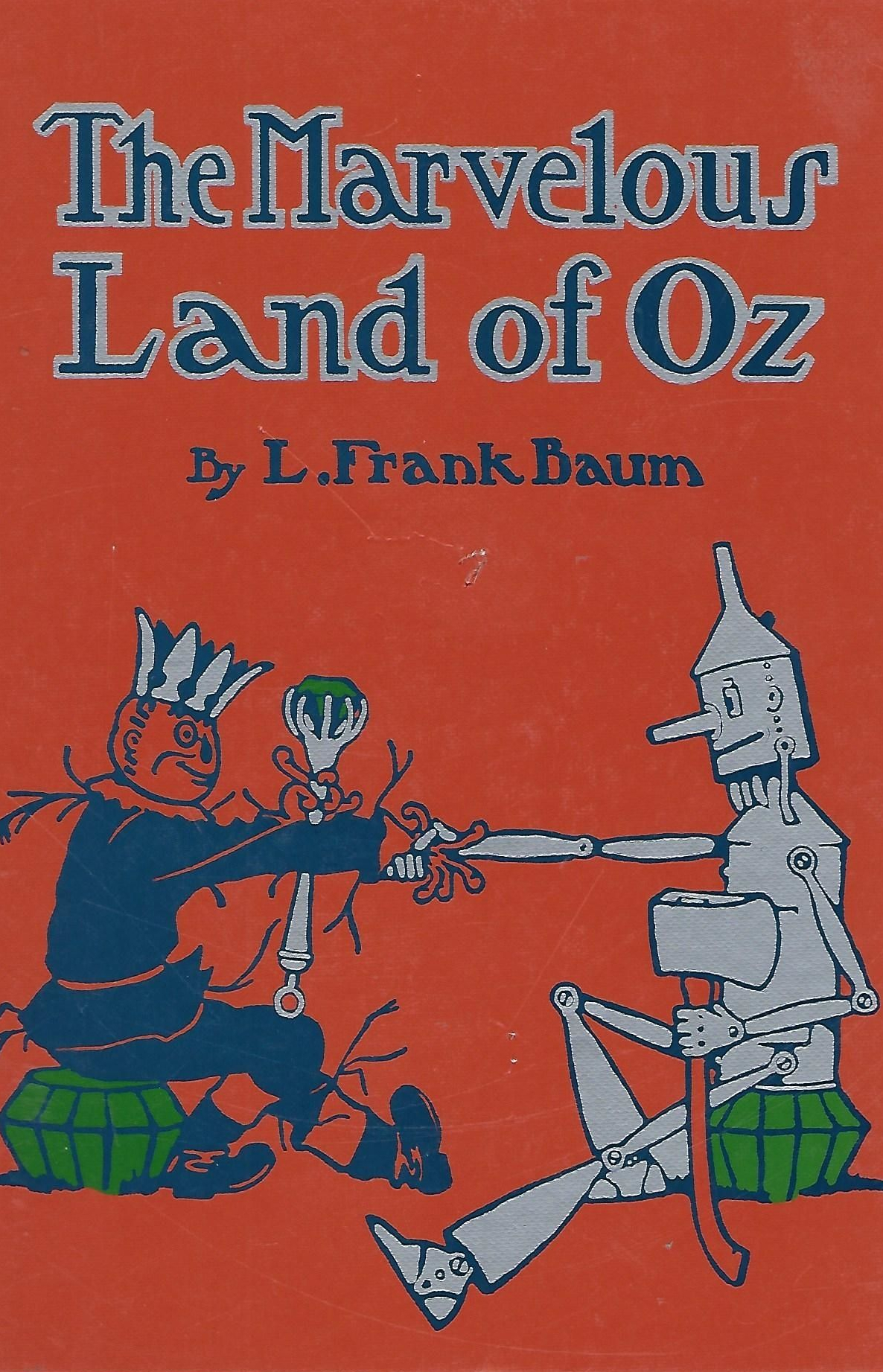
Published in 1904, The Marvelous Land of Oz was a sequel demanded by fans across America. The first book was a smash success, and Baum had written a script for a play that toured America in 1902. It would also be adapted into several film versions even before the most well-known one in 1939. But fans wanted more.

But while they liked Dorothy, she wasn't the most popular character. As you can see in the picture above (a reproduction of the original cover art), the Scarecrow and Tin Woodman were the breakout stars of the story. Fans wanted to know more about their adventures after Dorothy left, and so Baum wrote The Marvelous Land of Oz in response.

Land of Oz is notable for introducing the Gillikin country, which is the north quarter of Oz; its color is purple. Green, blue, yellow and red were used for the Emerald City, Munchkin land in the East, the Winkies in the West, and the Quadlings of the south. Although she doesn't make an appearance in this book, the good witch from the first book, who met with the Munchkins and sent Dorothy on the path to Oz, is the Witch of the North, so this is her territory.

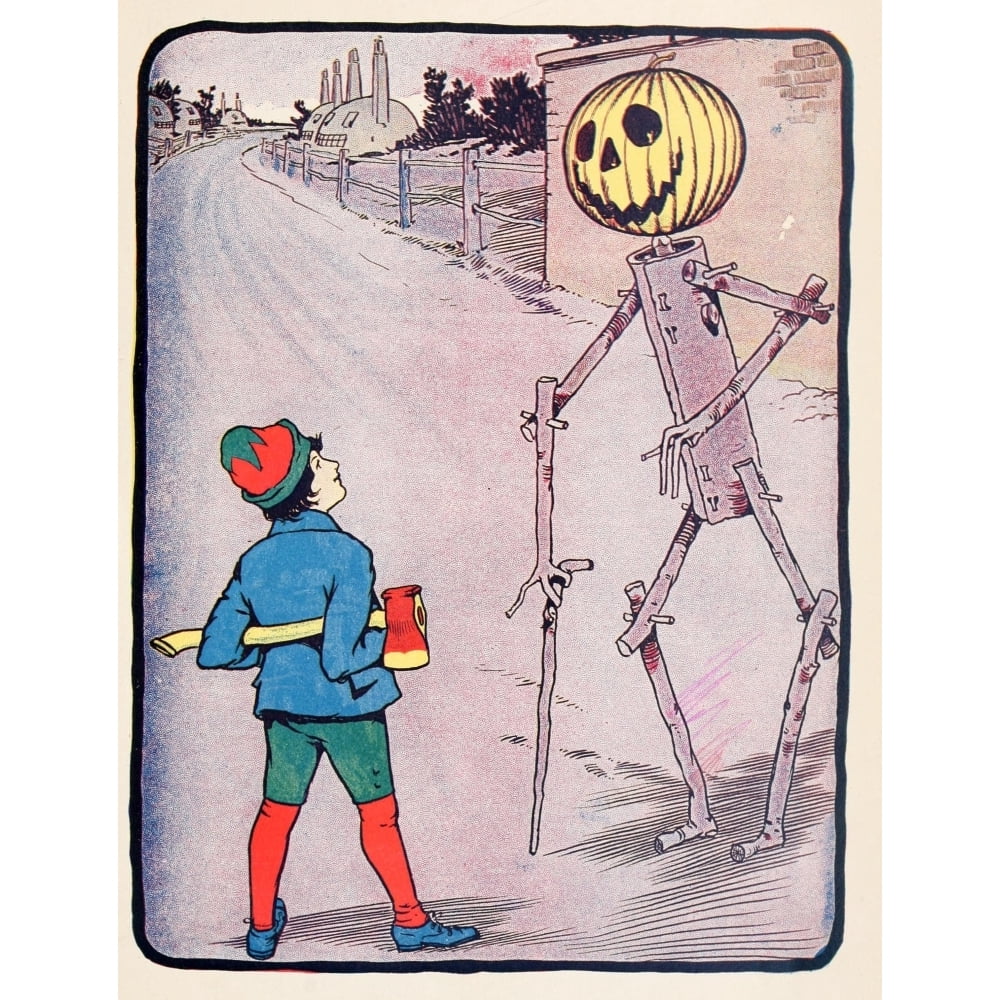
The protagonist of this book is a boy named Tip, who lives with Old Mombi, an unpleasant practitioner of the magical arts. Mombi isn't a witch, though, since the Good Witch of the North doesn't like competition. So she's a sorceress, a trickster, or what have you. Anyway, she's a nasty piece of work, and when Tip tries to have a bit of fun by building a pumpkin-headed man to frighten her, she uses a magic powder to bring the pumpkinhead to life. She then decides to dispose of Tip, who escapes along with the Pumpkinhead, who he names Jack. So begins another adventure in the marvelous land of Oz.

The Scarecrow, for those who remember the first book, rules the Emerald City, and the Tin Woodman is the Emperor of the Winkies. They don't appear right away, as Tip and Jack have to make their way to the Emerald City first. On the way, they find a sawhorse, which Tip brings to life using the magic powder he stole from Mombi before escaping. Eventually they get to the Emerald City, which is under siege by an army of girls armed with knitting needles. What? It's 1904; things were different then.

The Scarecrow escapes the besieging army along with Tip, Jack, and the Sawhorse, and make their way to the Western land of the Winkies to get the Woodman's help in taking back the Emerald City. More adventures ensue, and yet another new companion joins them, the Highly Magnified, Thoroughly Educated Woggle-Bug. He's a pompous sort with a love of puns, but he proves himself to be quite useful by the end of the book.

The end of the book finds the party seeking the help of Glinda, the Witch of the South, who is searching for the long-lost princess Ozma, who was stolen away by...the Wonderful Wizard himself. Turns out he might have been a humbug, but he had a bit of a ruthless streak in him. Eventually, Ozma's fate is revealed, and everything works out in the end.

I tried to avoid the big spoilers, since this book, despite being 118 years old, isn't nearly as well-known as its predecessor. Which is a shame, because this book rocks. It was my favorite Oz book growing up, and it hasn't lost that position to this day. It's the only Oz book that doesn't feature Dorothy or the Lion, and it introduces a bunch of recurring characters that will stick around for book after book.

Baum really let his imagination run wild on this book, even moreso than with the first one. And he got very creative when he was writing about Oz. The characters are well-defined, with personality quirks and distinctive speech patterns. The action scenes are vivid and well-crafted. The descriptions, while minimal, convey the sense of the fantastic that permeates the entire series.

The art in this, and all subsequent Baum-authored Oz books, is done by John O'Neill after Baum and Denslow, the original Oz artist, had a falling-out. As you can see in the images below, O'Neill's style reflects what Denslow did, but it's definitely its own thing.

Meet Tip and Jack Pumpkinhead.


The Sawhorse and Jack in the Emerald City.

And the gang's all here. From bottom to top: Tip, Scarecrow, Tin Woodman, Jack Pumpkinhead, and the Sawhorse, meeting the Woggle-Bug, H.M, T.E.

I can't say enough good things about this book; Baum was one hell of a creative writer, with an imagination perfectly suited to entertaining children with fantastic stories and tales of adventure. If your only knowledge of Oz is the movie, or even the first book, you owe it to yourself and your kids to read this one.

Thursday, January 12, 2023

The Wonderful Wizard of Oz

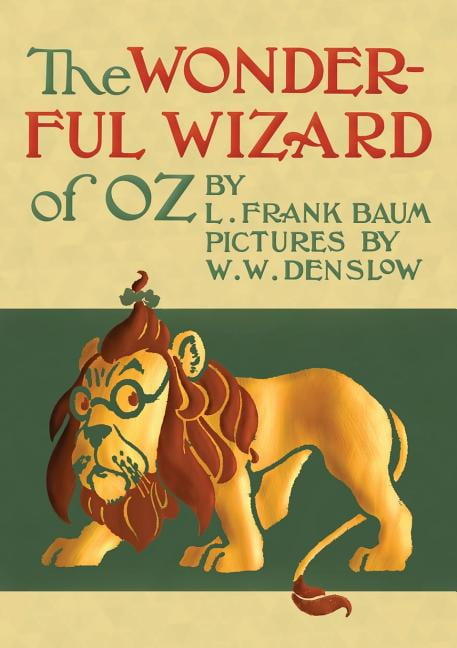
Okay, just to be clear: This is about the book by L. Frank Baum, not the Judy Garland movie. The movie is great, but the book is better. Published in 1900, it was four years before a sequel would be written; Baum didn't realize at first just how popular the book was until he started getting letters. Lots and lots of letters, from kids wanting more stories about Oz.


The book is short by today's standards of fantasy writing; even with copious illustrations, the book is only 190 pages long. But it packs a LOT into those 190 pages. There are twenty-four chapters, only a few of which are more than five or six pages long. There is an economy of words here, and a lot happens in those twenty-four chapters. Baum gets to the point, and does so in a very entertaining way.

If you've seen the movie, you know about two-thirds of the plot. Dorothy is in Kansas, cyclone hits, house lands on the Wicked Witch of the East, good witch sends her to Oz, yellow brick road, Scarecrow, Tin Woodman, Cowardly Lion, poppies, go kill the Witch of the West, flying monkeys (did you understand that reference?), bucket of water, return to Oz, Wizard is a humbug, balloon, magic shoes, there's no place like home.

However, there's quite a bit more than that in the book, believe it or not. Not only do the companions have a lot more to do besides sing and dance through the forest, but the return journey to Oz from the witch's castle takes a couple of chapters itself instead of being skipped over to get to the finale. And Dorothy doesn't leave right after the Wizard's balloon takes off without her; she has to go on yet another journey to the Good Witch of the South to find out how her silver (not ruby) shoes work. And that doesn't include the encounters with the Queen of the Field Mice, the stork, the Hammer-heads, and China Town (not that kind of China, the plate kind). All bursting with imagination and wonder, and all within a single book.

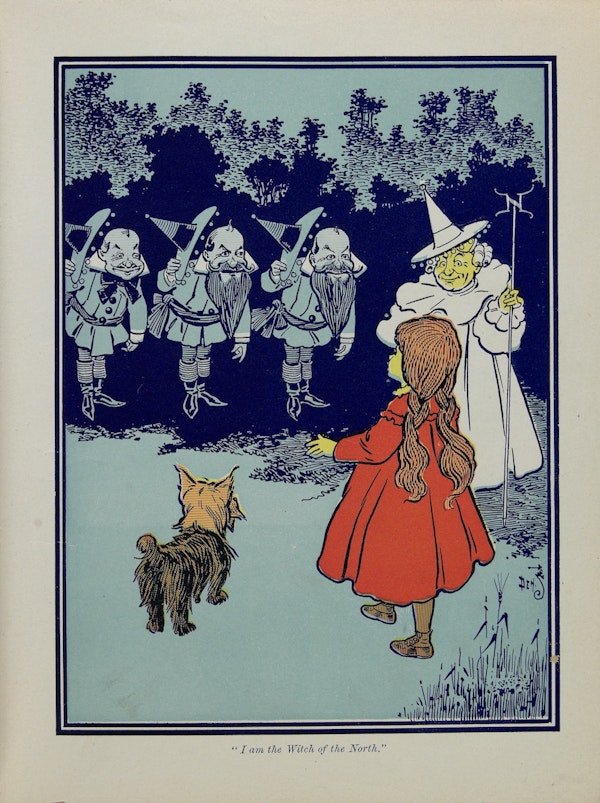
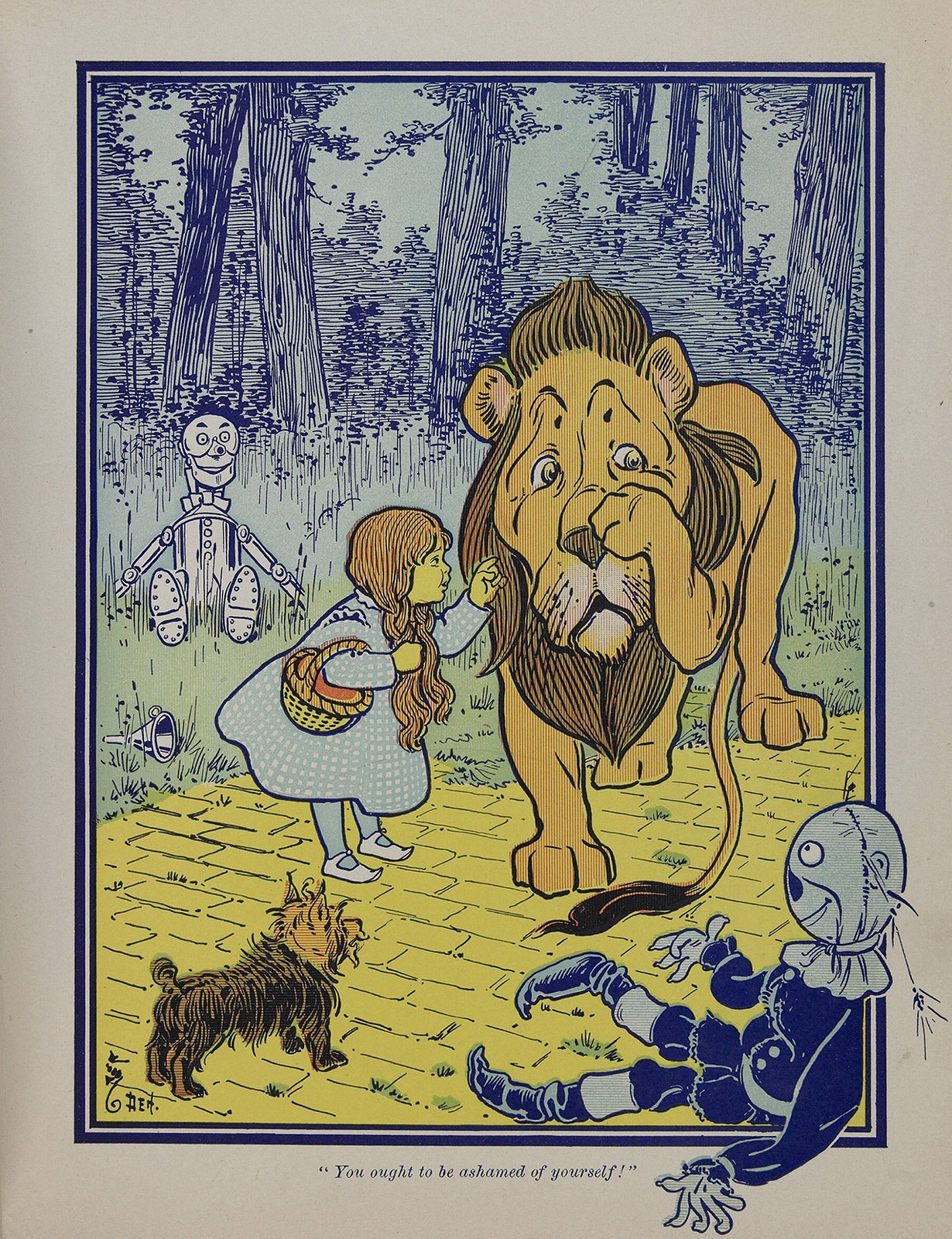
I mentioned the book is illustrated. There are at least a hundred illustrations in this book by William Denslow. Here are a few examples; many of them are in full color in the original publication.


She might be a good witch, but she ain't a beauty queen.


Shirley Temple might have been a better fit for the character, at least age wise; Judy Garland was sixteen years old, whereas Dorothy in the book is about seven.

Those are called Kalidahs, with the body of a bear and the head of a tiger. Nasty critters that would make a great addition to a fantasy role-playing game. Better than an owlbear, anyway.

This was the only Oz book illustrated by Denslow; the remainder of the Baum Oz books were illustrated by John O'Neill. I like both artists, but there is definitely something magical in Denslow's work. Even though our cultural identification of the characters is defined by the movie, Denslow's art is evocative and memorable enough to challenge the dominant images of Garland, Ray Bolger, and Margaret Hamilton.

This is a book every child should read. It is one of the all-time classics of children's literature, incredibly imaginative and still inspiring people 122 years later.

But, you know what? The sequel is actually better.

Sunday, February 14, 2021

Arabian Nights, Nights 9-12

Man, that last post was a long one, wasn't it? And believe me, I'm condensing the stories as best I can. The thing I noticed about the last four stories was that there weren't any jinnis, other than the one the fisherman was bargaining with. There was an ogress, a really stupid prince, an even stupider king, and a nasty witch who turned her cousin/husband into a half-pillar of stone because she wanted to play the close-buttocks game with an ugly leper slave. Icky.

So, let's continue with NIGHT NUMBER NINE.

When last we left, the king pretending to be the lecherous, leprous slave had tricked the witch-queen into reversing the curse on the prince, and she was about to free the city, as well. And so she does, and the fish stand up and become men again. The lake becomes a city, and the curse is gone. So, she goes back to her "lover" and the king slices her in half, then quarters, just to be sure. Well, she would have turned him into a newt or something, if she could have. But that was it for the nasty witch, and the prince was quite thankful and happy. Now, the two of them left, the King adopting the Prince as his son, since he didn't have one anyway. Hurray! Happy endings all around!

Except that the story doesn't appear to be done yet, as they head back to the Sultan's palace, with an escort of Mamelukes. I should mention that these guys are military slaves, soldiers owned by the sultan or king. Historically, they were common in the Ottoman Empire, and often acted as administrators and even rulers of some cities. There, some history in your entertainment!

Back to the sultan, who rewards the fisherman (remember him?) by marrying one of his daughters, marrying another one off to the prince, and making the fisherman's son the head treasurer of the kingdom. One has to wonder if that son had any experience with making monetary policies for a kingdom. I would guess 'no,' which makes him qualified to run the Federal Reserve.

Anyway, that is the end of the story of the Fisherman and the Djinni, finally. But Scheherazade informs her husband that she has an even better story to tell:

The Porter and the Three Ladies of Baghdad.

This story starts in Baghdad, where a porter, who happens to be a bachelor and planning to stay that way, comes across a woman who would be a leading lady in Bollywood today. She's so gorgeous that he almost doesn't hear her hire him, but he readily takes the job and starts carrying her stuff. She does some shopping, and he gets to follow around this stunning beauty all day, thinking he's got it made. We get a lot of descriptions of the things she's buying, and this guy must be built like Arnold Schwarzenegger to carry it all. I don't think it would all fit in the trunk of my car, you know? But he's following her like a faithful puppy dog, carrying whatever she buys. It's enough to feed an army a seven-course mean and have leftovers. He finally notes that had he known what she was going to do, he would have brought a pony or a camel to help. She tells him that the reward will be worth it. Having read ahead, I can't disagree.

The shopping spree takes two pages, then she finally leads him to a mansion. She knocks, and while the porter is still thinking how hot she is, another woman opens the door, and she's even better-looking than the first one. She's so beautiful that the description of her takes up half a page, including some poetry. Well, the porter is just beside himself (not really, but having a twin would have helped with the carrying). The shopping girl tells the other one to help the porter with his stuff, and they invite him in. And there in the mansion is yet another woman, the best-looking of the three. They take the merchandise from him and toss him a couple of gold dinars, but he's still dumbstruck by the bevy of beauties and doesn't leave. So, they throw him another coin, but he's not worried about the money, and flat-out suggests that three women all alone need a fourth to keep them company. And wouldn't you know it, that line works on them, but they don't want to give up their secret, which we don't know what it is yet. He assures them that he is good with secrets, and they finally agree to let him stay with them.

After the first few stories, I'm sure you can guess where this is leading. And Scheherazade does not disappoint. They do some partying and drinking, then some drinking and partying, until the girl that was doing the shopping finally strips down and jumps in the pond in the courtyard. Then she gets on the porter's lap and starts asking him what he calls her privates. Yeah, I'm being delicate; trust me, the book is not. Not even close. But here's where it starts to get weird. Every time he guesses, he's wrong, and she smacks him around for a bit. Stark naked, mind you. The writers of these stories were into some kinky stuff. Finally he turns the tables and asks what she calls it. And she gives him the answer: "The basil of the bridges."

More partying and drinking, and the second woman who answered the door repeats the same scenario as her sister did, including the beating him until he's sore when he guesses wrong. She calls it 'the husked sesame seed'. Third time's the charm, and the last woman goes through the same procedure, and calls it...'the Khan of Abu Mansur.' Yeah, I don't get that one either. There doesn't seem to be any sort of clue or point to all this except to include a picture of one of the naked women cavorting at the porter's feet. Well, whatever floats the reader's boat, I guess.

Anyway, the porter decides to play as well and gets naked, swims around, and then asks them to name his special party favor. They start guessing...and Scheherazade stops her story there. I'm sure the king was really excited to keep hearing this story the next night. But, she lived another day, and thus we come to NIGHT NUMBER TEN.

The story picks up again with the ladies still guessing, and he turns their own secret names back on them. I'm not going to get more detailed than that; my son wants to read my blog. So, the party goes on, and while it's not explicit, it's pretty obvious what goes on after that. So, we'll skip to later on, where they tell him he can't stay the night unless he promises to do as he's told, ask no questions, and read what's written above the door. He does, and it says, 'Whoso speaketh of what concerneth him not, shall hear what pleaseth him not.' He agrees to their conditions, probably because he's already having the time of his life and doesn't want to stop. They start eating the magnificent feast the shopping girl bought, and then there's a knock at the door.

One of the girls opens the door, and there are three one-eyed men with shaved heads out there, called 'Kalandars,' who are looking for a place to stay for the night. She convinces the others to let them in, figuring they can have some fun with them. So the Kalandars come in and are pretty impressed with the place, and think the porter (who is drunk and has been bruised pretty badly by the three women) is a beggar like they are. He takes offense, but the girls quickly make peace between them, and they join the feast. The beggars get some musical instruments and begin to play, which draws outside attention, and there's another knock at the gate. This time it's the Caliph Harun al-Rashid, his bodyguard Masrur, and his vizier, Ja'afar, and anyone who's seen a Disney movie knows that name. Actually, Burton informs us in the footnotes that these are historical figures, who will show up often in these stories.

The Caliph is looking for a party as well, and the vizier suggests this isn't the best place to do so. But the Caliph has the final say, so of course the girls let them in. Ja'afar says that they are merchants from out-of-town, not disclosing their true identities just yet. They get the same condition that the porter and the Kalandars got, which is to shut up and not ask questions about stuff that doesn't concern them.

The party goes on for a while, although I will hasten to point out that everyone is clothed; they're mainly eating and drinking. Then the girls have something they have to do, and the table is cleared off. The men are told to sit in various couches, and you would think this is going to lead to another story I am going to delicately gloss over. You would be wrong; it's a whole different kind of weird. The shopping girl tells the porter to give her a hand, and they bring out two black women from a closet, with chains around their necks. They then proceed to whip them and, when finished, hug them and kiss their foreheads.

I'm not really sure how to describe this stuff; it's just weird. I can't even make snarky comments. Needless to say, the Caliph is curious as hell as to why they're doing this. He's not upset by it, but he wants to know what's going on. Ja'afar reminds him that they promised to mind their own business. Then one of the girls...you know what? This is just too weird to explain. It turns out she's got scars and welts on her back as well (which the porter didn't see earlier when she was bouncing naked on his knee, but whatever), and finally the Caliph demands to know what's going on. The Kalandars are wondering what they've gotten themselves into as well. The men gang up and demand to know what these girls are up to. The girls reply by summoning seven black slaves with swords and order them to tie the  men up together by the elbows. They'll question them before having them decapitated. The porter protests that he didn't break his promise...and Scheherazade stops.

Believe me, there was a lot of weirdness in the part I skipped over. Maybe it will get explained later, but not so far. I told you, this is definitely not the Disney version of these stories.

Moving along, Scheherazade continues on with NIGHT NUMBER ELEVEN.

So, the lady starts questioning the men; the Caliph tells Ja'afar to tell them who he is before something bad happens; Ja'afar points out that he earned it, which doesn't do wonders for his employer-employee relations. The lady starts with the Kalandars, and asks them some questions about who and what they are. It turns out that all three are princes from different countries, and each of them has a story about how he lost his eye and became a wandering mendicant. Coincidences are a big thing in these stories.

The ladies let the porter go, but he wants to stick around to hear the stories, which is good, since that's the point of this entire exercise. So, one of the one-eyed men steps forward and begins to tell:

The First Kalandar's Tale.

This guy is a prince, with a cousin who was born on the same day as him. The cousins grow up to be great friends, and one day while dipping heavily into the wine together, the cousin asks the prince to help him with something really important and not to stop him from doing it. 'No problem,' says the prince, and the cousin leaves, coming back with a veiled woman. He asks the prince to take the lady to a specific burial ground and go into a sepulchre (sort of like a tomb) and wait for him. No, that's not at all ominous.

The prince does what he's asked, and shortly after the cousin arrives, carrying water, mortar, and a trowel. He opens a hole in the sepulchre's floor, then digs through the dirt until he reaches an iron plate. Below it is a staircase, and he tells the woman to make her final choice. She goes in, and the cousin asks the prince to put everything back the way it was, including the flagstones on the floor so no one can tell they went down there. He'd been working on this place for a whole year in secret. He then goes down, and that is the last time the prince sees him. He bricks up the place as requested, still a bit tipsy from drinking.

The next day, the prince regrets what had happened, and wonders if it was all a dream. No one has seen the cousin, and the prince goes hunting for the sepulchre to no avail. He repeats this for a whole week, until he heads home to his father the Sultan (not the same sultan as in the previous story). On the way, though, he gets attacked by rioters; it turns out that his father's rulership was in the process of being demolished by a mob. The prince finds out that his father's vizier had led a rebellion and overthrown the sultan, killing him in the process. This is a problem for the prince, since he had accidentally put out the vizier's eye with an arrow some time past. Sure enough, the prince gets brought, shackled, to the vizier, who orders him to be beheaded. The prince protests that it was accidental, to which the vizier decides to do it to him on purpose, and puts out his left eye. He then orders one of his swordsmen to bring him out to the wastelands, kill him, and leave him for the animals to feast on.

You remember Snow White? Yeah, same thing here, although the one-eyed prince doesn't sing about it. But the swordsman, who had served his father, lets him go and warns him never to come back or they're both dead. So, the prince returns to his uncle's home, telling him about the coup. The uncle is distraught because his son (the cousin, remember?) has been missing for a while. The prince tells him what the cousin had done, and the uncle goes with him to find the tomb. This time, they actually find it, and break into the trap-door. Going down together, they run into some blinding smoke. Continuing, they find a saloon, with tons of provisions handy, as well as a canopy over a couch. The uncle checks out the couch, and there finds the cousin and his lady together and naked, but burned to a crisp. The uncle then spits in his son's burned face and tells him he got what he deserved. And on that note, Scheherazade goes to sleep, and you just know the king isn't going to leave it at that.

NIGHT NUMBER TWELVE, and Scheherazade resumes the story. It turns out that the lady wasn't just some cute thing the cousin picked up; it was his sister (also the prince's cousin). Yep, let's add incest to the stories, because why not? She must have been veiled up pretty well for the prince not to recognize her, since he would have known her pretty well. And no one in the palace seemed to be wondering where she was, being the uncle's daughter and all. But, there it is, and the uncle flat-out says that Satan got hold of them both and drove them to unnatural lusts for each other. Well, at least they're saying incest is bad. That's a good sign, even though you have had cousins married in a few stories prior to this. I suppose 'cousin-marriage' wasn't considered as bad as 'sister-marriage' back then.

So, the uncle adopts the one-eyed prince as his son now, and they put the tomb back the way it was, leaving the charred couple to their eternal embrace. When they get back to the uncle's palace, they hear the marching of armies, and the vizier who had taken the prince's eye is on the conquest kick, wanting to take the uncle's lands as well, thereby assuring no challenger to his ill-gotten throne. And he's hired a bunch of mercenaries, so he's got the upper hand. The uncle is killed (orphaning the prince once again), and the prince escapes by shaving his head and dressing up like a beggar, leaving the city and heading for Baghdad, where he fell in with the other two Kalandars and found the ladies' house.

His story impresses the ladies enough that they let him live, and then we hear:

The Second Kalandar's Tale.

This one was a prince as well, highly educated and well-known across many lands for the breadth of his learning. A far-off King wanted to meet him, so he went to sea and sailed for a full month to get to the land of Hind. Unfortunately, before they get to the king's palace, a huge dust-storm comes up, and an hour later they are surrounded by a troop of fifty horsemen, who don't answer to the King of Hind, and don't care that the travelers are his invited guests. They rob them blind (no, they don't put his eye out), and the prince is left out in the wilderness with most of his entourage killed by the bandits.

He manages to find a cave in a mountain, then sets out the next day until he arrives at a city. Unfortunately, it's not the city he wants to go to; in fact, it's run by one of his father's blood-enemies, so if he announces his presence or reveals his identity, he's dead meat. He takes up work as a woodcutter, since nobody in this city cares about his book-smarts. He ends up working as a woodcutter for a year.

One day, he starts digging up a tree but finds a copper ring attached to a trap-door. Under the trap-door is a (surprise!) staircase, and down there he finds a beautiful woman. She asks him if he's a man or a jinni, and tells him that she's been there for twenty-five years without having seen any man in all that time. She is a princess, and was kidnapped on her wedding day (to her cousin, of course) by a jinni who locked her up here and shows up every ten days for a tryst, keeping her well-fed and comfortable but imprisoned. She can summon him at any time by brushing up against an alcove in the cavern. She's not happy about it, and since he's not due back for another six days, she tells the woodcutting prince that he's got five days to stay with her, with the implied rewards therein.

They get to partying and carrying on, and after some drinking and fornicating, he gets the idea to take her away from this place. She says no, that he's going to have to be content with getting nine days out of ten with her, but the jinni isn't to be crossed. Princey-boy had a bit too much wine in him, because he starts bragging that he can take down a jinni, and that in fact he was an expert in doing just that. She argues with him that suicide isn't painless, but he gives the alcove a swift kick--

And Scheherazade ends it there. Another cliffhanger, and we're done with this post as well. At least we've got another jinni; it's been a few nights without one showing up. There wasn't much magic in these four nights, except for the witch-queen who got sliced and diced at the beginning of Night Nine, just a bunch of people running into a whole pile of weird coincidences. Oh, and sex, because that's a big thing in these stories. As you can tell.

So, that's it for this one; come back for the next one, where I'll close the gap between where I've read and where I am in these posts. I'm reading Night Seventeen tonight, so I'm almost caught up. I'm going to try to summarize the stories a bit better in the future, since these posts are quite long.

Friday, February 12, 2021

The Thousand Nights and a Night, Nights 5-8

Salaam and good evening to you, worthy friends. Please, come closer...

Too close! A little too close! I--

Oh, sorry; flashback. It's time to follow the continuing adventures of Scheherazade's imagination, and I'm going to post four nights at a time until I'm caught up. Which will take a while, since I just finished reading Night fifteen. But it will happen.

So, when we last left Scheherazade and her psychotic wife-murdering husband, she had been just about to tell how the king told his vizier the tale of:

King Sindibad and His Falcon.

No, this isn't that Sinbad; he shows up later. This is a king who had a prized falcon and carried it with him everywhere and all the time. The story doesn't specify, but I wouldn't be surprised if the bird sleeps at night on his arm, too. So, the king goes out hunting one day, because that's what kings do, and challenges his huntsmen that whoever lets the gazelle jump over his head will be executed. Well, you know what happens next, right? The huntsmen point and laugh at the king when the gazelle swan dives over his head and runs away. The king calls a mulligan and chases the gazelle into the mountains. When he catches up to it, he lets the falcon finish the gazelle off and does hunting things to it afterward to package it up for the trip home. Being thirsty, he sees a tree that is dripping water, like melted butter. So he takes a cup and fills it up, offering it to the bird, which promptly turns the cup over and spills it. The king tries it again, with the same result, and a third time. Irritated with the vexing falcon, he thinks the bird is somehow defective, and he cuts off her wing with his sword. That's a bit extreme, don't you think? Especially since it was his favorite bird and all. So, they dying bird points with its remaining wing up into the tree, and the king looks up to see a whole bunch of snakes, dripping poison from their fangs.

Are there any snakes that actually do that? That seems a bit much. So, he takes the dead bird back with him, along with the gazelle. And...that's it, except for the king's wailing and gnashing of teeth, but that's pretty much standard for stories like this. And the other king (the one telling the story, not Sindibad) starts another story right away, telling his vizier the tale of:

The Husband and the Parrot.

Basically, this is a story in which the husband has to go on a long trip, and buys a parrot to leave at home to keep an eye on things and tell him what went on while he was gone. That's a pretty smart parrot. And of course, every husband who leaves his wife in these stories suffers the same fate: She cheats on him. Although this is the first of these adultery stories in which she's not with a black man. Variety is the key to good storytelling, after all.

So, the wayward husband returns from his business trip, and the parrot dutifully tells him that his wife entertained a young man every day while he was gone. Well, he's not going to take that sort of disrespect, and goes all Mike Tyson on her. After the bruises heal, the unfaithful wife figures that one of the slave-girls tattled, and interrogates them. One of them admits that the parrot was the culprit, and so as soon as the husband leaves on another trip (do they never learn?), she gets the slave-girls to set up a hand-mill right under the cage and grind whatever they can, sprinkle water through the roof of the cage, and run around the room flashing bright lights with a mirror into the cage. She could have put the bird under a sheet and hung the cage outside, but I guess she wanted to give the slave-girls something to do while she entertained her boy-toy.

The next morning the husband returns, and this time the parrot's got nothing to report except the stormy weather it experienced throughout the night. Since it was mid-summer and there was no storms, the husband thinks the parrot screwed up and kills the bird. Of course, it's only a few days later that one of the slave-girls tells him what really happened. So he lies in wait until the young fellow comes out of his wife's bedchamber, at which time he beheads them both like any sensible cuckolded husband would do.

What? Just me? Carry on, then.

So, that's the end of the king's stories, but the vizier counters with a story of his own. In Scheherazade's world, nobody can take any course of action without reciting a moral lesson in the form of a wild story. The vizier tells his king the tale of:

The Prince and the Ogress.

Well, that's encouraging; no jinni or ifrit this time around. So, a young prince goes hunting (like I said, it's really common), and his trusted (and totally not trustworthy) vizier sends him after a big animal (what kind is not specified, but how many big animals are there in the Arabian peninsula, anyway? Seriously, other than camels and horses, are there any?). The prince gets lost, but runs into a crying damsel. She claims to be a princess who fell asleep while part of a caravan and fell off her horse, being abandoned by the caravan's crew.

Okay, if he doesn't immediately figure out that she's a lying ogress, I'm done with him. Seriously, it's in the story's name! Besides, what caravan is going to continue on while the princess slips into a coma and falls off her horse? Come on! Of course, he isn't a complete moron, and sees right through--

Oh. No, he falls for it completely. Look, I'm a guy, and I'll be the first to admit that I'll pay close attention to a pretty face. But there isn't a woman alive that could make that story believable. This guy is an absolute idiot. She should just go ahead and eat him; the gene pool will thank her later.

So, the moron takes her on his horse, and as they are riding, they pass a ruined building. She actually calls for a potty break! Prince Moron waits while she disappears into the ruin, wondering what's taking her so long. Apparently constipation wasn't a problem for these people. Finally, he goes to find her, and stumbles across her looking much different. Spoiler alert: She's really an ogress, or a 'ghulah' in this story. In the footnotes, Burton compares her to a lamia, Lilith from Hebrew myth, and Baba Yaga. And she's telling her family about the succulent meal she just brought them. I hope they don't believe in 'you are what you eat,' because this meal will make them grossly stupid.

So, Prince Moron turns and runs like hell back to his horse and--what? He just stands there shaking while she comes back out (is she disguised again? I think so, but it's not made clear). She asks him what's wrong, and he says he spotted an enemy that he's scared of. And now her brains dribble out of her head, because she suggests he buy off his enemy so he can leave in peace. But no, this enemy wants nothing but his life. And then...seriously, this happens. The ogress, the demonic hellspawn that wants to eat him, tells him to pray to Allah, who will surely protect him. And he does. And, guess what? IT WORKS! She turns away from him and leaves! That's like a coach drawing up a play for the other team, letting them run it, and getting fooled by it! This is easily the stupidest story so far. I feel like I lost IQ points reading it.

Oh, but here's the best part. The prince gets home and blames the vizier for what happened to him, and the king executes the vizier! What?! What did the vizier have to do with it? He didn't summon the ogress from the pits of Hell and send it after the idiot prince! He's the one who was stupid enough to fall for the girl's story, not the vizier!

But, the vizier (the one telling the story, not the one who got beheaded in the story) thinks this is a story that will convince the king to kill the guy who healed him (remember him?). And lo and behold, it is. Somehow, that story convinces the king that the man who healed him from advanced leprosy is really a spy plotting his death.

So, the king summons the healer, who shows up expecting to get more rewards, and he's humming poetry and having a great time, praising the king in his songs. So, he comes to the king's throne, bows, and the king informs him that his reward for his service is to be executed as a spy. This doesn't exactly sit well with the healer, whose name is Duban, by the way. He protests, but the king is adamant, because he's as stupid as the prince in the vizier's story. Maybe that's why the vizier picked that story; it's important for the audience to identify with the main character.

Anyway, Duban tries everything to keep his head attached, but the king isn't having it. Finally, Duban acquiesces to his fate and asks permission to return home and take care of his debts and hand out his books on medicine. Oh, and he'll also bring the king a gift, a book of secrets that will allow the king to make Duban's head continue to speak even after it's removed from his body. This impresses the king, who agrees to Duban's request, because he's an idiot. So, Duban goes and does what he promised, pays off his debts, distributes his books, and makes funeral arrangements. See, I would have hopped onto the nearest camel and high-tailed it out of there. But Duban is wiser than I, because he comes back. Wait. Did I say wiser? I meant he's a moron, too.

Or is he? Because he instructs the king on what to do when his head is removed and put on a platter covered with a special powder. And then...slice! The head comes off, and they put it on the powdered platter, and sure enough, the head begins to speak, instructing the king to turn the pages and read three lines from each page. He does so, because he's still an idiot, even though the pages are blank. And, to the surprise of no one, the pages are poisoned, and the king's been moistening his finger to turn the pages, thus licking the poison, and he dies just before the head does.

Got all that? Good, because all that was the story told by the fisherman to the ifrit after shoving him back in the jar. Nested stories, remember? Oh, and that's the end of the fifth night.

Night six, and Scheherazade goes back to the fisherman, telling the ifrit that he's going to suffer the same fate because he threatened to kill the fisherman for the crime of letting him out of his thousand-plus-year imprisonment. The ifrit is still begging for mercy, even teasing a story of his own, but refusing to tell it unless he's released. Then he makes a vow and a covenant with the fisherman, promising that he absolutely won't kill him, and he'll even help him with his fishing since that's what caused all the trouble in the first place.

Bolstered by the promises of the totally trustworthy demonic and psychotic spirit-creature, the fisherman agrees, and the ifrit swears by Allah to do exactly what he said. Okay, so he's actually going to follow through on the promise not to kill the fisherman. Great! He opens the jar, and the ifrit comes out, then punts the jar way out into the sea. This does not boost the fisherman's confidence, and he literally pisses his pants, then reminds the ifrit that he promised Allah he'd be good.

The ifrit leads him into the wilderness beyond the city, and they find a mountain-tarn (a small lake). The ifrit wades in and invites the fisherman to follow him. When he does, he sees that he is surrounded by multi-colored fish like he's never seen before. We're not getting that story the ifrit promised, apparently. Can't trust an ifrit, can you? Altough the fisherman did, and now he's got some pretty fancy fish. The ifrit tells him not to fish more than once a day, and then leaves, without killing the fisherman. Okay, then.

Still with me? Good, because here is where the story gets complicated. The fisherman takes four of these fish and puts them in a bowl, then brings them to the king's palace as a gift. The king is just as impressed as the fisherman, because despite having been king of these parts for a long time, he's never seen fish like these. So naturally, he has them sent to the kitchen for frying, paying the fisherman four hundred dinars for the catch. Nice deal. Not the same as getting a princess for a bride, but then he's just a fisherman.

Meanwhile, the cook starts cleaning them and frying them, just like you're supposed to do with fish. But then a gorgeous young woman comes in through the wall, dressed to the nines, and starts talking to the fish about their covenant while sticking a wand in the pan. The cook faints, so she misses the part where the (cleaned, deboned and frying) fish raise their heads from the pan and reply, singing a song while they're at it. The girl flips over the frying pan and goes back through the wall, which closes up behind her. When the cook comes to, she sees the fish burnt to a crisp. So, naturally, she faints again. Because no one has ever burned multi-colored fish in a pan before. The vizier shows up, demanding the fish. So the cook tells her what happened, and the vizier slaps her around for making up such a ridiculous story.

No? Oh, he just sends for the fisherman to get more fish. He does, and the whole scene repeats again. At this point, Scheherazade ends her story for the night, much shorter than the previous night was.

Night number seven, and once again the girl with the magic wand makes the fish get up and dance in the frying pan before disappearing. This time, the vizier witnessed it, so he goes to the king, who wants to see it for himself. So the fisherman is summoned to get yet another batch of fish, and the whole scene starts all over again. Except this time, it's not a pretty girl that comes through the wall; it's a huge black slave (how do we know he's a slave? I don't know; it just says he is), who bursts in like the Kool-Aid Man and does the same trick with the fish before leaving.

So now, having seen it with his own eyes, the king is intrigued and wants to know more about these fish. He interrogates the fisherman (politely; he kept bringing him fish, after all) and finds out that the fishpond is only half an hour away from the city. So the king takes a group of men, and with the fisherman as a guide (who is now cursing the ifrit for putting him in this position), heads off to the mountain-tarn to see these magical fishes. And...now the wilderness is a desert? That's a lot of soil erosion in two days. But they find the tarn anyway, which none of them have ever seen before despite having lived all their lives in this region.

Having set his guards up around the perimeter, the king tells his vizier that he has a gut feeling that he has to figure out the mystery of this fish-tarn. He orders the vizier to guard his tent and pretend he's in there, sick, while he heads off somewhere (with guards all around the place; is this king secretly a ninja?) to solve the mystery. He changes clothes and takes his sword, and it's two days of a march before he finds a palace. Two days from the tarn? How does he know they even know about it, since he only lived half an hour away?

But, this being a fantasy story, of course he gets some answers. Of a sort. The place is deserted, and wandering around he finds that it's beautifully furnished and full of rich treasures. But he also hears a lamenting voice singing a dismal and depressing song. Looking around, he finds a young, handsome prince who is sitting on a couch...because the lower half of his body is encased in stone due to a curse. Naturally, the king wants to know how this happened, which leads us to the tale of:

The Ensorcelled Prince.

The prince tells the story of how he married his cousin (like I said, this isn't uncommon in these stories), and thought that it was a happy marriage. I'm sure that by now, you can figure out what's going on, and what she's doing, and who she's doing it with. Hey, the variety was in the last story, remember? Back to the usual. The slave-girls betray her secret, and he learns that she's been drugging his wine to make him sleep so she can go and have her fun. So, that night when she drugs the wine, he only pretends to drink it and fall asleep, then he follows her to the slave quarters of the city. We're talking slums here. She goes into one of the mud-brick huts, and the prince climbs up to a hole in the roof to see what's going on. Sure enough, she's shacking up with a 'hideous' black slave with huge lips, who is also a leper and a paralytic. Seriously? I mean, I've heard the phrase, 'once you go black, you never go back,' but come on! Is this prince that much of a loser in the sack? Or is she just into some really kinky stuff?

And get this: She's apologizing to the slave for being late! And she's running down her husband, calling him all kinds of ugly, asking the slave to forgive her and promising that she's only for him. And he's not buying it! And the cuckolded husband is still up on the roof, watching through the skylight (hole in the roof) as she strips off and begs for some food, which turns out to be rat-stew. Yikes. And then she climbs into bed with her leprous lover, which finally sets off the prince, who comes down and swings for the neck...and Scheherazade is done for the night.

One more to go today. And apparently, this prince sucks at swordfighting, because he missed the guy's neck, only slicing a couple of arteries. Oh, is that all? But the tramp wakes up (she fell asleep that fast? Before they actually did anything?), and the prince leaves. Seriously? He just goes home and waits for her to come back. And she does, not having seen who actually attacked them.

And in the morning, she comes in to their bedroom and tells him that she needs to leave for a while She's in mourning; her hair is cut, and she's wearing black. Then she recites a country song to him, saying that her mother is dead, her father was just killed in a jihad, and one of her brothers died of a snakebite, and the other fell off a cliff. Laying it on a bit thick, isn't she? Of course, this prince isn't as much of an idiot as the other one was; he knows she's lying. But he lets her go, and she builds a cenotaph and sneaks her not-dead-yet slave-lover inside to tend to him. Even without the 'close-buttocks game' action going on, she's still attached to this guy. This goes on for two whole years, until the prince catches her crying about her broken heart. He tries to get her to stop her mourning, but she threatens to kill herself. I would have told her to go ahead, but that's just me.

She keeps it up for a third year, when he catches her inside tending to her mute and impotent lover. Finally, he's had enough, and he confronts her and admits that he was the one who cut the slave's throat. He even draws his sword to finish them both off, but she just laughs at him. It turns out that she's a witch, and she curses him to be half-stone. Then she curses the entire city, turning the entire thing into the tarn...and turning all the people therein into fish, color-coded by their religions for convenience. Yep, every white fish the fisherman caught and handed over to the king to fry was a Muslim. Not satisfied with that measure of revenge, the nasty woman gives the prince a daily whipping just to remind him who's really in charge. How good was this guy in bed, anyway? Because that seems like a severe overreaction on her part.

So, the King (who was trying to solve the mystery of the fish, remember) asks how he can help his fellow nobleman out of this horrible situation. The prince tells him where the slave is holed up, and the king goes in to see the slave lying there, as he has for the past few years. The king stays hidden, watching when the witch comes to whip her husband once again. Then she leaves him, going back to the cenotaph. And after she pleads with her lover to speak to her, the king twists his tongue and lays on a heavy accent, convincing her that he can't speak to her because of how she is treating her husband and his subjects. He talks her into freeing the prince from his stony prison, and she reverses the spell and orders him to leave on pain of death. Then the king, still faking an accent in the darkness, pleads with her to freeing all the people and restoring the city as well. She heads off to do just that...

And the night ends, and so does this very long blog post. Tune in next time to see what happens next!


Sunday, February 7, 2021

The Thousand Nights and a Night, Introduction

So, I said I'd do this on Sundays: A brief review/overview of Sir Richard Burton's The Thousand Nights and a Night, more commonly known to us today as the Arabian Nights tales. For the vast majority of us, our exposure to these stories comes from children's stories and Hollywood movies. And, in an extreme case, a Bugs Bunny cartoon. ("Open...Sasparilla? Open...Saskatchewan?" Ah, the classics never get old.) And the version of these stories we got was invariably family-friendly, with no indication that there even were any naughty bits to take out.

Surprise! This is the unexpurgated version of the stories. That means, the 'unedited' versions, with all the naughty bits left in and described in loving detail. This isn't your childhood Arabian Nights; this is Aladdin done by the Playboy Channel. And judging from the legacy left by Sir Richard Burton, the man who introduced the Kama Sutra to Victorian England, I have no doubt he enjoyed himself immensely.

So, most of us who are familiar with these stories knows how the framing story goes: Once upon a time, there was a king whose wife was unfaithful to him. He had her executed, then decided that all women were unfaithful by nature, so he began marrying young women every day, executing them the following morning to make sure they didn't cheat on him. The vizier's daughter, Scheherazade, worked up a plan to stop the murderous king. When she married the king, she had her younger sister show up before they went to sleep and ask for a story; the king assented to the story, and she told an enchanting tale, not finishing it before the end of the night, and thus the king kept her alive to continue telling these marvelous stories for 1,001 nights before he realized that he loved Scheherazade and she wasn't unfaithful to him after all. And they all lived happily ever after.

Yeah, right. That's the kiddie version. Here's how it actually went down. Brace yourselves; this is going to be a wild ride.

First of all, there were two brothers, both kings. The older, Shahryar, invited the younger, Zaman King of Samarcand, for a friendly visit. As he was leaving, Zaman realized he'd forgotten a gift for his brother. Going back to get it, he finds his wife in bed with a black slave. This didn't sit well with him, and he sliced them both in half with his trusty scimitar. This depressed him, however, and he went to his brother's kingdom feeling quite rotten about the world.

His brother was happy to see him, and did everything he could to help his brother. After a month of so, he invited Zaman to go hunting, but the younger man refused. So, as King Shahryar went hunting, Zaman wandered the palace by himself until he looks through a window and sees his brother's wife and twenty-one other people (including her husband's concubines, so the whole notion of 'faithful marriage' doesn't really fly here) go into a secluded courtyard. And as he watches, they all strip down and go to town in a wild orgy.

I told you, this is wild stuff, especially for Victorian readers. Did I mention that this wasn't available to the general public, but only by special subscription? Yeah.

Anyway, the revelation that his brother's wife was an even worse cheat than his own cheers Zaman up, and while he doesn't explain himself, Shahryar is happy to see him in better spirits. But when he presses Zaman for details, Zaman really, really doesn't want to tell him. But eventually he gives in, and after they leave on a fake hunt, they come back and watch the courtyard in secret, and sure enough Mrs. King and her friends get down and dirty once again. Shahryar and Zaman aren't quite sure how to respond to this, so they just leave the palace altogether in search of someone who has suffered the same indignities that they have.

Well, they run into a Jinni, or at least see him before he sees them, and he's got a beautiful woman with him. These genies are not like Robin Williams at all, by the way. Anyway, he boasts about how awesome he is because he kidnapped her from her wedding night so he could have her virginity all to himself. Nice guy, isn't he? Anyway, he gets drunk and goes to sleep on her lap. She spots the two wayward kings and because she hates the jinni so much, she demands that they get to know her in the Biblical sense, or she'll wake up the jinni to kill them. So, they both give her what she wants, and then she takes their seal rings, adding them to her collection of over five hundred rings.

We haven't even gotten to the Scheherazade part of the story yet.

So, after leaving the jilted jinni, they head back to Shahryar's kingdom and decide that all women are naturally unfaithful. Zaman heads home after Shahryar has his wife executed and makes the vow to begin the marry-screw-kill game, except he does all three with the same girl, all within twenty-four hours. Zaman doesn't show up again before the thousand nights stories happen, so I don't know what he does when he gets home. King Shahryar spends three years doing this every single day, until his chief Vizier can't find any more virgins to sacrifice. Here is where Scheherazade enters the story.

See, Scheherazade and her sister Dunyazad are the vizier's daughters, and Scheherazade insists that she be the next girl to be married to the king. Obviously, the Vizier isn't thrilled with this plan, and he gets to tell the first story in his attempts to stop her crazy plan. That story is the Tale of the Bull and the Ass (Donkey), and it's a fable about an overworked bull who complains to the donkey about his situation. The donkey advises the bull to just roll over and refuse to work or eat. So, when the bull won't do the job, the farmer (who, thanks to a blessing from Allah, understands the language of the animals and knows exactly what's going on) drags the donkey to the plow and makes him do the bull's work while the bull relaxes and spends the day in the spa.

So, the donkey convinces the bull that the farmer's going to send him to the butcher shop if he doesn't get back to work the next day. End of the story, right? Wrong. Now we get the farmer laughing at the banter between the animals, and his wife thinks he's laughing at her. He can't reveal that he knows the language of the animals, or else Allah will strike him dead. She's not buying it, and demands that he tell her, even if it literally kills him. She nags him until he's about ready to tell her just to get it over with and die in peace, and as he's putting his affairs in order he overhears the dogs and chickens talking about it, and the rooster points out that if he can handle fifty hens on his own, the farmer should be able to handle one wife, and advises that he do so in the traditional manner, by beating the crap out of her with a stick until her curiosity is satisfied.

I'm paraphrasing a bit. But you get the idea. Anyway, the farmer follows the rooster's advice, and the Vizier finishes the story by saying he'll do the same thing to Scheherazade if she tries to become the king's next sacrificial bride. However, she doesn't budge, and since the Vizier doesn't have any options, he goes to the king and finally tells him about Scheherazade. She, of course, has the plan I mentioned above, although there's a detail here that didn't make it into the stories I read when I was younger. See, before the king gives her the bridal poke, she asks him if her sister can be there for her last night on earth. The king agrees, and Dunyazad is brought into the room. And then they consummate the wedding, with the sister sitting on the floor nearby.

And then Scheherazade and Dunyazad start the bedtime stories. And this entry is long enough as it is, so I'm going to follow in Scheherazade's footsteps and keep you in suspense as to what stories she is telling the king.

So, like I said, this is definitely not the kid's version of the stories. I'm definitely keeping these books away from my twelve-year-old son; he can read the kiddie version instead for now. I'm not being a prude, but really, this isn't suitable material for young minds.

I will say, though, that it's a good thing the king agreed to hear the stories; if he'd just rolled over and started snoring, the book would have been a lot shorter...

Tuesday, February 2, 2021

Book Review: The Moon Pool, Abraham Merritt

This review is not of the 1919 published novel called The Moon Pool. This is actually a review of the original novelette that Merritt published in the June 22, 1918 edition of All-Story Weekly. This was his third published story, following Through the Dragon Glass and The People of the Pit, also published in All-Story Weekly. But this one was the breakthrough, the one that got everyone to sit up and take notice. It was so popular that the publisher asked Merritt to write a sequel. That was published in six parts in early 1919, as Conquest of the Moon Pool. The two stories were then mashed together and edited to create the version that most people who are familiar with the story at all remember the best.

That last part was a convoluted way of saying 'not too many people know about this guy anymore.' But man, he can write a ripping yarn. Merritt's total output is not very heavy; nine novels and nine short stories during his lifetime, with a few fragments published years later. But the influence he laid on the fantasy/weird/horror genres cannot be underestimated.

The Moon Pool is framed as a 'someone told me this' story, wrapped in the conceit of a 'scientific' organization to lend the tale authenticity. The story takes place on a ship in the South Pacific, where Dr. Goodwin encounters an old colleague, Dr. Throckmartin, who is not the man he used to be. The story is told from Throckmartin's perspective as he relates the horrifying tale of what befell himself and his small group of scientists who meddled with things they should have left alone.

According to Throckmartin, his wife, her maid, and his assistant went to the island of Ponape in the Carolines, where the natives warned them to stay away from the island on the nights of the full moon because bad things would happen. Naturally, being scientists, they disregarded the native superstition and determined to study the ruined city of Nan-Matal by the light of the full moon. Oops.

The story seems cliché to modern eyes, but that's because it's men like Merritt and Burroughs who created those clichés in the first place with their incredible stories that truly took popular fiction to places people had never imagined before. They were fresh ideas at the time, and need to be read in that vein. Merritt uses the newness of those clichés to write a tale that drips with weird menace on every page. As Throckmartin tells the tale, the sense of unknowable terrors continues to grow, even as the reader's mind reels at the impossibility of the story. By the end, Throckmartin's fate is sealed, and Goodwin is left with knowledge that would shatter a lesser man.
"Good God!" breathed Throckmartin, and if ever the words were a prayer and an invocation they were. And then, for the first time—I saw—it!
Nearer and nearer it came, borne on the sparkling waves, and less and less grew the protecting wall of shadow between it and us. The crystalline sounds were louder—rhythmic as music from another planet. Now I saw that within the mistiness was a core, a nucleus of intenser light—veined, opaline, effulgent, intensely alive. And above it, tangled in the plumes and spirals that throbbed and whirled were seven glowing lights.
Through all the incessant but strangely ordered movement of the—thing—these lights held firm and steady. They were seven—like seven little moons. One was of a pearly pink, one of delicate nacreous blue, one of lambent saffron, one of the emerald you see in the shallow waters of tropic isles; a deathly white; a ghostly amethyst; and one of the silver that is seen only when the flying fish leap beneath the moon. There they shone—these seven little varicolored orbs within the opaline mistiness of whatever it was that, poised and expectant, waited to be drawn to us on the light filled waves.

Intense, isn't it? And very descriptive. Merritt could turn on the vocabulary when he wanted to, and it shows. And as the story progresses, we know what is going to happen to each member of Throckmartin's party; it's as inevitable as the rising of the moon. But even so, the tale keeps drawing the reader in, making these old clichés seem fresh after all. Just wrap your head around the imagination required to write this:

"As I turned again to call to Stanton, my eyes swept the head of the steps and stopped, fascinated. For the moonlight had thickened more. It seemed to be—curdled—there; and through it ran little gleams and veins of shimmering white fire. A languor passed through me. It was not the ineffable drowsiness of the preceding night. It was a sapping of all will to move. I tore my eyes away and forced them upon Stanton. I tried to call out to him. I had not the will to make my lips move! I had struggled against this paralysis and as I did so I felt through me a sharp shock. It was like a blow. And with it came utter inability to make a single motion. Goodwin, I could not even move my eyes!

"I saw Stanton leap upon the steps and move toward the gateway. As he did so the light in the courtyard grew dazzlingly brilliant. Through it rained tiny tinklings that set the heart to racing with pure joy and stilled it with terror.

"And now for the first time I heard that cry 'Av-o-lo-ha! Av-o-lo-ha!' the cry you heard on deck. It murmured with the strange effect of a sound only partly in our own space—as though it were part of a fuller phrase passing through from another dimension and losing much as it came; infinitely caressing, infinitely cruel!

"On Stanton's face I saw come the look I dreaded—and yet knew would appear; that mingled expression of delight and fear. The two lay side by side as they had on Thora, but were intensified. He walked on up the stairs; disappeared beyond the range of my fixed gaze. Again I heard the murmur—'Av-o-lo-hal' There was triumph in it now and triumph in the storm of tinklings that swept over it. "For another heart-beat there was silence. Then a louder burst of sound and ringing through it Stanton's voice from the courtyard—a great cry—a scream—filled with ecstasy insupportable and horror unimaginable! And again there was silence. I strove to burst the invisible bonds that held me. I could not. Even my eyelids were fixed. Within them my eyes, dry and aching, burned."

Readers voted The Moon Pool the most popular story that All-Story Weekly published in the first half of the twentieth century. Reading it, it's obvious why; Burroughs wrote great adventure stories, and Dunsany wrote fantasy like no one before him or since. Doyle and Haggard created the 'lost world' stories, but Merritt synthesized it all together into a tale so powerful it inspired H.P. Lovecraft himself, the master of weird horror fiction.

So, why doesn't anyone know about this book? How is the man who wrote something like this so obscure today?

Frankly, the answer is Terry Brooks. Fantasy fiction prior to 1977 was a mixed bag, a field where literally anything could happen; Conan knock-offs could fight eldritch horrors on an alien starship and nobody blinked at the weird mix. Pulp fantasy authors from 1920 to the early 1970s were influenced by Dunsany, Burroughs and Merritt, and there were no limits to what they could imagine. Earth so far in the distant future that the sun was red and wizards schemed to steal ancient spells from their rivals; an alternate world where elves and faerie creatures fought a war against the Christian men; a tide-locked Earth where magic and science waged a war; and small hobbits could save the world from ancient evils through their compassion and determination.

All of these were familiar tales to the fantasy readers in the early 1970s. But in 1977, Terry Brooks changed all that with his Sword of Shannara, a book that many people have said is nothing more than a pastiche of the Lord of the Rings. And they would be right; while it is an entertaining read, one I have enjoyed in the past, it really is the herald of the future of fantasy. It's been said that almost all fantasy today is nothing more than people writing Tolkien-style books, epic trilogies with massive worldbuilding and grand quests. I disagree with that assessment; it would be more accurate to say that the majority of fantasy authors today aren't mimicking Tolkien; they just aren't good enough to do that. No, they are mimicking Terry Brooks in their attempts to mimic Tolkien. And that is why there isn't anything new on the shelves anymore; it's all just footnotes to Tolkien and Brooks.

It's a tragic situation, and one that needs to change. And the best way to change that is to bring back the writings of the old masters, the ones who started it all and made fantasy truly fantastic. The sooner we do that, the better. Abraham Merritt being obscure should be an absurd thought to any reasonable fan of science fiction and fantasy. It's no different than fans of vampire romances not knowing about Bram Stoker and Dracula. That's how seminal Merritt is to the fantasy genre.

So, do yourself a favor and check out The Moon Pool. You can find it in its original form at the Internet Archive. Believe me, you won't regret it. Although you might not ever look at the full moon the same way again.

And when you're done with that, you might want to check out my own contribution to pulp fantasy, starting with The Chronicles of Meterra: Arrival.