Showing posts with label Movie Reviews. Show all posts

Sunday, January 18, 2026

The Mask of Zorro (1998)


I can't believe I haven't reviewed this movie before. It's still one of my favorites. It's got action, adventure, humor, romance...really, it's very nearly a perfect movie. It never takes itself too seriously, but it never becomes a farce, either. The fact that it's got a measly 6.8/10 rating on IMDB shows that site is not to be taken seriously. Rotten Tomatoes is at 86%, which is better, but still short of the mark.

Here's the plot summary, via Wikipedia:

In 1821, masked swordsman Zorro defends the commoners of Alta California from Spanish oppression. Corrupt governor Don Rafael Montero sets a trap for Zorro at the public execution of three peasants. Zorro stops the execution, and Montero's soldiers are defeated by two young brothers, Alejandro and Joaquín Murrieta. Zorro fights the remaining soldiers and thanks the brothers by giving Joaquín a medallion. Montero deduces Spanish-born nobleman Don Diego de la Vega is Zorro and attempts to arrest him at his home. A swordfight and then a fire breaks out, and de la Vega's wife Esperanza, whom Montero covets, is murdered in the process. While the building burns, Montero takes de la Vega's infant daughter, Elena, as his own before imprisoning de la Vega and returning to Spain.

In 1841, Alejandro and Joaquín are bandits and conmen trying to steal a strongbox. They, however, fail and are caught by Captain Harrison Love, employed by Montero's company. Alejandro escapes, but a wounded Joaquín commits suicide. Meanwhile, Montero returns to California with the now adult Elena. Because of Montero, Elena believes her mother died in childbirth. Montero's reappearance motivates de la Vega to escape captivity. He encounters a drunk Alejandro and recognizes the medallion he gave his brother. He agrees to make Alejandro his protégé in order for them to take revenge on their respective enemies, Montero and Love. Alejandro agrees to undergo de la Vega's intense training in Zorro's secret lair underneath the ruins of his family estate, in hopes of being named his successor.

While still being trained, Alejandro steals a stallion resembling Zorro's steed Tornado from the local garrison, masked like "Zorro" and barely escaping. De la Vega scolds Alejandro, asserting that Zorro was a servant of the people, not a thief. He challenges Alejandro to gain Montero's trust instead. Alejandro poses as visiting nobleman Don Alejandro del Castillo y García, with de la Vega as his servant Bernardo, and attends a party at Montero's hacienda. There, he earns Elena's admiration and enough of Montero's trust to be invited to a secret meeting between noblemen. Montero hints at a plan to overthrow Mexican rule in California and proclaim it as an independent republic by buying it from Santa Anna, who needs money for the upcoming Mexican–American War.

Montero takes Alejandro and the noblemen to a secret gold mine where peasants and prisoners are used for slave labor. He plans to buy California from Santa Anna using gold mined from his own land. While walking in a market, Elena meets the woman who was her nanny. She tells Elena her parents' real identity. De la Vega sends Alejandro, now Zorro, to steal Montero's map leading to the gold mine. Zorro duels Montero, Love, and their guards at the hacienda. When he escapes, Elena chases him, attempting to retrieve Montero's map. After a sword duel, Zorro kisses her and flees.

Fearing Santa Anna's retribution, Montero decides to destroy the mine and kill the workers to leave no witnesses. De la Vega tells Alejandro to release the workers on his own so he can reclaim Elena. Alejandro sets off, feeling betrayed by de la Vega's vendetta. De la Vega corners Montero at the hacienda and reveals his identity, before Montero captures him. While being taken away, de la Vega tells Elena the name of the flowers she recognized upon her arrival in California, convincing her that he is her father. She releases de la Vega from his cell. They proceed to the mine, where Alejandro and de la Vega duel and slay Love and Montero respectively, avenging Joaquin and Esperanza. Elena and Alejandro free the workers before the explosives go off and find the mortally wounded de la Vega. Before dying, he makes peace with the pair and gives his blessings for Alejandro to continue as Zorro and be with Elena. Sometime later, Alejandro and Elena are married with an infant son "Joaquín", whom Alejandro names after his brother and tells of the deeds of Zorro.

*********************

Ah, memories. The summary doesn't really do the movie justice. I've read the original Zorro book (The Curse of Capistrano), which I will have to do a review on. This is not connected to that book at all; the Zorro story has been told and retold and remade so many times that this is more of a sequel to the 1940 Mark of Zorro movie, or possibly the Disney TV show (since Zorro isn't publicly unmasked in this movie). We'll just chalk it up to a new setting entirely.

The set pieces in this movie are wonderful. The opening scene where Zorro I pulls off his final rescue is swashbuckling in all its glory. The finale is just as exciting, but for me the most exciting scene and the one I watch over and over is Alejandro's first true appearance as Zorro, when he infiltrates Montero's hacienda and steals the map to the mines. That whole scene is just brilliant in every possible way. The sword fighting is beautiful, the choreography is exquisite, and the denouement where Zorro has to fight Elena in the stable is the cheeky cherry on top of the beautiful sundae. The stunts and practical effects are top-notch as well, and there isn't any CGI to distract from the story.

You can tell that the entire cast was having an absolute blast in this movie, even the bad guys. There is some scenery chewing here and there, but that's to be expected in a movie like this one. Banderas is Zorro like no one ever has been before him. For one, he's actually Spanish; none of the previous Zorros on film were Latinos of any sort (except the one who played the character in a Spanish movie from 1953). Douglas Fairbanks, Tyrone Power, Guy Williams, Duncan Regehr...even George Hamilton played the character in a comedic movie. For that matter, Anthony Hopkins plays Zorro in this movie, and he's definitely not a Spaniard. Nor does he even bother with a real Spanish accent; neither does Stuart Wilson as Montero. They are both English to their core. And Catherine Zeta-Jones is Welsh, but she was absolutely stunning as Elena. It wasn't her first movie, but it was her breakout role.

This movie is one of those movies that can be rewatched over and over without losing its shine. I've stopped counting how many times I've seen it. I highly recommend it to everyone; it's family-friendly, and even the stable fight never descends to gratuitous sexualization. It's a movie that you can sit back, relax, and just enjoy the ride.

Saturday, August 2, 2025

Fantastic Four: First Steps (Review)

 My, it's been quite a while, hasn't it? A year and a half since I posted. Well, it's been a busy year. With my surgery and our full-time baking business, it's been crazy. But I miss posting, and I decided it was time to get back to it. And I'm going to do so by reviewing the first Marvel movie I've seen since Spider-Man: No Way Home.

I've always liked the Fantastic Four; that comic book was foundational to the entire Marvel Universe, with dozens of characters and key concepts debuting within its pages, particularly in the Lee-Kirby era. I stopped reading the book a couple of decades ago, when the entirety of DC and Marvel became a massive hot mess, but I still enjoy reading the older stuff. And the buzz about the movie hinted that the old stuff would be a big part of this endeavour.

Fantastic Four: First Steps was better than I had feared it would be. Marvel has had a string of disappointing movies over the past few years, and early takes on this movie weren't suggesting it would be any better. Thankfully, I saw some online reviews from people whose opinions I trust, and they gave the movie at least a mild recommendation, which was enough to get me back to the theater to check it out.

And boy, am I glad I did. It name-dropped no fewer than six classic FF villains (and no, Doctor Doom was not one of them), half of them in the introductory sequence. I'm going to include a SPOILER WARNING here, so if you don't want to know what happens, skip past the starred section to get to my final thoughts. You have been warned...

********************************

Okay, so the movie is set in what is basically the 1960s. It could be a retro/art-deco version of the 1960s that is actually set in the modern day, but the movie feels like it's set in the time period when the comics were first published. So, bonus points right there.

The intro to the film skips the whole 'origin story' thing, choosing instead to start things off with a retrospective of the team's first four years. It's the classic origin, with the team getting into space in their rocket and being exposed to the cosmic rays. No Doom in the picture, no weird extra-dimensional portals like in the previous iterations of the team's films. More bonus points for this whole sequence, which includes a direct homage to the cover of FF#1. The Mole Man, Mad Thinker, and Red Ghost (and his Super-Apes) are name-dropped in this brief but comprehensive intro to the team. Later on in the movie, the Puppet Master, the Wizard, and Diablo are also mentioned in passing.

We join them with Sue discovering that she's finally pregnant after years of trying. Reed is worried that the kid will have superpowers or effects from the cosmic radiation that affected his parents, because he's Reed Richards and that's what he does.

There are some nice exposition scenes of the team's family life, and the reality of having public identities is addressed. The team are celebrities (and the only heroes on this version of Earth), and their lives as as public as any movie star's, if not moreso. The action picks up when an alert goes off to announce the arrival of the Silver Surfer, who in this version is Shalla Bal rather than Norrin Radd. Meh. I wasn't all that thrilled about the switch, but it worked out because it was more interesting for Johnny to be chasing a 'naked silver chick' rather than a dude on a surfboard. Incidentally, Johnny had quite a bit to do in this movie besides be a snarky thrill-seeker.

The Surfer warns everyone that Galactus is coming, and the team decides to be proactive and go hunt him down. It...doesn't go well. They are no match for this cosmic being, and he demands a high price for not using the Earth as an hors-d'oeuvre: He wants Franklin, and induces Sue into premature labor to get him faster. The team escapes and returns to Earth, refusing to give up their child.

When they return, the press assumes they were triumphant, only to be stunned and shocked to find out that not only did the FF not defeat Galactus, but they refused to give in to his demands, thus putting the entire planet at risk. For myself, it was the obvious answer; no parent is going to give up their child like that. But of course, the majority of Earth doesn't see it that way, and the FF become public enemies overnight. It takes a passionate plea from Sue to get people to understand where the team is coming from.

Reed is desperate to find a solution to stop Galactus, and eventually does come up with one: Teleport the Earth to another solar system. Um...okay? That seemed a little far-fetched, but it was obvious that wasn't going to be the way it went down. Running away isn't the way to defeat the bad guy. Of course, the Surfer wrecks the teleportation tech all around the world, so the team is forced to use Franklin as bait to lure the Big G to the last remaining teleporter so they can send HIM across the universe instead.

The final action sequence is one that would rival any other superhero movie climax with the possible exception of the two Avengers movies that closed out the Infinity Saga. The whole team does their part to bring down Galactus, and Sue makes the ultimate sacrifice, burning herself out to shove Galactus into the teleporter. Yes, Sue is that powerful in the comics as well. It wasn't a 'girlboss' moment so much as it was a 'mama bear' moment. She gave everything for her child, and paid the ultimate price.

Fortunately, Franklin is already endowed with the Power Cosmic and brings his momma back. That was the perfect way to use Franklin (besides bait), hinting at what he will eventually be capable of doing. The movie ends where it began, with a TV interviewer based on Ed Sullivan talking about the team. The mid-credits scene takes place four years later, with Sue reading to Franklin before Doctor Doom makes his first appearance.

******************************

Alright, spoilers are done. Here are my thoughts on the movie in general

All four of the team are well-developed characters, which is no surprise considering there are over sixty years of stories to draw from. Reed (played by Pedro Pascal, who is the least fitting of the cast but managed to make it work) is driven to protect his family as well as the entire world. Sue is the mother-figure, the team's real strength and unquestionably the most powerful member. Johnny is a quick-thinker with a penchant for problem-solving, and Ben is the rock of the team (no pun intended) and one hell of a pilot. All four of them are trained astronauts and work as a well-oiled machine.

The movie wasn't 'woke'. There was no race-swapping, no gay characters, no girlbossing. Sue was portrayed as a world leader and often the voice of the team, but it's clear that Reed is the leader despite his personal flaws. Johnny still likes the ladies, just not as blatantly as Chris Evans' version twenty years ago. And Ben is actually Jewish like he is in the comics, or at least it's hinted that he is near the end of the movie.

Mostly, the movie is about family. Unlike teams like the Justice League or the Avengers, the FF are a true family. Reed and Sue are married, Johnny is the younger brother, and Ben is the best friend. Together their dynamic is strong, and it really binds the whole movie together. Johnny and Ben are as happy as Reed and Sue to find out she's expecting, promising to be the best uncles ever. I really liked this aspect of the film, which wasn't nearly as played up in the previous attempts to make FF movies.

There's also a metric crap-ton of nostalgia here. Anyone who is a fan of the original series, particularly the Lee-Kirby years, is going to be loving this movie's callbacks. Earlier I mentioned several supervillains who are talked about, and one of them gets to play a role in the climax of the movie. I was half expecting Willie Lumpkin to show up at some point.

The other thing I liked was that this movie has no connection to the broader MCU, at least not yet. In fact, this isn't Marvel Earth. This is Earth-828. So there are no Avengers, no Spider-Man, no X-Men...just the FF. So it was easy to watch and not have to worry about knowing a thousand or so hours of prior continuity just to follow along. To me, that was the best part of the whole thing. I know from seeing the Thunderbolts end credits scene that the FF is going to end up in the official MCU Earth at some point, but that's fine. For now, this movie stands on its own, and that's the best part about it.

So, I do recommend this movie. It's the FF done right. The 2005 cast was stronger, but this cast holds their own and gives us the FF we have been waiting on for decades. I give it a strong recommendation.

Incidentally, we watched the 3D version, which worked just fine. Good stuff all around.

Saturday, January 6, 2024

Who's Yer Father? (Movie Review)


I have to talk about this movie; it's very much a PEI sort of thing, and people outside of the Maritimes probably didn't even hear about it, let alone watch it. And if they did, they wouldn't have understood half of it. But I have to say, it was a hell of a good time.

Even Wikipedia doesn't have much to say about it:

Who's Yer Father? is a 2023 Canadian crime comedy film, written, produced, and directed by Jeremy Larter. The film stars Chris Locke as Larry Constable, a bumbling private investigator in a small Prince Edward Island town who teams up with convenience store owner Rhonda Perry (Susan Kent) to investigate a black market lobster smuggling ring.

And that's about it, aside from some more cast info and a brief mention of when it was filmed and released. It doesn't really do the movie justice.

I wasn't sure about going to it at first, but my wife really wanted to go, and it was on a limited release. So, we made a date of it, and sat down to one of the funniest movies I've watched in a long time. It's funny because it is so dead-accurate to life on PEI. I've been asked the title question many times when people find out I was born here. And it was quite cool seeing a couple of places I've actually been to appear in the movie. Charlottetown and Summerside aren't featured at all in this movie; it's very much a rural thing. Which covers 95% of this island, really.

The movie suggests that PEI doesn't actually have any private investigators, or rather only has the one, which I actually had to look into to find out if it was true. I've never required the services of a PI before, so the question of whether or not there are any on this island never came up until I saw this movie.

It's not exactly family-friendly; the language is coarse at best, and there is a lot of suggestive sexual references, although there's no nudity. Still, it's quite...earthy. The violence is either suggested and not shown, or it's absurd and played for laughs. Overall, though, this movie is definitely not for kids.

There are a few loose ends that never get tied up, such as what ends up happening to Larry's ostensible client, or whether or not the black market lobster ring (that still sounds funny as hell in my mind) is ever broken up. Let's just say that Larry will not be mistaken for Sherlock Holmes or Hercule Poirot any time soon. But at least he can play the guitar, which those other two couldn't do, so he gets some bonus points for that.

I'm going to rate this movie an 8 out of 10; it's flawed, and as I said it's not for families, but it's a great little slice of the humorous side of life on a small island province. If it shows up on one of the streaming sites, check it out.

Saturday, January 14, 2023

Top Gun: Maverick Movie Review


Well, that was something.

I'd heard about this movie, of course; I'd seen clips online. But I never saw it in the theaters, which is one of the very few movies of the past few years I regret having missed. Thankfully, our son bought it for us as a post-Christmas gift, so the wife and I sat down to watch an overload of testosterone and manliness.

What a great movie.

The first criteria for that statement is that both my wife and I not only watched it, but enjoyed it. Movies that qualify for that are as rare as hen's teeth. But this was a lot of fun for both of us, so it's getting a full five stars on that alone.

But beyond that, this movie shows just how dedicated Tom Cruise is to entertaining the hell out of people. I've seen the videos where the actors trained to actually fly planes, did underwater training, and all sorts of crazy stuff to prep for this movie. And it shows; it's the most believable, realistic aerial scenes I can remember ever watching. Granted, I'm not a pilot. But after watching this, I wish I was.

***SPOILER ALERT BEGINS***

So, the story. It's thirty years after the original Top Gun movie; Iceman is an admiral, Goose is still dead, and Maverick is still a captain and a test pilot, flying a test mission to save a project that is about to be axed for budgetary reasons. He breaks Mach 10, then breaks the plane. The admiral in charge wants to can him into oblivion, but instead he is summoned back to Top Gun to train the best pilots in the Navy to accomplish a near-impossible mission.

I've seen some videos from actual fighter pilots who were watching this movie, and while there are some parts of it that they said flat-out don't work that way, overall they had a very favorable impression of the movie, and confirmed that what we were seeing on the screen was real, not CGI. That's good enough for me.

Maverick dogfights the elite pilots into submission, then tries to teach them how to fly the mission. When all else fails and he's about to be permanently grounded, he flies the mission test himself to prove that it can be done, and in so doing is named team leader. The mission is flown and the team all come back alive, although not before Maverick and Rooster (Goose's son, played by Miles Teller) are shot down and have to steal an old F-14 and dogfight SU-57 5th-gen fighters to get back to the carrier.

Yeah, I skimmed over a bunch of stuff, like the ever-beautiful Jennifer Connelly as Maverick's love interest. The woman is at least as old as I am and is still one of the most beautiful women on the planet. She's come a long way from Labyrinth, that's for sure.

***END SPOILER ALERTS***

This movie was phenomenal; it didn't insult the audience, it didn't preach a message other than 'flying fighters jets is insanely cool', and it was entertaining from start to finish. The music is on point, some of it cribbed directly from the original movie, some of it modifying themes from the original score. The cinematography is gorgeous, the landscapes are beautiful, the planes are sleek and deadly, and the actors were clearly having the time of their lives making this movie. What more could you ask?

If you haven't seen this movie yet, see it. It's awesome. You won't regret it in the slightest.

Wednesday, June 29, 2022

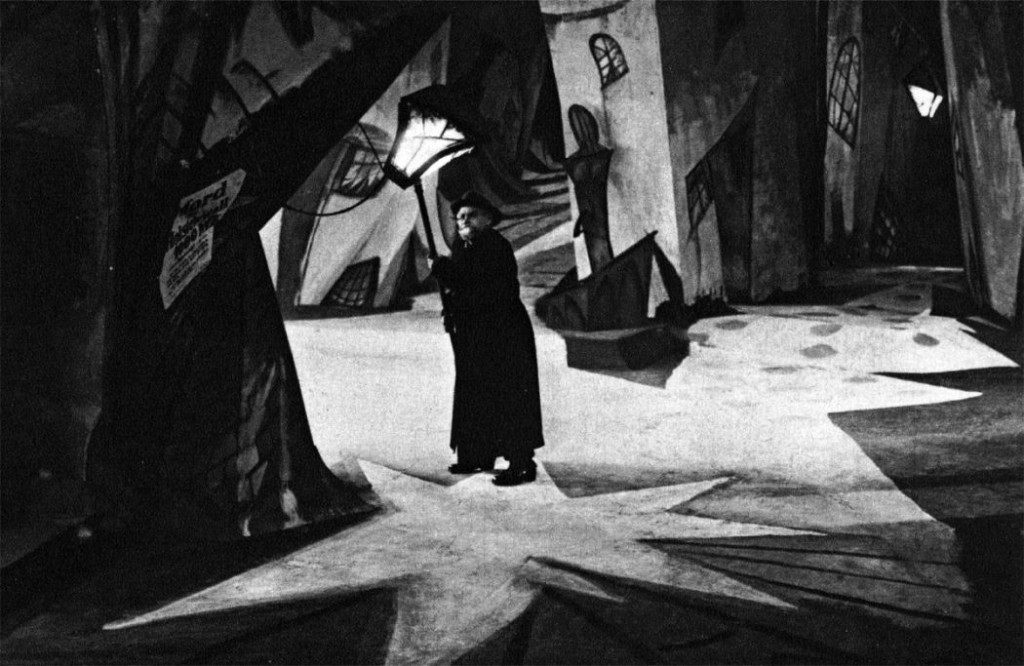
Movie Review: The Cabinet of Dr. Caligari (1920)


Oh, we're going old-school on this one. VERY old school, in fact. This is a 1920 film from Germany that still stands as one of the best and most famous films of the silent era. Best known for its insane set design and its twist ending, this movie still has an impact to this day.

You doubt me? Oh, but it's true. This was the second time I watched this; I watched it in a college course a few years ago. But I didn't watch it alone. I watched it with my middle son, Tanner, a fourteen-year-old who is totally into cool stuff, not Dad's old stuff. But he couldn't turn away.

Yes, it's silent, and yes, it's German, and yes, it's nowhere near as creepy and horrifying as the sort of stuff we've been given in movies for the past few decades. But it's got incredible atmosphere, a very clever script, and as I mentioned, the set design is unreal. Literally. Everything on the screen has a twisted, warped perspective. There isn't a single right-angle to be found anywhere. Clerks sit on stools five feet high and bend over desks piled with scraps of paper. Roads and sidewalks are slanted. It's utterly wrong...and it's perfect.


See, the original screenplay was intended to reflect the national post-war attitude in Germany; the writers, Hans Janowitz and Carl Mayer, were pacifists who had different experiences during the Great War; Janowitz was an officer, Mayer a draft-dodger who faked insanity to avoid serving. Their original idea was to write an allegory about how the German government had brainwashed the German people into fighting a war and paying the consequences for it. The twist ending was not part of their original script. But without it, the movie likely would not have been remembered nearly as well as it is today.

So, short synopsis. A man named Francis sits on a bench, watching Jane, the woman he loves, walking by, oblivious to his adoring gaze. He tells the man next to him that she is his fiancée, but they have both suffered through a terrible ordeal. The story is then told, with the twisted, Impressionist art and sets leading the way.

It turns out that not too long ago, a man calling himself Dr. Caligari showed up at the festival with a strange and unique exhibit: A somnambulist named Cesare, a man who has slept his entire life. Caligari claims to be able to control Cesare, and wakens him to the delight and horror of the paying audience. Cesare is also able to predict the future, and predicts the death of Alan, Francis' best friend and rival for Jane's affections. That night, Alan is indeed murdered, and the police cannot locate the murderer.

Francis soon suspects Caligari of having something to do with the murder, and he's right; Cesare is the murderer, unknowingly committing crimes at the behest of the insane Caligari. He is sent to murder Jane, but instead of killing her, he abducts her. A chase ensues, and Cesare leaves the dumbstruck girl behind before collapsing in the roadway.

Dr. Caligari (left), Cesare, and Jane

Caligari turns out to be the director of the insane asylum, who has gone mad in an attempt to replicate the experiments of the actual Dr. Caligari, an 18th-century mystic who had hypnotized a somnambulist of his own, named Cesare. When the current Cesare was admitted to the asylum, the director successfully used him for his own experiments in hypnotism. When confronted, Caligari reveals his insanity, and is hauled into a padded cell of his own.

Returning to the bench, we reach the twist ending as we find out that Francis is actually a patient at the asylum, along with Jane (who believes she is a queen) and Cesare (who isn't a somnambulist, just a quiet, staring man with no homicidal tendencies). Caligari is the director, who now understands Francis' delusions and believes he can cure him.

Caligari was one of the highlights of German cinema in the 1920s, along with such films as Nosferatu, Metropolis, and The Golem. It was a hit on both sides of the Atlantic, doing well with American audiences. And while the horror elements are incredibly tame by today's standards, they are quite striking for their time.

This is definitely not a movie for everyone; modern audiences often struggle with silent movies. But if it is an acquired taste, it's definitely a taste worth acquiring. And I'm not the only one who thinks so; Tanner enjoyed it just as much, although the twist ending caught him by surprise.

Check it out; it's public domain, so it's available on YouTube or the Internet Archive, as well as on DVD and Blu-Ray. 

Friday, June 3, 2022

Tombstone (1993) Review

Well, I've written science fiction, fantasy, mystery, steampunk superheroes, pulp heroes...but not a western. Not yet, at least. Maybe I will at some point. My son and I have been delving into the old Lone Ranger TV series lately, but tonight I wanted something a bit more...grandiose. For research for future writing. That's the ticket.


So, I put on one of the all-time greats, Tombstone. A movie absolutely loaded with stars, past, present and future, based on real history and full of quotable lines that still resonate nearly thirty years later. And yes, I called it an all-time great, because it is exactly that. Action, romance, comedy...this movie has it all and then some. And, much like Desmond Doss of Hacksaw Ridge fame, the reality overshadows the movie, because some of the stuff these men did was too much even for Hollywood to believe.

I'm not going to recap the whole movie in detail; basically, Wyatt Earp and his brothers and their wives move to the silver mining hub called Tombstone, Arizona. There they encounter the Cowboys, a semi-organized crime gang of red-sashed riders who terrorize the civilians and threaten the lawmen. Wyatt just wants to settle down and live a normal life, but things keep piling up until he and his brothers are sworn in as sheriff and deputies. There's this famous gunfight you might have heard of, but in the aftermath, Wyatt's brothers are taken out. Wyatt and his friend, Doc Holliday, lead a small band of Marshals who go after the Cowboys, breaking their control over the region and restoring law and order.

That's the short version; now go watch the movie yourself, because it's fantastic.

So, the cast. As I mentioned, it's full of stars. The leads are Kurt Russell as Wyatt Earp, Val Kilmer as Doc Holliday, Sam Elliott as Virgil Earp, and Bill Paxton as Morgan Earp. Dana Delany plays the love interest, and Charlton Heston has a brief cameo as well. The bag guys include Michael Biehn as Johnny Ringo, Powers Boothe as Curly Bill and Stephen Lang as Ike Clanton. Thomas Haden Church plays Billy Claiborne, and Billy Bob Thornton shows up as a cowardly bully who gets manhandled by an unarmed Wyatt in one of the movie's juiciest scenes. And there are plenty of others as well; this cast was stacked.

Favorite scenes (and everyone who has seen this movie has them) include the aforementioned bully take-down, the arrest of Curly Bill for murdering the sheriff (while high on some kind of opiates), the gunfight at the OK Corral, and the final showdown between Holliday and Ringo. Actually, any scene with Doc Holliday can be considered a favorite scene; Val Kilmer was absolutely spectacular in this role. Every time I look at a clip from the movie on YouTube, I see the same comment over and over: Kilmer should have won the Best Supporting Actor Oscar for this movie. To the Academy's eternal shame, he wasn't even nominated. In fact, Tombstone got a grand total of zero Oscar nominations that year, which is a crime against entertainment.

So, what is that makes this such a great movie? Well, it's a very masculine movie. These are men. They have a moral code (or, in the case of the Cowboys, the antithesis of one), they take action when necessary, and they aren't afraid to stand and fight when needed. But they don't go looking for fights; Wyatt's admonishment to his younger brother Morgan that killing a man 'changes you inside' rings true; Wyatt spends the first half of the movie trying to keep a low profile. It's only when Virgil has had enough and enlists Morgan to join him as a town deputy that Wyatt finally accepts the inevitable. And when bad men are doing bad things, it takes good men to stop them, and sometimes there is a price to pay. These men do what has to be done.

Is it 100% historically accurate? Of course not; it's a Hollywood movie. But the OK Corral gunfight did happen. Wyatt did try to stay out of law enforcement in Arizona until circumstances forced him to do so. Doc Holliday really did have the reputation of being one of the deadliest gunfighters in the West. And yes, Wyatt really did shoot Curly Bill at near-point-blank range while somehow managing to not get hit by a single bullet.

The Old West has been mythologized for decades, but it was a real time and place, and there were real men like Wyatt Earp and Doc Holliday who blazed a trail and wrote their names in the history books. And the Western is the American genre, more than any other. Aside from romance, the western was probably the most popular genre of fiction in America for decades. The first real movie (with a plot, beginning, middle and end) was a western, The Great Train Robbery. Hollywood made thousands of westerns; TV and radio shows like the Lone Ranger, Gunsmoke, Bonanza, and dozens of others were the most popular of their time. And even when the western began to die off during the Space Age, the most popular science fiction shows were basically westerns in space. Even Star Trek was originally pitched as a 'Wagon Train to the Stars' to get the green light from the studios.

So, I have to give this movie the highest recommendation; it's that good. Check it out, and see what I mean.


Wednesday, August 4, 2021

Jason and the Argonauts (1963)

Yes, I know, it's not exactly an original movie to review; it's been done to death, in fact. But that's because it's such a fantastic and awesome movie, that it deserves massive praise and fawning reviews. So, spoiler alert, here's another one.


Let's start with the actors. Without looking them up, I don't remember any of their names, nor do any performances stand out as exceptional or noteworthy. These people know who the real stars of the movie are, and their job is mostly to stand around in awe of the special effects, much as the viewers did. Todd Armstrong, who plays the manly and heroic Jason, is a bit wooden in his performance, almost like he's a Harryhausen creation himself. He does an adequate job, but there's a spark missing that would put Jason into the pantheon of great fantasy movie leads.

Nancy Kovack as Medea gets second billing, but her role is quite limited; she only appears in the last third of the movie, and doesn't have a whole lot to do. But she does set into motion the events that will lead to the movie's most memorable scene.

The only other name in the cast that stands out is Honor Blackman as Hera, who would become much better known the following year, playing Pussy Galore in Goldfinger. She spends part of the movie doing voiceover for the Argo's figurehead, which is sculpted to look like Hera. Again, the performance isn't meant to be Oscar-worthy; nor does it ever threaten to be so.

Alright, on to the main event and the real star of the movie: Ray Harryhausen. I'm going to review other Harryhausen movies over the next little while as I watch them, just because they are so fantastic. He didn't pioneer stop-motion animation, but he certainly perfected it as much as humanly possible. There are plenty of other blogs and websites that gush over Harryhausen and have a lot more detail about him than I can possibly give, so I'll just move on to the special effects he did here.

Interestingly, one of the earlier special effects in the film that tends to get overlooked is the discus competition between Hylus and Hercules on the beach. Hylus challenges Hercules in order to earn a place on the Argo, and Hercules accepts with a discus challenge. Hercules throws it like an Olympian would; Hylus skips it like a rock. The effect really isn't very well done; the effect is more like old 50s movies spaceships dangling on a string. It's certainly the most disappointing effect in the film. But it's a minor one and, as I said, it generally gets overlooked.

With that out of the way, the first Harryhausen creation of the movie is one of his most famous: Talos, the bronze giant statue that comes to life and threatens the Argo and its crew. The sound effects of this scene are particularly eerie, and really bring a depth to Talos' actions. You can hear the bronze limbs grinding as the statue stiffly moves across the landscape and reaches down to grab the helpless Argo out of the water. It's very effective, far more so than many CGI creations today. I think it might have been even more effective than if they had just put someone in a Talos suit; this Talos feels like a bronze statue come to life, something that CGI and motion-capture just can't emulate as well.

After Talos is defeated, the Argo is repaired and the crew continue on their journey, where they...do I really need to recap the plot? No, I don't; you've seen it anyway, haven't you? Let's stick to the effects instead. The next creatures encountered are the harpies, who torment the blind Phineas, stealing his food and leaving him with crumbs. I really like this scene, because it seems like it was a more challenging effect to create: The harpies, after all, are flying. And there's real interaction between them and Phineas as one of them grabs a piece of his toga and unwraps it while flying upward, sending Phineas rolling across the ground. The Argonauts are successful in trapping them in a clever net-trap. The fight is, again, interactive, which couldn't have been easy to do. But it works, and that's what matters.

Then there are the Clashing Rocks, reminiscent of Scylla and Charybdis, the monsters that threatened Odysseus and his crew. Yes, I read old stuff. Anyway, Jason and his crew escape these thanks to a magical token that, when dropped in the sea, summons Neptune, or (according to Wikipedia) Triton, to hold the rocks apart long enough for the Argo to slip through. The effects of the gigantic Triton, with his merman-tail, holding the rocks apart are integrated almost seamlessly with the footage of Jason and his crew rowing frantically to get past the deadly rocks as quickly as possible. It's a tense scene, and it works really well.

Finally, the Argonauts arrive at Colchis, and Medea shows up. The golden fleece, the object of the quest, is guarded by a deadly seven-headed hydra, which Jason ends up fighting alone. He handles it pretty well, as heroes are expected to do. The hydra kills the traitor in Jason's crew (convenient, isn't it?) and lowers his limp corpse to the ground in its tail. I doubt there was an actual person in the hydra's grip for all the time they did the shooting, but it still looks pretty good for a 1963 movie. We even get a perspective shot from behind the hydra as it slithers after Jason, which emphasizes how creepy and dangerous this beast is. Medea is there as well, but she spends the entire fight watching helplessly. Feminism? What's that? If the movie were to be made today, of course, Medea would end up saving Jason's life by ninja-kicking the hydra and knocking its heads off just as it was about to make a meat-snack of the helpless man. This movie is a little more old-school than that.

And now, for the main event of the evening: The skeleton fight. Yes, this is THE Harryhausen scene, the one that cemented his legacy as the greatest special effects wizard in Hollywood. He'd done a single skeleton fight in The Seventh Voyage of Sinbad five years earlier; this time, it was SEVEN of the buggers. Against three humans: Jason and the Sacrificial Lambs. Okay, that's not really their names, but they might as well have been.

What can I say about this fight that hasn't been said a thousand times before? It's simply amazing from start to finish. As King Aeëtes raises the skeletons from the ground using the teeth of the hydra, the ground bursts open and they rise up from their graves, weapons in hand and ready to go. One little touch that I really liked is that the skeletons have their own shield emblems and even different weapons; they aren't simply mirror-images of each other. No, these are seven individualized skeletons, all of which move as smoothly as stop-motion animation can do. And they are deadly fighters, taking out Jason's two companions and nearly getting him as well, until he lures them into jumping into the sea. It turns out that skeletons aren't as buoyant as living humans.

From a gamer's perspective, this movie gave us some iconic creatures that would later appear as monsters in the inaugural D&D game: the iron (bronze) golem, the hydra, the harpy, and the skeleton. Not to mention the gigantic merman, but that's not generally seen as an iconic D&D creature. The Argonauts are an early example of a typical D&D party, although it's all fighters until Medea shows up (she's a priestess of Hecate in the movie, and a sorceress in classical Greek mythology). There are the heroes (Hercules, Jason, and Acastus), as well as the hirelings and henchmen, aka the cannon fodder. And it has nautical adventuring, which has always been a favorite theme of mine.

One thing I really wish for is a sequel to this movie; it's clearly set up for one, as the movie ends with Jason and Medea leaving with the Argonauts and the golden fleece on their way back to King Pelias, where Jason is supposed to confront him and avenge his parents' murder when he was a baby. Unfortunately, we never got one. And considering the state of Hollywood today, I wouldn't want one now. No, this movie will have to stand alone as one of the greatest fantasy films of all time, thanks to the magnificent imagination and tireless dedication of one Ray Harryhausen.

So, I'm going to rate this movie seven out of seven skeletons; it's not the kind of movie you watch for the acting, so you know what you're going to get. And you get it, in spades.

To give you an idea of how this movie and others like it have inspired me, please check out my first fantasy novel, The Chronicles of Meterra: Arrival, available in ebook and paperback formats at an Amazon website near you. And support indie publishing, because it's the wave of the future!


Saturday, May 29, 2021

Movie Review: Willow (1988)

Time to go back to my fantasy roots with another movie review. This movie is etched into my memory like few others ever have been. I remember when this movie came out in theaters, and I was absolutely determined to watch it. The trailers had me stoked, with stirring music (still one of my favorite movie themes of all time), Val Kilmer swashbuckling, cool monsters, and the trailer's opening narration: "From the creator of Star Wars..." I was hooked. So, was this movie going to live up to my expectations?

Hell, yes.

I was on a trip to Québec City after I'd won a high school French competition, and I was there with kids from across Ontario and a class from Cleveland, Ohio. I'm not sure what a bunch of Americans were doing in Québec City, but they were having fun, too. The movie had just opened, and I had saved up money for the trip. We got off the bus and went to the hotel, and I was at the theater that night, mesmerized.

I went again the next night, and the next...and the next. Four straight nights at the theater, something I'd never done before, or since. Not even Batman (which I saw nine times in the theater in 1989) had me going back four nights in a row. This was something special.

Now, there are a lot of people who are scoffing at what I'm saying. "It wasn't that great of a movie," I hear. "The effects were cheesy, the plot was thin, and the villains were cardboard cutouts."

I reply: So what? The effects were very good for the time (1988), nobody was expecting an M. Night Shamalayan movie out of this, and the villains were no more nuanced and layered than Darth Vader was in 1977. They were evil, they knew they were evil, and they made it clear to everyone that they were evil. That's what villains do in fantasy stories. It's like complaining that the witch in Snow White isn't a fully-developed character. She's the villain! And so was Queen Bavmorda! And both of them got what they deserved in the end.

So, let's run through the thin plot, shall we? Warning: SPOILERS in case you haven't watched this 33-year-old movie yet.

Still here? Good. So, the evil queen Bavmorda is trying to stop a prophecy that claims a child will be born with a mark that identifies her as the person who will cause Bavmorda's downfall. She doesn't go all King Herod, slaughtering all the kids around, but she does capture and kidnap every pregnant woman in the kingdom, forcing them to give birth in her dungeons until the right baby is found. Naturally, the baby escapes with the help of a sympathetic midwife, and the opening credits roll.

The midwife puts the baby onto a raft (Moses story!) and pushes her out into the river just as Bavmorda's hounds track her down and kill her. The raft floats downstream until it reaches a bank by a village of Nelwyns (short people; Peter Dinklage would fit right in), and the farm of a Nelwyn named Willow Ufgood, played by Warwick Davis of Ewok fame. Willow dreams of being a great sorcerer, but is stuck on his farm, plowing with a pig. When one of the dogs tracks the baby to the village, Willow reluctantly agrees to take the human (Daikini) baby to its own people.

With some help from village warriors, Willow finds a Daikini prisoner in a crow's cage at a crossroads. The prisoner, Madmartigan (Val Kilmer, in the role that made me a fan for life), offers to take the baby in exchange for his freedom. Willow eventually gives in, but not until a defeated army marches by and warns that Bavmorda's troops have destroyed an important fortress. Madmartigan leaves with the baby, but Willow is abducted by brownies (really tiny people) on his way home, and finds the baby has been taken from Madmartigan by said brownies at the request of Cherlindrea, a forest spirit/goddess who names the baby "Elora Dannan." That's a suitably Celtic name.

Elora has told Cherlindrea (who is fluent in Babytalk) that she wants Willow to protect her and take her to the castle of Tir Asleen, where she will be placed under the protection of a great army. Willow takes her into the Daikini lands, where he once again finds Madmartigan just as Bavmorda's troops, under the command of her daughter, Sorsha (Joanna Whalley, who would shortly become Joanna Whalley-Kilmer), find them. Together, Willow and Madmartigan escape after a thrilling wagon chase (it looks better than it sounds), and Madmartigan agrees to take them to the island of Fin Raziel, a sorceress who will help them.

They find Raziel, who was transformed by Bavmorda into a possum. She accompanies them, but they are captured by Sorsha and shackled as slaves while she takes the baby. In a snowy camp, they escape from their cage, but Madmartigan falls under a love spell and temporarily loves Sorsha, spouting poetry while Willow tries to take the baby and escape. They are caught again, but Madmartigan finally gets hold of a sword and shows what he can do. They escape by using a shield as a sled and slide down a mountain, ending up in a village where they meet the remnants of the army they saw earlier at the crossroads.

They escape the village using Sorsha as a hostage, and eventually make their way to Tir Asleen, which has fallen under a curse. Bavmorda's troops arrive, but Madmartigan goes extra-heroic and fends off the army by himself...with the help of an awakened two-headed dragon (called an Eborsisk in the novelization). In the chaos, Bavmorda's General Kail takes Elora, but Sorsha is impressed with Madmartigan's heroic stand and defects, joining Madmartigan in fighting off the evil army.

Meanwhile, Willow, who has been unsuccessfully trying to restore Fin Raziel to her human form using Cherlindrea's wand (she became a raven and a goat before he finally succeeds), goes with the army to Bavmorda's castle to attempt to rescue Elora Dannan before Bavmorda can destroy her soul and end the threat to her reign. After Fin is restored, the army uses deception to get into the castle, where the big final battle is fought. Madmartigan fights General Kail in hand-to-hand combat, Sorsha and Fin Raziel take on Bavmorda, while Willow watches from the sidelines until he's the only one left to rescue Elora from Bavmorda after the two women fail to stop her.

Willow tricks Bavmorda using some sleight of hand, and Bavmorda's ritual backfires and turns against her, destroying her instead of Elora, thus fulfilling the prophecy. The curse of Tir Asleen is lifted, and Madmartigan and Sorsha take Elora to raise her there together, while Willow returns home, triumphant and confident in his newfound magical abilities. Which I glossed over in the synopsis, but it does happen. Honest.

So, there's humor, action, romance, adventure, and an epic feel. Plus a dragon. What more can you want in a movie?

Now, let's look at the performances, in particular the two (three?) leads. First, Val Kilmer was born to play Madmartigan. He is fantastic in this role, bringing all kinds of awesome with him. He's funny, sarcastic, conniving but charming, heroic and deadly with a sword. He's also smart, outwitting General Kail in their showdown at the climax of the movie. Five chef's kisses for Kilmer in this movie.

Warwick Davis does his best to keep up with Kilmer's scene-chewing performance, and acquits himself well enough. His Willow is courageous but lacking in self-confidence at the beginning of the movie, but he's as determined as Frodo Baggins when the chips are down, and his focus throughout the movie is protecting Elora and returning home to his family. He's vulnerable when he has to be, and while he doesn't get a lot of screen time to be a hero, leaving the fighting stuff to Madmartigan, when he faces down the powerful Queen, he shows he's got the guts and the smarts to make up for his stature. Well done, Mr. Davis.

Then there is Joanna Whalley, in her debut role. Sorsha is young, as is Whalley (she was 19 during filming). She's got the fiery red hair thing going on, which definitely got my attention as a teenager, and she's certainly a beauty. But Sorsha starts out as the Queen's henchdaughter, as cold and cruel as her mother when it comes to hunting down that helpless baby girl. She even gets to kick the chained Madmartigan in the face, which sets the stage for their magically-induced love scene shortly afterward. She does well, and while her sword technique leaves something to be desired, she does well enough to be believable as a swordswoman. And she doesn't wear chain mail bikini armor, which is totally fine; she's got the presence and figure to look damn good even in the black armor of her mother's army.

Okay, so what about the effects? Well, as I said, for 1988 they were excellent. The scene that, to this day, sticks out in my mind the most is when Cherlindrea tasks Willow with protecting Elora. In the theaters, I got chills each time her glowing white face filled the screen and she pronounced her dire warnings. Even on the fourth viewing, it got me. It was powerful. The effects are almost all practical; the Eborsisk looks like a Harryhausen monster (which is not at all a criticism), and while the green-screening for the big fight in the castle with the dragon is pretty obvious, the same techniques with the tiny brownies isn't nearly as blatant. The state-of-the-art was improving by 1988.

The production was light on the magical effects (mostly with Cherlindrea and the climactic fight in Bavmorda's tower), but the makeup was well done for the transformation scene near the end, and the production made excellent use of the landscape, in both Wales and New Zealand. I guess we know where Peter Jackson got the idea to do his own fantasy movie there, don't we? That's how influential and important this movie is.

Okay, so the critics disagree with me; Rotten Tomatoes has it at 51%, Siskel & Ebert both said 'thumbs down,' and it wasn't the blockbuster it was projected to be at first. Hey, I did my part.

But the thing is, in the end, the critics are just people, and their opinions aren't any more important or special. What matters is what we, personally, think of the movie. And to me, the best and finest review of the movie came not from me, but from my son, Tanner. I convinced him to sit and watch this with me, and he was reluctant. At one point, he was adamant that he wasn't going to watch it any more. But he did, and after it was over, he said, "I don't know exactly what you see in this movie, Dad. But can we watch it again tomorrow so I can figure it out?"

He got it.

I give this movie a 9 out of 10 for its epic sense of fun and great lead performances. Siskel & Ebert can go sit on their thumbs; this movie rocks.

For my own take on fun fantasy, I would like to suggest that you take a look at Arrival, the first book in my Chronicles of Meterra. It's based on the ideas of fantasy that I grew up with, with a strong helping of pulp fantasy to season it. It's available in both paperback and e-book at Amazon. Supporting indie publishing is the key to bringing back the fun-tasy we all love!


Wednesday, April 21, 2021

Jesus Christ Superstar, Rock Arena Tour 2012

Well, I was supposed to get this one done before Easter, but things happen. This is an interesting version of the rock opera, a version that Andrew Lloyd Webber claimed was how he had 'originally' intended the show to be performed. This is a recording of a stage performance that was done as sort of a rock concert. The 'stage' is a terraced platform where the band is off to the sides and the actors/singers do their bit on the steps. I've never seen anything like it before, so it had that uniqueness going for it.

Of course, the key to any performance of this nature is the singers themselves. This version stars Tim Minchin as Judas, Mel C from the Spice Girls as Mary Magdalene, and Ben Forster in the role of Jesus. Forster got the part by winning a reality show called 'Superstar,' which was explicitly done for the purpose of finding someone to play the part of Jesus in this performance tour. I'll get to his performance later.

The original stage and screen version of the show had a 'modern' feel; the movie has Roman soldiers walking around with spears and machine guns, with tanks rumbling in the desert and fighter jets flying overhead. The sets are very abstract, the apostles are wearing jeans and T-shirts, and it's incredibly anachronistic.

This version 'updates' that concept, moving the setting to even more modern day; cell phones and online polls play a part, the Pharisees are Illuminati/businessmen, and Pilate looks like a judge. When he's not working out. Herod is a talk show host, and the soldiers are riot cops. But the most striking conceit is that Jesus and the Apostles are portrayed as an Antifa-style group. This is in the years before Antifa was the big news it became during the Trump administration, but it's still very, very jarring to see this performance portraying that movement as Christ-like.

Be that as it may, the story is unchanged from the other versions; Judas is torn and conflicted, Mary has the hots for Jesus, Pilate just wants to keep the peace and prevent any riots, and the Pharisees want to ensure that no one threatens their power. You know the drill. One of the songs added in the movie remains (Could We Start Again, Please), while the other (Then We Are Decided) is dropped. As far as I know, that one only appeared in the movie. Too bad; it's a nice tune.

So, let's look at the leads. Minchin has been praised for his performance as Judas; it was a lifelong dream of his to sing the part, and he handles it capably. His Judas is quite snarky, having quite a few literal eye-rolling moments. He gives a sense of 'I know better than the rest of you,' and he is antagonistic toward both Jesus and the other apostles, shoving them aside when they try to talk to him and sitting at the far end of the stage to brood. This develops over the course of the performance; his initial song (Heaven on Their Minds) is excellent, showing Judas as a man who just doesn't really believe that Jesus is what he claims to be.

Mel C is excellent. Her portrayal of Mary Magdalene is a highlight, combining the world-weary wisdom of an 'experienced' woman with the uncertain fears of a woman confronting a man she loves but totally doesn't understand. It's a delicate line, but she walks it well. Her performance of "I Don't Know How to Love Him" is fantastic. She doesn't hog the spotlight, either; she fades into the group of disciples when she's not soloing, never wearing out her welcome.

Now, we come to Ben Forster's performance. First off, his "Gethsemane" is absolutely incredible. The raw emotion he puts into that song just jumps off the screen. Jesus is scared and angry at the same time, desperate to understand why he has to go through the upcoming passion and death. Forster puts everything he's got into this song, and it totally works. One part that especially stands out is the changed line near the end. Originally, Jesus sings, "God, thy will is hard/But you hold every card." In this version, the lyric is changed to: "God, thy will be done/Take your only son." It's quite the change, and I like it a lot. Forster somehow ramps up the emotion in that lyric, to powerful effect. Thumbs up all around.

The problem I have with the rest of his performance is, up until that point in the show, Jesus has been very...off. What do I mean? Well, this Jesus is pissed. And arrogant at times. And he blows off his 'right-hand man' (Judas) multiple times. No wonder Judas finally handed him over to the Pharisees; Jesus was being a complete dick to him from the very start. When Jesus rampages through the temple, overturning the tables and kicking out the moneychangers, the sense is very different. When you watch the 1973 version, or just read the Bible itself, it's a shocking moment; this calm, peaceful rabbi and healer suddenly goes postal in the temple, shocking everyone with the sudden violence. But in this version, it's more like walking into the temple was the trigger point for a man about to become a mass-shooter. It's not surprising that he tears into the merchants and moneylenders; what's surprising is that anyone is surprised that he finally snapped.

The other problem I had with this performance is that Jesus is a little too appreciative of Mary's attentions. Sure, Mel C is still a whole lotta woman in her late 30s/early 40s, but this is supposed to be Jesus Christ, not his horny cousin Randy Christ. But this performance doesn't shy away from the idea that Jesus is just as into Mary as she is into him. It's a bit uncomfortable in a couple of spots.

Overall, I would have to say that this version is a bit disappointing. "Gethsemane" is the highlight, as it should be, and Forster nails it. The rest of it, though, doesn't really work. It's not that it's bad, and the musical performances are excellent, but the production leaves a lot to be desired. Forster's "Gethsemane" is available on youtube; the rest of the show is just so-so, and you won't miss anything if you miss it.

Sunday, March 21, 2021

Jesus Christ Superstar (1973) Review

Okay, I finally watched this one with my wife and son last night. It was a lot of fun, like I remember, and while it has been a long time, it was good to see the differences between this version and the album I reviewed a while back. Obviously, a movie and an old vinyl recording won't be the same. But the differences in the music itself are striking, nonetheless.

First of all, Ted Neeley was born for this role. He is absolutely amazing as Jesus, hitting the right mixture of all-knowing, all-wise mentor to the disciples, resignation to his ultimate fate, and his show-stopping performance of Gethsemane, pleading his case to know why God is about to allow him to be destroyed in the most horrible way imaginable. It's beautiful to watch.

Neeley is complemented by Carl Anderson, who plays Judas. I'll admit, when I first saw this movie, the notion of a black Judas threw me off; everyone knows the Apostles were Jewish, and they weren't black-skinned. But that's a stylistic casting choice, and it certainly works; Anderson's Judas is torn from the very beginning, trying desperately to hold back the landslide that he is sure is about to strike them all. In the original text of the gospels, of course, Judas is not what you would describe as a sympathetic character; he's a first-class, no-good rotten traitor who hands over the Son of God to be persecuted and crucified. But in this version, Judas gets some motivation beyond being a lousy traitor. He's scared, like the Pharisees, that Jesus' actions are going to bring down the wrath of the Romans upon them all, since the crowds are calling him the Messiah, ready to name him King, which the Romans would disapprove of in very explicit and strenuous terms.

There is more music in this version than in the album; a song called 'Then We Are Decided' is slipped in between 'Strange Thing, Mystifying' and 'Everything's All Right', providing a nice break from the scenes with Jesus and the Apostles. In the album, Caiphas and the rest of the priests don't show up for the first four scenes; this gives them an earlier introduction and provides a good explanation as to why Caiphas is so adamant that Jesus has to die.

The second new song is 'Could We Start Again, Please', which appears after King Herod's song as Jesus is being led back to Pilate for the fourth part of his trial. Mary and Peter sing a duet about how Jesus has gone beyond the bounds of reason to prove his message. It's a wistful song that fits nicely, and as I understand it became a permanent fixture of the stage play, unlike the other new song, which only appears in this movie (and on the soundtrack, of course).

Other songs have more to them than they did on the album, such as extra lines in the Trial Before Pilate, and I'm pretty sure there is at least one more verse in the Hosanna song. I'd have to go back and check the original, though.

Most of the cast from the Broadway show ends up in the movie; Neeley and Anderson, of course, both started out on the stage version. Two of them, Yvonne Elliman (Mary) and Barry Deneen (Pilate) were on the original album, as well. All are excellent in their roles, especially in those long-forgotten days before auto-tune was all the rage.

Now, for the one part of the movie my wife and son could not wrap their heads around: The setting for the movie. Sure, you've got Jesus wandering around in a simple shepherd's robe, and Mary is looking suitably Biblical in her attire, but you've also got most of the disciples wearing jeans or other 1970s' clothing. You've got Roman soldiers wearing purple wife-beaters and camo pants, carrying spears and machine guns at the same time. And you've got tanks. And fighter jets doing a fly-by over Judas after he's agreed to betray Jesus to the Pharisees. It's very, very surreal and weird. And yet, it works. Webber always intended for the play to have a modern feel, and Norman Jewison, who directed the movie, obviously agreed. The juxtaposition of the ancient and modern elements is silently explained during the overture, as a bus shows up with the entire cast aboard in their regular clothes. They actually take the props for the movie off the bus roof, change into their costumes right outside the bus (in the middle of the road in an Israeli desert; the 1970s were friggin' weird, man), before starting the actual movie.

So, why the tanks and machine guns? Why not? In the famous song 'Superstar,' which Judas sings after he's hanged himself from a tree in shame for what he did, Judas basically asks Jesus a bunch of questions about why he did what he did when he did it. 'Israel in 4 BC had no mass communication,' he reminds Jesus while glammed-up dancers do the most 70s routines you've ever seen behind him. Why did Jesus live then, and not in today's world where his message would have been instantly broadcast around the world? Of course, the movie doesn't answer that; it just moves on to Jesus' death on the cross, which is told in a much tamer manner than Mel Gibson did.

All in all, this is probably my favorite version, not the least of which because I like the new songs. The whole production, while it looks like it was done on the cheap, still shines. Regardless of the controversy about the story and how it's told in the movie/play, this is still a fantastic rendition of the music of Andrew Lloyd Webber. It's a great movie, and I recommend it without reservation. And, as I said earlier, Ted Neeley absolutely nails the passionate Gethsemane song, and I'm sorry to any Ian Gillan fans out there, Neeley was better.

Saturday, November 28, 2020

Movie Reviews: Recon (2020), Let Him Go (2020)

So, it's my wife's birthday tomorrow (she's 29 again!), and she wanted to watch some movies this weekend. We did a Cineplex free rental yesterday, and tonight we went to see a movie in the theatre together for the first time in a couple of years. Let's just say that the quality of the movies in the era of COVID-19 is not as good as I remember.

The first one we saw, the rental, was Recon, a movie about some soldiers in World War II in Italy. Actually, it's about these soldiers suffering from PTSD while they're still out in the field, and how their sergeant is a cold-blooded murderer and sends these four guys off on what is effectively a suicide mission to reconnoiter potential German forces up on a mountain.

Twenty-five years ago, that would have been a very exciting movie. Last night...not so much. It was boring, which is not normally a word associated with movies about World War II, especially when the movie takes place in the field. Relatively recent movies like Hacksaw Ridge, for example, tell a great story and wrap it in some intense action. Recon is also based on a true story, but it's not a story anyone really wants to hear or watch. As I said, it was boring. The lead spends most of his time being terrified over the death of an innocent. The other three soldiers are constantly bickering and fighting. In the Italian mountains. Where they have been told there are German troops. And snipers. Because the easiest way to avoid a sniper's notice is to keep up a constant chatter and argument while trudging up a forested mountain.

The movie ended in a very pointless way. There was no feeling of heroics, no feeling of accomplishment, just pointless death. And, as a bonus, you know how when you watch a movie based on true events they'll usually put in a few sentences at the end to let you know what happened in real life to the characters portrayed? Well, we got those sentences. In German, no translation. Say what? No thanks; and, to be honest, I didn't care enough about the character to look it up and find out what happened to him.

So, that was last night. Tonight, we watched Let Him Go, a Kevin Costner movie about two grandparents who want to bring their grandson home from his stepfather's evil family. And I use the word 'evil' deliberately; these people are messed up in the head something fierce. The boy's stepfather is abusive to both the boy and his mother, and things don't work out very well for pretty much anybody in the movie. The movie is set in Montana/North Dakota in 1964, so it's understandable that the bad guys didn't yet know the rule of 'don't piss off Kevin Costner'. The survivors drive away at the end, tearful and silent. It was...not a happy ending, to say the least.

I think what bothers me the most about both these movies is the nihilistic viewpoint. It's like the filmmakers in both cases wanted to show suffering and misery, with no real payoff at the end. I mean, sure, Costner kicks some impressive ass in the climactic sequence, but his character always felt like he was on a fool's crusade, as if nothing was going to matter anyway.

My wife liked it, but she has a thing for Kevin Costner, so that's a biased opinion. Again, the movie was boring. There was some suspense, and a very gruesome scene before the climax, but it dragged. Costner was the executive producer on this, so he should have known better and made the movie more interesting than that. At no time did I feel a compelling reason to keep watching. But, it was her birthday movie, so I stayed put. I didn't fall asleep, so that's something.

Movie pickings are slim these days, but man, there has got to be better options than what's being offered. Fortunately, there are. I'm appreciating my collection of older movies more and more as I see what's being shown in the theaters today. For good war movies, you can't go wrong with movies from the 1950s and 1960s. A lot of the people involved in making those movies were actually in the war, so they knew what they were doing. And, as a bonus, they don't curse four times in each sentence, so young ears aren't going to be upset. For parents, that's an important draw.

I wouldn't watch either of these movies ever again; I'd rather not even know they existed. Strong recommendation to avoid them both.

Monday, August 3, 2020

The Muppet Movie (1979) Review

Yeah, this one's a classic by any standard. If you haven't seen it yet, you are definitely missing out. I remember seeing it when I was a kid; it might have been in the theaters, but maybe not; I was in northern Quebec at the time, so we didn't go to the movies very often. I didn't even see The Empire Strikes Back in theaters; I was a deprived child.

So, this movie gives us Kermit, Piggy, Fozzie, Gonzo, Rolf, Dr. Teeth and the Electric Mayhem, Dr. Bunsen Honeydew and Beaker, and the rest of the cast of characters that gave us so much entertainment for decades. The Muppet Show was must-see television for kids and adults; we loved the puppets, the adults loved the sly humor that went right over our young heads. Watching old episodes now, I get a lot of the stuff I missed, while still enjoying the stuff from my youth.

But what's it about? Well, Kermit's a swamp-dwelling frog who happens to play the guitar and sing (no, seriously, he plays the guitar in this movie. He also rides a bicycle. Not bad for a green felt Muppet). He's discovered by a talent scout lost in the swamp and is persuaded to take his act to Hollywood. On the way, he meets Fozzie, Piggy, and the rest of the band, and they eventually make it to Los Angeles despite the efforts of the nefarious Doc Hopper, who sees in Kermit the perfect spokesman for his French-fried frog legs' restaurants. And he doesn't care if Kermit's legs are still attached to his body or not. He's not a nice dude.

There are cameos galore, as there are in every Muppet movie. Except A Muppet Christmas Carol, which didn't have many cameos, at least not from humans. But this one started them all, with appearances from Dom DeLuise, Edgar Bergen and Charlie McCarthy, Milton Berle, Mel Brooks, James Coburn, Elliot Gould, Bob Hope, Madeline Kahn, Carol Kane, Cloris Leachman, Steve Martin, Richard Pryor, Telly Savalas, Orson Welles, and Paul Williams. Seriously, that's a Who's Who of comedians and entertainers from the 1940s to the 1970s. The Muppets were BIG back then, folks. Way more than they are now. The recent iterations of the Muppets have proven to be quite lackluster compared to the originals, and this movie makes that crystal clear.

This movie even got nominated for two Oscars, back when the Oscars meant something. They were both for music; the score and the hit song, The Rainbow Connection. Yes, it was a hit song, reaching number 25 on the Billboard Hot 100 in November, 1979. I told you, the Muppets were a big deal.

So, needless to say, you have to watch this movie. Seriously. Go find a copy and watch it. Even if you've seen it before, watch it again. I don't care if you watched it last night, watch it again; you probably missed something, because the movie is chock-full of subtle humor that can fly right by you. You won't regret it.

Thursday, July 23, 2020

Movie Review: The Mark of Zorro (1940)


Let's face it: Swashbuckling action movies are awesome. Even the ones that aren't very good are fun to watch. The 1993 Disney version of The Three Musketeers has very little to do with the plot of the original Dumas book, but it's still fun to see Oliver Platt having the time of his life as Porthos, not to mention the mental gymnastics of watching Charlie Sheen play the pious Aramis. Talk about casting off-type.

But The Mark of Zorro, a black-and-white remake of the silent version starring Douglas Fairbanks, is a joy to watch. I actually found a colorized version of it, which actually improved the movie, although the color can't match the lush spectacle of The Adventures of Robin Hood. Still, it's another great swashbuckling movie, one that everyone should watch. Especially Batman fans, because Zorro was Batman before Batman was Batman.

The movie opens up in Spain, where the young caballero Diego de la Vega is summoned home to California on urgent business. When he returns, he is shocked to find that the Alcalde, his father, is reviled and feared by the peasants for his cruelty and usurious taxation. It's only when he goes to his old house that he finds out his father doesn't have that job anymore. He meets Governor Quintero and his henchman, Capitan Esteban, a fencing master with designs on the governor's wife. Realizing that things are not what he expected, Diego assumes the role of a foppish wastrel, refusing to heed his father's call to fight back against the governor's harsh policies.

Later, disguising himself with a black mask and cape, he becomes Zorro, doing Robin-Hood things like stealing from the governor and giving the money to the poor (in this case, the local friar, who bears a remarkable resemblance to Friar Tuck from Robin Hood, since they are played by the same actor, Eugene Pallette). He also exacts some revenge on the cruelest of the governor's soldiers, and even leaves a threatening 'Z' on the wall in the governor's house.

Meanwhile, he's also romancing the governor's niece, Lolita Quintero, played by the delightfully beautiful Linda Darnell (who, it turns out, was actually only 16 years old at the time), while fending off the advances of the governor's wife, who prefers him to the cold Esteban. The movie's climactic duel between Esteban and Diego (not Zorro) is one of the best fencing duels I've ever seen. Fast-paced, beautifully choreographed, it looks deadly, even more than the famous one in Robin Hood.

Like Errol Flynn in Robin Hood, Tyrone Power was born to play the role of Zorro. He's equally convincing as the foppish Don Diego, and the dashing and deadly masked vigilante. No wonder he inspired Bruce Wayne to don a cape and cowl many years later. Basil Rathbone gets to play the heavy again, and he even gets to win a fencing duel this time, against Pallette's Friar Felipe. And while Power and Darnell don't quite have the same level of chemistry that Flynn and Olivia DeHavilland had in their many screen pairings, they certainly go well together here, despite Darnell's youth.

Along with Robin Hood, this movie is essential viewing for any fan of swashbuckling adventure. It's a movie you can watch over and over again and still enjoy it. And it only runs for 94 minutes, a blink of an eye compared to today's overblown movies. It's available on YouTube, believe it or not, so check it out.

And, for more sword-fighting adventure, check out Arrival, the first book of the Meterra series, available in e-book or paperback now.

Tuesday, July 7, 2020

The Adventures of Robin Hood (1938) Review


When people ask me why I think older movies are so much better than the stuff Hollywood spews out these days, I simply point them to this movie, the ultimate swashbuckling epic. The Adventures of Robin Hood stars Errol Flynn and Olivia DeHavilland as Robin and Marian, with Claude Rains as Prince John and Basil Rathbone as the devilish Sir Guy of Gisborne.

As is obvious from the picture above, this movie is in Technicolor, which wasn't exactly new in 1938, but hadn't been used very often. When people think of older movies, they think 'black-and-white.' Well, most of them were, but not all. And when you see a movie in Technicolor, the colors are just fantastic. And that only adds to the glamor and spectacle of Robin Hood, and it holds up even today, over eighty years later.

I was going to say that most people already know the basic plot of this movie, but then I remembered that for most modern viewers, Kevin Costner or Russell Crowe are more relevant as the iconic hero. And Costner's turn as Robin Hood was, shall we say, pretty liberal with the basic plot. A Moorish ally? No Prince John? Marian sword-fighting? Not exactly historically accurate. I haven't seen Crowe's version, so I can't comment on it, other than to say there's no way it's anywhere near as good as this one.

So, let's recap the plot. Prince John wants the throne of England. His brother, King Richard III, is a prisoner in France, and John has no intention of paying the ransom to get him back. He's going to collect it via increased taxes, but he's not actually going to give it to the French just to get his brother back. So, while the Norman soldiers are busy taking everything they can from the Saxon peasants, the Saxon noble, Sir Robin of Locksley, takes exception to their actions. He even breaks into Prince John's celebratory feast and eats venison with them, meeting Maid Marian in the process. Big fight scene, he escapes, you know the drill.

Later on, he captures the Sheriff of Nottingham and Sir Guy of Gisborne while intercepting a shipment of gold for John's coffers. Marian is with them, and realizes that Robin isn't the heartless killer her Norman relations keep saying he is. Later, she learns of a plot to assassinate the escaped King Richard, but is in turn caught by Gisborne before she can warn Robin. He finds Richard anyway and has a big climactic fight with Gisborne at John's coronation. Afterward, he gets Richard's blessing to marry Marian, and they live happily ever after. Or so we assume, since that part wasn't filmed.

This wasn't the first film version of Robin Hood; the original swashbuckling movie star, Douglas Fairbanks, played him in the 1922 movie. That one was both silent and black-and-white, and not too many people today will have seen it. I've got it downloaded, of course. But Fairbanks version, while entertaining, can't match up to Flynn's absolute command of the screen and his almost-perfect embodiment of the character. Flynn's chemistry with DeHavilland is off-the-charts; they made quite a few movies together over their careers, although they were never involved off-screen (though they should have been).

The fight scenes are iconic, particularly the climactic one. And the supporting cast are pitch-perfect, including Little John, played by Alan Hale Sr., the father of the future Skipper of Gilligan's Island, and Friar Tuck, played by Eugene Pallette, who had a habit of playing feisty clergy (he was also the priest in The Mark of Zorro, starring Tyrone Power). The soundtrack is stirring and martial, and the cinematography rules.

I can't say enough about this movie; it's absolutely perfect, one of the greatest movies ever made. You can keep your Citizen Kane; give me Robin Hood all day long.

I've got my own medieval adventure stories available as well; they aren't as iconic as Robin Hood, of course, but they're full of action and excitement, minus the music. Check out the first two book of the Chronicles of Meterra: Arrival and The Devil's Playground, available in e-book or paperback format.

Saturday, June 27, 2020

Ladyhawke: A Review

I haven't done a movie review for a while, so I figured I'd go for one tonight. This one's from 1985, back in the days when movies were good and didn't rely on huge special effects budgets and CGI to tell their story. There are some effects in this one, but very little; the plot drives this movie, not the budget. It's a long-time favorite of mine, although some people don't think it's aged very well.

So, let's see. Ladyhawke is the story of a young thief in medieval France named Philippe the Mouse, who escapes from an inescapable dungeon in the city of Aquila. As he avoids the authorities, he encounters a knight, and his tame hawk, who defends him from the bishop's soldiers. The knight is on a quest to kill said bishop, which puts Philippe off a bit. However, since he's the only prisoner ever to escape from the dungeons, he is just the guy to help the knight, Sir Navarre, get into the city and kill the bishop.

By the way, this bishop is not a nice person; turns out that he forgot about that whole vow of chastity thing and lusted a whole lot after the woman Navarre loves, Isabeau. He went so far as to curse them so that if he couldn't have Isabeau himself, no man (especially Navarre) would. So, there's some fantasy in the adventure, which is always a good thing.

I won't go into any more plot details, since it's better if you watch the movie yourself. But it's got some great set-pieces, including an assault on a ruined monastery and a climactic battle in the nave of a cathedral. In the end, the question becomes, can Philippe and his companions find a way to break the curse, or will the bishop have his final revenge? Well, I'm sure you can figure it out; it's a fantasy adventure, not a modern, nihilistic depression quest.

So, casting. Matthew Broderick is Philippe, and does a fine job, bringing a little touch of Ferris Bueller to his performance (Ferris Bueller would make his movie debut the next year). He's a greedy, selfish person, and he knows it. His conversations with God are a highlight, giving him a way to impart some information to the audience, especially about his inner thoughts and feelings.

Rutger Hauer gets to be heroic and noble, and is a great Étienne Navarre. He's got that brooding fatalism down pat after his turn in Blade Runner a few years earlier, but now he gets to swing a mean sword and ride a truly awesome horse. Goliath is his name, and he gets to prance and strut around himself.

Michelle Pfeiffer plays Isabeau, the most beautiful woman in the world. Well, they certainly got the casting right there; she is absolutely stunning in this movie, especially since most of her scenes take place at night. They put some serious luminosity when lighting her scenes; there are times when she looks like an ethereal spirit, a ghost. No wonder the bishop went nuts over her.

So, we've got a solid cast, a great story, and lots of fun action. What else is there?

Oh, right...the soundtrack.

This is the part of the movie that has got a lot of people twisted up in their thoughts. It's not a classical, theatrical movie soundtrack; it's pulse-pounding, hard-rocking metal. It would have worked better with a Rocky movie than a medieval fantasy. It's not that it's bad, it just doesn't really fit very well. It's the one flaw in what is otherwise an excellent movie, and a movie that I recommend very highly.

If you're looking for fantasy adventure with some weirdness included, you could do a lot worse than The Devil's Playground, my second fantasy book. It's got curses, creepy creatures and horrid hallways, and it's available right now on Amazon, in either e-book or in paperback. Hard rock soundtrack is not included.

Saturday, May 2, 2020

It Could Happen to You

I've mentioned before that I like old things. Not 'old' as in, 'when I was a kid.' Old, as in 'long before I was even born' old. Old books, old music, old movies. And when I read new books, listen to new music, and watch newer movies, I like it when they remind of those older ones. It's a sense of familiarity. My mother played classical music while I was in the womb, so I had a good start, I suppose.

Tonight, I was reminded about why I enjoy those older things as much as I do. We watched 'It Could Happen to You,' a 1994 romantic comedy with some screwball elements starring Nicolas Cage and Bridget Fonda. It's based on a true story about a cop who promised a waitress, in lieu of a tip, to split any winnings from the lottery ticket he'd just bought. He wins, he shares, his wife is pissed...and the movie had a genuine 'old-school' vibe that you don't see very often anymore. Twenty-six years later, and the movie still resonates. It's one of my favorites, frankly.

This movie could easily have starred Jimmy Stewart and Judy Garland; it's that kind of old-time romantic movie, where the main characters are good, pure-hearted people, and everyone in the movie gets what's coming to them. Karma can be wonderful sometimes. Be warned; there are spoilers ahead.

The thing I like about it is that Charlie (Cage) and Yvonne (Fonda) come across as genuine nice people. Charlie is exactly the kind of cop you want to have around; he's honest, plays stickball with the neighborhood kids, and chases down convenience store robbers armed with guns. He even throws a can of tomatoes at one of them because he doesn't want to risk missing with his gun and hitting another customer. Winning the lottery doesn't change him; he's a blue-collar cop and happy to be so.

Meanwhile, Yvonne is every naive small-town girl who ends up in the big city and finds out that things aren't like they were back home, and neither are the people. She's beaten-down, bankrupt and ready to give up on life. "I feel bankrupt," she admits to her friend at her lowest point. Her faith in humanity is restored when Charlie keeps his word and gives her half of the winnings, and while she takes advantage of the windfall (buying the coffee shop she works at from her abusive boss), she still holds onto that innocent naivete and compassion for others that makes her a woman worthy of a good-hearted cop.

There's very little mention of religion, specifically Christianity, in this movie; Muriel (Rosie Perez), Charlie's money-hungry wife, invokes the spirit of her dead father in the courtroom scene, but it's in a mocking way. The narrator is identified only as 'Angel' for much of the movie (his true nature is revealed later on; spoiler alert: He's not supernatural), and he's sort-of in the background, hovering around through most of the movie. But Charlie and Yvonne come across as an ideal pair, looking for and finding the goodness around them even when their world falls apart.

As I said, I love this movie. It hearkens back to a time when that sort of attitude wasn't so unusual, where people like that were common, the kind of people you'd meet in the streets on a regular basis. When people were decent to each other, because that's just how they were raised. Unfortunately, today there seem to be a lot more Muriels than Yvonnes out there. That's not to say that Yvonnes are that uncommon, but let's be honest: That sort of moral fiber isn't as common as it once was.

I suppose this is getting rather preachy, but I can't help it; this blog is, after all, about my thoughts and feelings on various things. I've stayed away from religion and politics thus far, because those are the easiest ways to lose large chunks of potential readers. But, I am who I am, and I have to be honest, not only with myself, but with whoever decides to read this as well. So, I'll talk about things like morals and decency, because frankly, we need more of those in the world today, now more than ever.

I cant recommend this movie enough; it's a movie my wife and I could actually agree on and watch together, which puts it in a very rarified category. It's not the kind of movie that Hollywood makes anymore, which is unfortunate. Maybe someday, they'll get back to this kind of story, but until then, check this one out.

And, if you're the kind that prefers reading to movies, check out my first short-story anthology, A Universe of Possibilities, available now on Amazon.