Monday, January 16, 2023

Reclaiming my Heritage

Most people who know me have no clue that English isn't my first language. But it isn't; my first language was French. I started speaking French when I was two years old, and English when I was four. My father wanted me to learn French so I could have more opportunities in Canada. I attended French schools until Grade 5; then, we moved to Ontario. I still held onto my French for a while, all the way though high school, but after that I simply never used it. Fast forward over thirty years, and it's barely there.

I can mostly follow a conversation in French now, but I lost the knack for thinking in the language. That's the key to any language, really. You have to be able to think using the concepts and words of that language. You can't just translate in your head, unless you're one of those incredibly rare polyglots.

So, I've decided that this year, I'm going to get my French back. I'm going to do this in a couple of ways. I'm watching some online videos to get my mind trained in thinking in the language again. I'm also picking up my study of Latin. Why Latin? Because it's the most fundamental language of Western civilization, that's why. French is a modified, vernacular form of Latin. French borrowed a lot of words from Latin, almost directly. So, learning Latin will help bring back some of the French I lost, as well as helping me to get some of the French I never learned. Even when I was still top of my class in high school French, my vocabulary was no better than that of a ten-year-old, since that's how old I was when I stopped using it regularly.

Living and working here on Prince Edward Island means coming into contact with quite a few French-speakers. Being able to communicate in that language will help in my dealings with them. Besides, I still love French, and it would be fun to watch Montreal Canadiens games in the correct language again.

So, it's off to French lessons once again. It should be fun; I can't wait to go on this linguistic adventure.

Sunday, January 15, 2023

Planning the Gardens

It's that time of the year where preparations have to begin for the spring planting. It's not something I spent a lot of time on last year, but this year is definitely going to be different. We're going to be adding a lot more to our gardens this year, including some new trees and some friendly bugs, such as ladybugs, to keep the pests down. We're not exactly going for the whole 'micro-ecosystem' that a lot of small-scale farmers are looking to emulate, but we are going to do what's best for the soil, the plants, and above all, our family.

The real question we have to ask is, how far are we going to take this gardening thing? Are we going to focus on just growing enough food for the family? If so, I can do that working on a part-time basis in the garden while working full-time at my bookkeeping job. It's not my favorite plan, but it's the most straightforward. On the other hand, with the price of gas threatening to climb into the stratosphere, it might not be practical to drive to work four or five days a week come summertime.

Another option is to join the ever-growing community of market gardeners, people who do small-scale, organic farming and sell it at local markets, to subscribers, or at their own roadside stands. That would mean a lot more of a time requirement on my part, and probably would require hiring some help as well; I'm not getting any younger, after all. And to grow that much food would be a full-time job.

Partnering with a local greenhouse to get some veggies so we don't have to plant them ourselves is another option, although that limits our market share, since we're growing less and buying some from the greenhouse. But there's another option that might work: meal prep. Growing our own food and using it to prepare ready-made meals for people to buy and take home. It's not the most original idea, but anyone who has ever tasted my wife's cooking knows that the quality will be sky-high. She does love to cook, but making a full-time job of it might dampen her enthusiasm.

We have time to decide; this year, the focus is going to be growing as much food for the family as possible; if we sell some of it for extra income, that will be a bonus. And, of course, we will have the meat to sell as well, with chickens and pigs coming to the farm in the spring. Keeping our options open is a good idea.

So, what will we be doing this year? Well, the smaller garden (it was our main garden last year) will be primarily corn, beans, and squash, all growing together to complement each other; it's an old, traditional native style of gardening that we learned about late last year, and we're looking forward to trying it. We're also going to put a trellis between the two gardens to grow peas and possibly cucumbers as well.

The big garden, which was only partly used last year, is going to be the main garden. We've already got two fifty-foot rows of garlic in the ground, hibernating for the winter. In the spring, I'll be planting potatoes in between the two rows of garlic; the garlic helps keep the potato bugs down. I'll also be planting peppers, tomatoes, broccoli, cabbage, lettuce, carrots, beets, radishes, onions, and other veggies to grow not only for ourselves, but for the animals as well. Oh, and sunflowers. Lots and lots of sunflowers. The seeds are great, and the chickens love them. Keeping the animals healthy is an important part of the farm, after all.

So, the plan isn't fixed yet, but we've got some strong ideas ready to go. Over the next couple of months, I'm going to get a proper layout prepared so I can get the gardens off to a great start in the spring. I'm looking forward to it, and I hope you'll come along for the ride.

Saturday, January 14, 2023

Top Gun: Maverick Movie Review


Well, that was something.

I'd heard about this movie, of course; I'd seen clips online. But I never saw it in the theaters, which is one of the very few movies of the past few years I regret having missed. Thankfully, our son bought it for us as a post-Christmas gift, so the wife and I sat down to watch an overload of testosterone and manliness.

What a great movie.

The first criteria for that statement is that both my wife and I not only watched it, but enjoyed it. Movies that qualify for that are as rare as hen's teeth. But this was a lot of fun for both of us, so it's getting a full five stars on that alone.

But beyond that, this movie shows just how dedicated Tom Cruise is to entertaining the hell out of people. I've seen the videos where the actors trained to actually fly planes, did underwater training, and all sorts of crazy stuff to prep for this movie. And it shows; it's the most believable, realistic aerial scenes I can remember ever watching. Granted, I'm not a pilot. But after watching this, I wish I was.

***SPOILER ALERT BEGINS***

So, the story. It's thirty years after the original Top Gun movie; Iceman is an admiral, Goose is still dead, and Maverick is still a captain and a test pilot, flying a test mission to save a project that is about to be axed for budgetary reasons. He breaks Mach 10, then breaks the plane. The admiral in charge wants to can him into oblivion, but instead he is summoned back to Top Gun to train the best pilots in the Navy to accomplish a near-impossible mission.

I've seen some videos from actual fighter pilots who were watching this movie, and while there are some parts of it that they said flat-out don't work that way, overall they had a very favorable impression of the movie, and confirmed that what we were seeing on the screen was real, not CGI. That's good enough for me.

Maverick dogfights the elite pilots into submission, then tries to teach them how to fly the mission. When all else fails and he's about to be permanently grounded, he flies the mission test himself to prove that it can be done, and in so doing is named team leader. The mission is flown and the team all come back alive, although not before Maverick and Rooster (Goose's son, played by Miles Teller) are shot down and have to steal an old F-14 and dogfight SU-57 5th-gen fighters to get back to the carrier.

Yeah, I skimmed over a bunch of stuff, like the ever-beautiful Jennifer Connelly as Maverick's love interest. The woman is at least as old as I am and is still one of the most beautiful women on the planet. She's come a long way from Labyrinth, that's for sure.

***END SPOILER ALERTS***

This movie was phenomenal; it didn't insult the audience, it didn't preach a message other than 'flying fighters jets is insanely cool', and it was entertaining from start to finish. The music is on point, some of it cribbed directly from the original movie, some of it modifying themes from the original score. The cinematography is gorgeous, the landscapes are beautiful, the planes are sleek and deadly, and the actors were clearly having the time of their lives making this movie. What more could you ask?

If you haven't seen this movie yet, see it. It's awesome. You won't regret it in the slightest.

Friday, January 13, 2023

Winter has Officially Arrived

Well, we knew it was coming eventually. The snow came hard today, but it wasn't all that cold; by the afternoon, it was raining, or freezing rain. No traveling today, that's for sure. Fortunately, we live in the era of 'working from home'.

The best news of the day is that our friends from Ontario have finally sold their house and will be moving here by late March. We're looking forward to having them here. We were actually the first people they called after signing the papers; they hadn't even told their son yet. It's a good feeling to have friends like that, and rare these days.

There wasn't much going on here due to the weather today, but we did get some stuff done in the house. Still, there isn't much to talk about today, so once again this entry is to keep the blogging streak going. Now, back to the writing...

Thursday, January 12, 2023

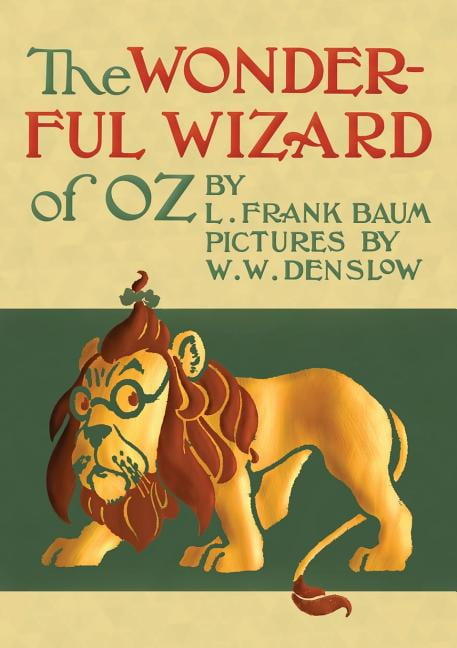
The Wonderful Wizard of Oz

Okay, just to be clear: This is about the book by L. Frank Baum, not the Judy Garland movie. The movie is great, but the book is better. Published in 1900, it was four years before a sequel would be written; Baum didn't realize at first just how popular the book was until he started getting letters. Lots and lots of letters, from kids wanting more stories about Oz.


The book is short by today's standards of fantasy writing; even with copious illustrations, the book is only 190 pages long. But it packs a LOT into those 190 pages. There are twenty-four chapters, only a few of which are more than five or six pages long. There is an economy of words here, and a lot happens in those twenty-four chapters. Baum gets to the point, and does so in a very entertaining way.

If you've seen the movie, you know about two-thirds of the plot. Dorothy is in Kansas, cyclone hits, house lands on the Wicked Witch of the East, good witch sends her to Oz, yellow brick road, Scarecrow, Tin Woodman, Cowardly Lion, poppies, go kill the Witch of the West, flying monkeys (did you understand that reference?), bucket of water, return to Oz, Wizard is a humbug, balloon, magic shoes, there's no place like home.

However, there's quite a bit more than that in the book, believe it or not. Not only do the companions have a lot more to do besides sing and dance through the forest, but the return journey to Oz from the witch's castle takes a couple of chapters itself instead of being skipped over to get to the finale. And Dorothy doesn't leave right after the Wizard's balloon takes off without her; she has to go on yet another journey to the Good Witch of the South to find out how her silver (not ruby) shoes work. And that doesn't include the encounters with the Queen of the Field Mice, the stork, the Hammer-heads, and China Town (not that kind of China, the plate kind). All bursting with imagination and wonder, and all within a single book.

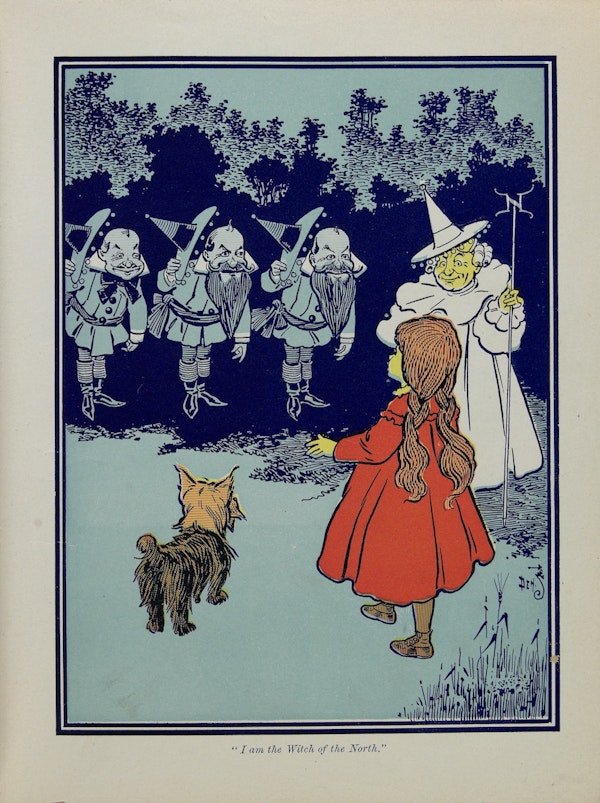
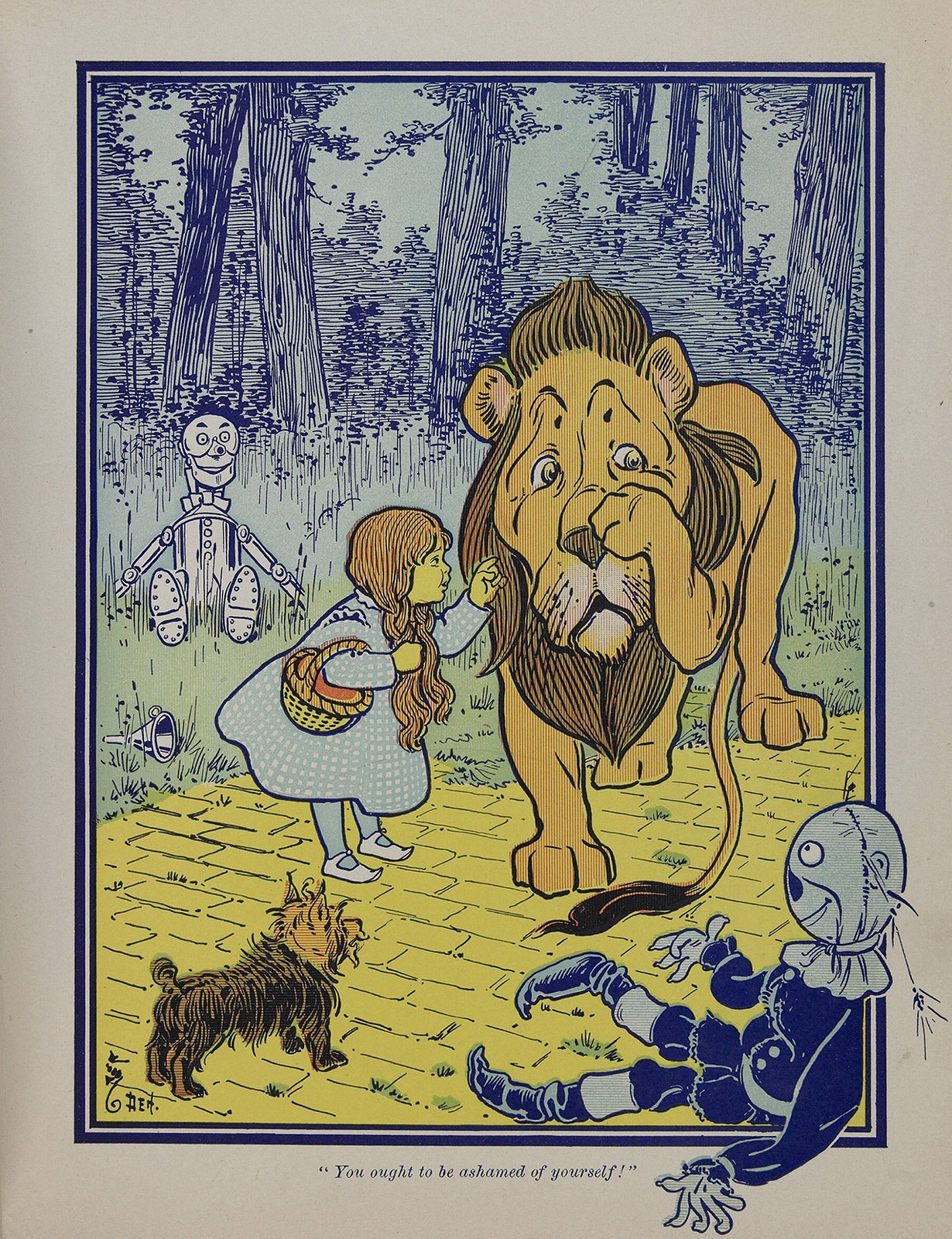
I mentioned the book is illustrated. There are at least a hundred illustrations in this book by William Denslow. Here are a few examples; many of them are in full color in the original publication.


She might be a good witch, but she ain't a beauty queen.


Shirley Temple might have been a better fit for the character, at least age wise; Judy Garland was sixteen years old, whereas Dorothy in the book is about seven.

Those are called Kalidahs, with the body of a bear and the head of a tiger. Nasty critters that would make a great addition to a fantasy role-playing game. Better than an owlbear, anyway.

This was the only Oz book illustrated by Denslow; the remainder of the Baum Oz books were illustrated by John O'Neill. I like both artists, but there is definitely something magical in Denslow's work. Even though our cultural identification of the characters is defined by the movie, Denslow's art is evocative and memorable enough to challenge the dominant images of Garland, Ray Bolger, and Margaret Hamilton.

This is a book every child should read. It is one of the all-time classics of children's literature, incredibly imaginative and still inspiring people 122 years later.

But, you know what? The sequel is actually better.

Wednesday, January 11, 2023

Post #400!

That's a milestone. Unfortunately, blog traffic isn't all that impressive right now. Still, I'm going to keep this streak going; people will stop by once in a while.

Since there's nothing much to talk about, I'll just call this another streak post and get back to writing the book. That's what really matters, anyway.


Tuesday, January 10, 2023

Collecting the Classics

Old books get a raw deal from a lot of people today. 'Racist, misogynist, homophobic...' The litany is well-known to all. Old books aren't 'relevant' to modern society, we are told. Old writers are out of touch. Readers can't relate to the characters. Not enough diversity or inclusion. Blah, blah, blah.

One doesn't need to read about a character identical to themselves to relate to them. I certainly don't; I can't remember the last time I read a book with an introverted half-French, half-English Canadian protagonist with Asperger's. But I relate to a lot of characters that I've read. Most readers do, regardless of what the character looks like in description. The classics, however, transcend such nonsense altogether. Anyone can relate to them, if they so choose. Anyone can read them and learn from them, if they so choose.

I find the older books simply more entertaining than modern stuff. There are always exceptions to that, of course; there are some great modern books that I enjoy. But they don't qualify as 'classics' just yet.

So, what classics am I talking about collecting? Children's classics, mostly. Things younger boys and girls can read and relate to. Why younger readers? For a couple of reasons. First, they have more time to read than most adults do. Second, they don't worry about 'relatability' or other such modern ideas; they just want to read a fun story. Third, these are fun stories. Adventures that take place all around the world, or even outside of the world. Alice in Wonderland and The Wonderful Wizard of Oz are two great examples of books that kids still love today. The characters are memorable and fun, the stories are exciting and easy to read, and their impact on culture to this day can't be ignored.

I've got a nice list of older kids' books that I've given to my boys to read during the homeschooling years. I'm hoping to get Garrett reading more as he gets older and comes out of his autism. He already loves listening to Alice and Dorothy's adventures. He doesn't care that they're girls; the stories are great. And that's why they are classics.

There are fourteen Oz books written by the original author, L. Frank Baum. Everyone knows about the first one thanks to the Judy Garland movie. But I actually preferred the second book, The Marvelous Land of Oz, when I was a kid. Others in the series include Ozma of Oz, Dorothy and the Wizard in Oz, and The Road to Oz, to name a few. With each book, Baum expanded Oz and its environs, adding new characters while retaining the favorites like the Scarecrow and Tin Woodman (who appear in almost all the Baum Oz books). Today, there are online communities of Oz fans and lots of information, including maps, flags, dynastic lineages, history books, etc. Oz is more real than some places here on Earth.

I'm starting the third book with Garrett; I'd like to do some reviews on the Oz books as we go through; I'll do the first couple at some point this week, then as we continue through the books. Physical copies, not ebooks. Paper is better.


Monday, January 9, 2023

Breaking the Ice: Enterprise Retrospective

Ah, back to this wonderful show. Breaking the Ice is the eighth episode of the first season. The two concurrent plot lines include T'Pol's marriage conflict and the ship's crew exploring a frozen comet. There's a Vulcan ship in there, too.

The episode begins with the aforementioned comet, and the crew discovering that it contains a rare element that even the Vulcans don't know much about. While Reed and Mayweather go prospecting, the Vulcan ship Ti'Mur under Captain Vanek shows up to 'observe' things. Archer, not being an idiot, knows the Vulcans are there to keep an eye on Enterprise, not comets. But he acts polite and even invites Vanek to dinner aboard the Enterprise.

Trip intercepts a secret message to T'Pol from the Ti'Mur and gets Hoshi to decode it for him, thinking that it's Vulcan spy stuff. It turns out that it's a very personal message involving T'Pol's upcoming nuptials. He confesses to T'Pol that he read the letter, which manages to make her seem a bit emotional (as in, really ticked off at him). But when she goes to Phlox to complain about trouble sleeping, he suggests she find someone she can confide in regarding whatever is keeping her up. She talks to Trip, since he is the only one aboard who knows what her issue is. His advice to do what she wants to do doesn't seem satisfactory, although he does point out that she's the one who asked him for advice, and that just asking shows that she doesn't feel comfortable with this particular Vulcan tradition.

Meanwhile, Archer hosts that dinner with Vanek, which goes about as well as expected. Fed up with Vanek's standoffish attitude, he accuses the Vulcan of spying on Enterprise and walks out of the dining room. Meanwhile, Reed and Mayweather get into some trouble on the comet, and the Enterprise isn't able to rescue them. The Ti'Mur offers to use their tractor beam (Enterprise still only has a grappling hook) to rescue the shuttlepod, and Archer finally bends enough to accept the help and save his crew.

In the end, T'Pol refuses to return to Vulcan and chooses to remain aboard Enterprise. Good on her. The Vulcans leave without her, and the Enterprise resumes its course.

So, what do I like about this episode? It's the first time we see T'Pol really interacting with a crew member in a meaningful, non-business way. And she doesn't know what to do, which is a definite rarity. Like Spock in the original series, T'Pol is the series' rock, the anchor that keeps everyone else grounded. Archer is the captain, but T'Pol is the vital crew member that always has the answers, always has the crew's backs, and has the confidence to step up when needed. Here, we see her vulnerable and uncertain for the first time. She has to confide in Trip, who she really doesn't like much, because otherwise she'd have to reveal her secret to yet another human. It's a great scene, easily the best of the episode and one of the best of the series so far.

What else? The science is typical Star Trek, made-up stuff that sounds neat and 'science-y'. But once again we see the limitations inherent in the humans' first foray into interstellar space as the ship is unable to rescue their stranded crew with the equipment they have on hand. Without the Vulcan ship and their tractor beam, the Enterprise would have lost two bridge officers. Not a good situation.

And, of course, the episode title has a double meaning, as Archer has to deal with a purported ally in Vanek, a man he doesn't much like and who doesn't seem to hold him in high regard either. Vanek's superior snobbery is evident despite his lack of emotion, and Archer's barely-concealed anger keeps the tension running. He does try to 'break the ice' with the dinner invite, which is a nice gesture, but Vanek doesn't even try to meet him halfway.

So, what do I think of this episode? It's not the best, but it's a good episode with some great acting from Jolene Blalock as she portrays T'Pol's uncertainty. I'd give it a 7 out of 10.

To catch a glimpse of my own idea of Earth-based space opera, check out my first science fiction book, Bard Conley's Adventures Across the Solar System, available right now in ebook for only $0.99 US and in paperback. It's a fun romp with lots and lots of action, so give it a look!


Sunday, January 8, 2023

Writing and Imagination

Writing is the most imaginative art form. Music has a definitive interaction with the listener; you hear the music. Some music can take you to a higher plane; Bach, Beethoven and Mozart are great at that sort of thing, where the music itself is powerful enough to activate the listener's imagination, either through the words or the music. Film and drama are much less imaginative, or least much less interactive. The viewer sees and hears what the director wants them to see and hear, and most of the imagining is done for you.

But writing...writing takes you somewhere else every single time you read. It is the most grounded yet the most fantastic form of art. Its effect is limited not by the writer, but by the reader. Here's an example. If I say, 'Star Wars', most people are going to get a specific set of images in their heads; the Death Star, light sabers, X-Wing fighters, and Baby Yoda floating in a hoverchair, for example. You might get different images than the person next to you, but the ones you do have in common will look pretty much exactly the same as their images. Why? Because the imagining was already done for you by Lucas, or whoever directed the movie you're thinking about. Your mind already has those associations, and they are indelibly etched into your conscious and subconscious mind. They are very powerful images, and that's a great thing.

But writing is different. Unless you're reading a tie-in like a Star Trek novel or something that was made into a movie (Harry Potter, Lord of the Rings, etc.), in which case the images you get from reading will be very close to what you saw on the screen. There's nothing wrong with that, either. It's a great visual shorthand for people to have that common experience.

But when you're reading something original, such as Abraham Merritt's The Moon Pool, the words themselves will fuel the imagination. Every reader will see Lakla and O'Keefe in their own minds, separate and distinct from what another reader sees. Even the best descriptions (and Merritt does some fantastic descriptive writing) is still only fuel for the reader's imagination. And that imagination can take you beyond anything the writer wanted you to go. The description of the Dweller, for example, is one of the most vivid in the early pulp writings. But if you read that passage to twenty different artists, you'd get twenty different renditions of what they thought it looked like.

And that is a wonderful thing. Writing engages the reader like nothing else can, because all it can do is lead the reader into the world and let them make it their own. It truly is an interactive art form, and that's what makes it so amazing. And if the story is well-written, the reader's mind will fill in any gaps in what is seen in the landscape of the imagination.

To see an example of this immersion, check out my newest book, Apprentice, available now from an Amazon website near you.


Saturday, January 7, 2023

Recommended Reading List

I don't think I've done this before, so this should be interesting. I'm going to list a few books that I (hopefully) haven't written about before, books that mean a lot to me and that I highly recommend. Some are very well-known, some...not so much.

I'm going to start with the first fantasy series I read, and still my favorite fantasy series to this day: The Belgariad, by David Eddings. It's a five-book epic fantasy series about a boy who has a great destiny. It's not exactly an original idea, and it's been called all kinds of clichés, but I love it. I was twelve when I first read it. I got the first two books, Pawn of Prophecy and Queen of Sorcery for my birthday along with Asimov's Foundation. I think I read Foundation first, but I really wasn't a big fan of it. But once I was done the first two Belgariad books, I was hooked. I couldn't wait for the next books to come out (they were still not all published yet), and I devoured each one as it was released. These were probably the first books I ever bought for myself.

The series is written for younger readers, but not stupid ones. Eddings had a good vocabulary, and he wasn't afraid to use it. And his world-building was amazing; Each nation is distinct, but believable. There are merchant-princes, Vikings, knights, plains nomads, Mongol hordes, and many others. Eddings spent a lot of time on his world-building before he ever wrote a word of the series, and it shows in the writing.

There is also a sequel series, The Malloreon, which is an admittedly inferior copy of the Belgariad, and two follow-up books after that, Belgarath the Sorcerer and Polgara the Sorceress that fill in a lot of backstory to the first series. There's also another book called the Rivan Codex, which is his background notes and a treatise on how to write epic fantasy, with an emphasis on world-building that really stirs the imagination. None of these are needed to enjoy the original five-book series, but they're good reads as well.

Okay, next up, let's go to less-epic fantasy. D&D gamers are familiar with Appendix N, the list of books that inspired Gygax when he was creating the game. People are now reading those old authors a lot more than they did when I was younger, when you just couldn't find them on the shelves anymore. Thanks to the internet, they're much easier to find. One of those authors is a woman by the name of André Norton, and one of the books she wrote is Quag Keep. This is a notable book because it is the very first-ever D&D book. Now, is it great literature? Hell, no. Norton can and has written much, much better books. But this is a book about a D&D adventure. And it is the very first book that uses the now-common trope of 'gamers sucked into the world they are gaming in'. I mean, it was written in 1978; the Dungeon Masters Guide wasn't even released yet. I'm not sure the Players Handbook was out for that matter. So this is based on the earlier version of D&D, the white-box version.

Quag Keep has a typical assortment of fantasy characters; there are clerics, fighters, mages, elves, and...a lizard man? Well, I never saw that in the supplements to the game. But, that was back in the days when D&D really was a set of guidelines rather than rules. And lizard men were just as popular in fantasy literature as elves were, going back to Burroughs' Pellucidar stories. So, it makes sense to include such a character in a book about the game.

The worst aspect of Quag Keep is probably the ending, which is really, really rushed and breaks the crap out of the fourth wall with an army of sledgehammers. I won't spoil it, but trust me, it's a hell of a letdown after the rest of the adventure. Still, I will recommend the book for its historical value, as well as because the book between the first and last chapters is a fun romp in the spirit of the game.

Okay, so instead of giving reasons why I like these next few books, I'll just list them and let the reader find out why I enjoy them so much.

G.A. Henty, The Cat of Bubastes

H.R. Haggard, She

L. Frank Baum, The Marvelous Land of Oz

David Weber, On Basilisk Station

E.E. "Doc" Smith, The Skylark of Space

Garrett P. Serviss, A Columbus of Space

And, finally, I'll recommend my newest book, Apprentice, available now on Amazon.